Latin America partnership for better future










The fact that 2024 marks the 10th anniversary of the establishment of the China-CELAC Forum and China's proposal to build a China-Latin America community with a shared future adds to the importance of President Xi Jinping's visit to Latin America from Nov 13 to 21 to attend the Asia-Pacific Economic Cooperation Leaders Meeting in Peru and the G20 Summit in Brazil as well as pay state visits to the two countries.
CELAC, incidentally, stands for China and the Community of Latin American and Caribbean States, a platform that promotes cooperation between the two sides.
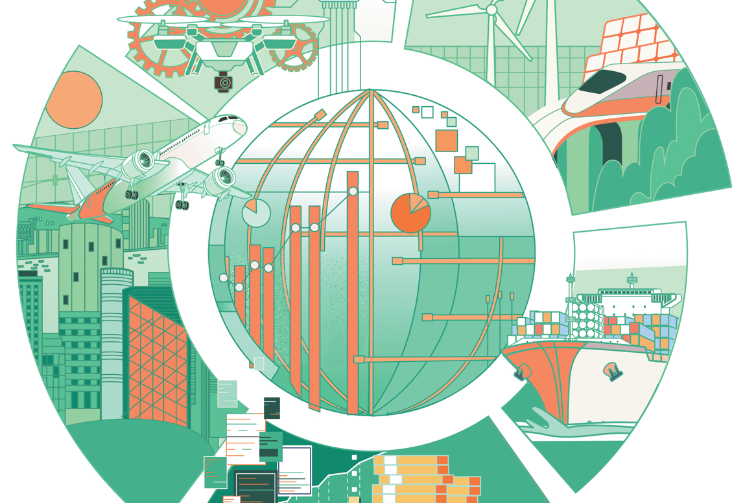
Over the past decade, deepening cooperation between China and Latin American and Caribbean countries has borne rich fruits in fields such as aerospace, healthcare, agriculture and energy. But cooperation between China and the Latin American countries is no longer limited to the government level; it now extends to enterprises, universities and research institutions.
In the field of aerospace, for example, the China-Brazil Earth Resources Satellite cooperation program has developed six Earth resource satellites, which provide valuable data for agriculture, water management and environmental monitoring. The CBERS also provides remote sensing data for developing countries in Latin America, Africa and Southeast Asia, making it a major open Earth observation data sharing system. And while China and Argentina have established a joint deep space exploration station, China has helped launch Venezuela's remote sensing satellites and Bolivia's first communication satellite.
The healthcare sector, too, has seen remarkable developments. During the COVID-19 pandemic, China provided medical support, including vaccines and ventilators, for Latin American and Caribbean countries such as Mexico, Cuba, Guyana and Ecuador. And BGI Genomics, the world's leading integrated solutions provider of precision medicine, has established a clinical laboratory in Uruguay, which will help improve public healthcare services including early disease diagnosis in that country.
In the agriculture sector, China has established bilateral agricultural cooperation mechanisms with 19 CELAC members, helping expand trade from local specialties to more technology-driven products and services including agricultural mechanization and new livestock farming technology.
Moreover, the China-Latin America and the Caribbean Sustainable Food Innovation Center was established earlier this month with the aim of boosting pragmatic cooperation by, among other things, expanding joint research in livestock farming technology, crop testing and exploration of new crops, and increasing the exchange and training of personnel engaged in the science and technology sector. The center's goal is also to promote sustainable development of the food industry to ensure global food security.
Green energy cooperation, on the other hand, has become a highlight of China-CELAC cooperation. While Chinese-made electric vehicles have entered the markets in Chile, Brazil, Mexico and Colombia, Chinese automaker BYD has built a complex in Brazil consisting of three manufacturing units which focus on making electric and hybrid vehicles, and processing lithium and iron phosphate. The BYD factory is expected to produce its first vehicle by early 2025.
China has also joined hands with Chile, Argentina and Brazil to build green energy projects such as solar photovoltaic panel-making factories, as well as hydropower stations and bio-energy plants.
Besides, Chinese investments have helped the Latin American and Caribbean states to expedite their social development, improve their logistics efficiency, increase their energy production and supply, facilitate their telecommunication development, and boost their economic growth. Not to mention that China-CELAC cooperation has also created new jobs and improved people's livelihoods.
Cooperation in the field of science and technology has not only yielded mutual benefit for China and the Latin American and Caribbean states but also facilitated the Global South's common development. In fact, by promoting high-tech development, China and the Latin American countries, rather the Global South as a whole, can drive global growth.
Green and digital technologies will be the focus of the cooperation between China and the Latin American and Caribbean countries in the science and technology sector in the next decade. As a matter of fact, by developing a green economy, the Global South can help boost the global economic recovery and sharpen its competitiveness as well.
By deepening cooperation with China in the green energy supply chain, the Latin American and Caribbean countries can unleash the market potential of the green economy and expedite their green energy transition.
The digital economy, too, has the potential to create new opportunities for cooperation between the two sides, if they can improve the digital economy's infrastructure, strengthen the digital supply chains, increase smart manufacturing, and boost the development of smart cities, cross-border e-commerce and the digital entertainment sector.
China and the Latin American and Caribbean states have already increased special air routes for cross-border e-commerce to meet the growing demand for air cargo. And through the South-South Cooperation Trust Fund, China has initiated digital agriculture and rural e-commerce cooperation with Panama, Guyana and some other Latin American and Caribbean states. Such efforts can facilitate the sustainable transformation of their agricultural and food industry, helping them meet some of the targets of the UN 2030 Agenda for Sustainable Development.
The author is director of the Department of International Relations, the Institute of Latin American Studies, Chinese Academy of Social Sciences. The views don't necessarily represent those of China Daily.
If you have a specific expertise, or would like to share your thought about our stories, then send us your writings at opinion@chinadaily.com.cn, and comment@chinadaily.com.cn.