Global ecological governance boost









JIN DING/CHINA DAILY
Greater G20 cooperation in green technology research is essential to narrow the North-South technological divide and promote global sustainability
The global energy transition is pivotal to addressing climate change, mitigating pollution and achieving sustainable development. Reducing reliance on fossil fuels and advancing renewable energy are central to this effort. At the forefront of this transition, the G20 and the 29th session of the Conference of the Parties to the United Nations Framework Convention on Climate Change (COP29) have made significant strides in securing climate finance.
Since 2008, G20 summits have made numerous commitments related to climate change and energy, with the prioritization of these issues steadily increasing in recent years. The 2024 G20 Rio de Janeiro Leaders' Declaration underlines the importance of international cooperation in tackling global challenges. It advocates for technological neutrality and inclusivity in the energy transition while highlighting the critical role of sustainable development in driving economic, social and environmental progress.
This year's summit underscored the pivotal role of the Global South and the significance of sustainable development.
As the G20 chair this year and incoming chair of both BRICS and COP30 in 2025, Brazil has committed to enhancing the voice of the Global South, advancing sustainable development and driving global governance reforms. Brazil, together with India and South Africa, has formed the "G20 troika", which aims to advance the agenda of Global South nations on key issues such as energy transition, digital economy and climate governance. Additionally, Brazil pursues a policy of "active nonalignment", aiming to foster global consensus through pragmatic and balanced cooperation.
The 2024 G20 summit emphasized the need to scale up climate finance from billions to trillions of dollars, acknowledging the urgency of mobilizing funds for the green transition. This was further reinforced at COP29, which highlighted the urgent need for accelerated just energy transitions in the Global South and emphasized greater ambition to address climate change. Dubbed the "climate finance COP", the summit concluded on Nov 24 with a landmark agreement to triple the current financial goal, committing nations to raise annual climate finance from $100 billion to $300 billion by 2035. This pledge, although a significant step forward, still fell short of the $1.3 trillion required for effective climate action, as experts estimated.
During the summit, President Xi Jinping emphasized that "countries should promote more inclusive, equitable and resilient global development". He also announced China's implementation of eight global development initiatives, including the joint construction of a high-quality Belt and Road Initiative.
China proposed further improving global ecological governance and building an eco-friendly global economy. It emphasized that the global green development transition must "uphold the principle of common but differentiated responsibilities and provide support to developing countries in terms of funding, technology and capacity-building".
China has demonstrated its commitment to addressing global climate and energy challenges. The following recommendations are proposed to further advance the global green transition and sustainable development.
First, G20 members must play a critical international role in energy and sustainable development. As the world's largest energy consumer, China holds significant potential to drive the green economy forward by aligning the BRI with the G20 framework, fostering global collaboration on sustainable development and climate goals. By addressing major issues such as energy security and climate change, China can play a leading role, mediate between emerging markets and developing countries, and drive the global energy transition.
Second, as the world's largest energy consumer, China can play a pivotal role in advocating for reduced barriers to G20 discussions, promoting equitable participation among all member states. Strengthening the clarity and fairness of working group recommendations, particularly by defining the decision-making roles of mechanisms such as Business 20(B20) and Civil Society 20 (C20), would also enhance the continuity and inclusivity of global collaboration efforts. Strengthening transparency and accountability within these mechanisms will ensure more effective implementation of agenda items.
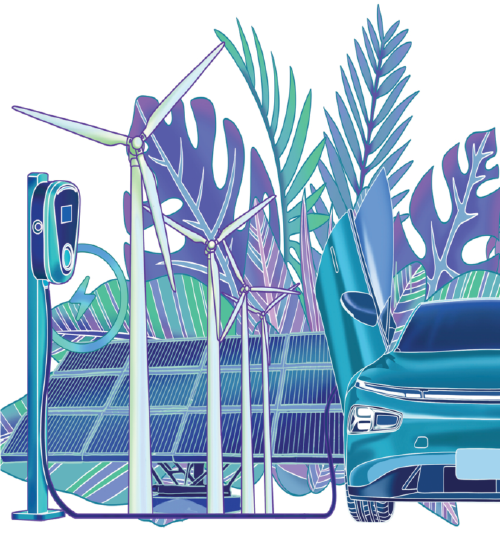
Third, stronger G20 cooperation in green technology research, development and application is essential for narrowing the North-South technological divide and promoting global sustainability. Establishing a knowledge-sharing platform, encouraging climate finance and technology transfers, and creating robust institutional frameworks and evaluation mechanisms will ensure policy continuity and alignment with sustainable goals.
Fourth, fostering sustainable infrastructure development is key to enhancing global resilience to risks. Efforts should focus on aligning public service infrastructure projects with the 2030 Sustainable Development Goals, particularly in sectors such as education and agriculture in developing countries. Climate finance must also be more closely tied to the objectives of the Paris Agreement, emphasizing climate adaptation in vulnerable regions. Additionally, leadership in the low-carbon sector should be maintained to drive the global green transition and support sustainable economic growth and social development worldwide.
Yu Hongyuan is a professor and director of the Institute for Public Policy and Innovation at the Shanghai Institutes for International Studies. Zhang Xiaoran is a doctoral candidate at the Law School at Shanghai University of Finance and Economics. The authors contributed this article to China Watch, a think tank powered by China Daily.
The views don't necessarily reflect those of China Daily.
Contact the editor at editor@chinawatch.cn.