


Rice beer traces dating back millennia found in East China










HANGZHOU — A collaborative study by scientists from China and the US has uncovered evidence of rice beer dating back about 10,000 years at an ancient site in East China's Zhejiang province, providing new insights into the origins of alcoholic beverage brewing in East Asia.
The study, recently published in the journal Proceedings of the National Academy of Sciences, was jointly conducted by researchers from Stanford University, the Institute of Geology and Geophysics of the Chinese Academy of Sciences, and the Zhejiang Provincial Institute of Cultural Relics and Archaeology.
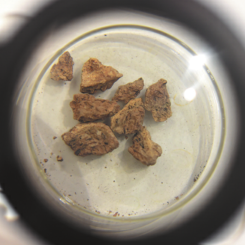
The research team analyzed 12 pottery shards from the early phase of the Shangshan site in Pujiang county, Zhejiang.
"These shards were associated with various vessel types, including those used for fermentation, storage and cooking," says Jiang Leping, a researcher from the ICRA.
The researchers conducted microfossil extraction and analysis on residues from the inner surfaces of the pottery, as well as the pottery clay and surrounding cultural layer sediments.
"We focused on identifying phytoliths, starch granules and fungi to gain insights into the pottery's uses and the food processing methods employed at the site," says Liu Li, a researcher from Stanford University, the first author of the paper.
Phytolith analysis revealed a significant presence of domesticated rice phytoliths in the residues and pottery clay.
"This evidence indicates that rice was a staple plant resource for the Shangshan people," says Zhang Jianping, a researcher from IGG.
The team also found a variety of starch granules in the pottery residues. Many of the starch granules exhibited signs of enzymatic degradation and gelatinization, which are characteristic of fermentation processes.
The study also revealed abundant fungal elements, including Monascus molds and yeast cells, some of which exhibited developmental stages typical of fermentation. These fungi are closely associated with qu (yeast) starters used in traditional brewing methods.
The research team analyzed the distribution of Monascus and yeast remains across different pottery vessel types and observed higher concentrations in globular jars compared to a cooking pot and a processing basin. This distribution suggests that vessel types were closely linked to specific functions, with globular jars purposely produced for alcohol fermentation.
According to the study, the emergence of this brewing technology in the early Shangshan culture was closely linked to rice domestication and the warm, humid climate of the early Holocene.
"Domesticated rice provided a stable resource for fermentation, while favorable climatic conditions supported the development of qu-based fermentation technology, which relied on the growth of filamentous fungi," Liu says.
"These alcoholic beverages likely played a pivotal role in ceremonial feasting, highlighting their ritual significance as a potential driving force behind the increased use and widespread cultivation of rice in Neolithic China," Liu adds.
The evidence of rice alcohol fermentation at Shangshan represents the earliest known occurrence of this technology in East Asia, offering new insights into the complex interplay between rice domestication, alcoholic beverage production, and social formation during the early Holocene in China, according to the study.
Xinhua