Negative impacts from US tariff move stressed
Consumers set to bear brunt of higher prices with global trade hit, experts say










As the United States prepares for a new administration, business leaders and trade experts are sounding the alarm about the potential consequences of President-elect Donald Trump's proposed tariffs, particularly on China.
Global trade serves as the backbone of the Los Angeles economy alone, with its bustling port system processing $400 billion in goods annually, according to Allison Clark, vice-president of business and international trade development at the Los Angeles County Economic Development Corporation.
In an interview with China Media Group, Clark emphasized the critical role trade plays, not only for the region but also for the broader US economy, with nearly 3.1 million jobs nationwide tied to the Los Angeles and Long Beach trade complex.
"Many analysts identify a net negative effect of tariffs on total US manufacturing jobs, largely as a result of rising production costs offsetting any gains," Clark told China Daily. "Tariffs on imports may improve the competitiveness of US companies providing like-for-like products in the short term, but they do not guarantee the reshoring of jobs or stronger domestic supply chains."
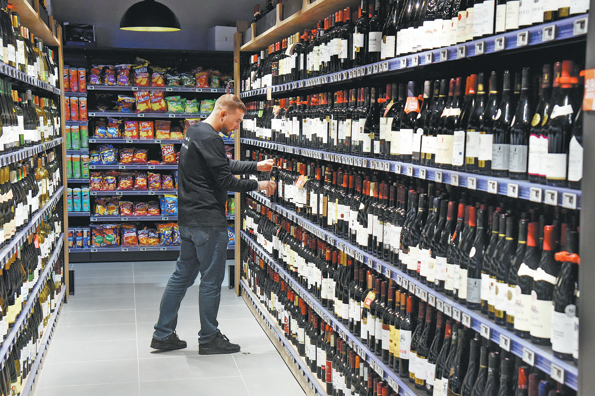
The impact of tariffs extends beyond manufacturers, with US consumers also bearing the brunt through higher prices for imported goods, such as food, clothing and household items, according to Clark.
"Even domestic manufacturers face cost hikes for imported components vital for production. Although a stronger dollar could mitigate some of these price increases, it also makes US exports more expensive, potentially hampering global competitiveness," she added.
For the Port of Los Angeles, which is having a banner year, the threat of more tariffs, particularly on China, is affecting cargo flows, according to the port's director.
Taking precautions
"Some shippers are front-loading cargo as a precaution against potential new tariffs," said Gene Seroka, the port's executive director, at a recent media briefing.
The port has posted robust cargo growth over the past year. In October, it handled 905,000 twenty-foot equivalent units, or TEUs, a 25 percent year-on-year increase.
"We are well on pace to exceed 10 million container units for only the second time in our 117-year history," Seroka said.
However, Seroka pointed to the uncertainty over Trump floating the prospect of 60 percent tariffs or more on Chinese goods and 10 percent on all $3 trillion worth of US imports.
"When the first round of tariffs took hold (in 2018), we saw a run-up in cargo before implementation dates, followed by a huge drop-off," he said.
By the end of 2019, the port saw a 16 percent decline in business. The port's trade with China has since fallen from 57 percent to 43 percent, despite overall cargo growth.
Moreover, he said a drought in the Panama Canal, security issues in the Red Sea and ongoing tariffs are challenges for exporters.
Mary Lovely, a senior fellow of the Peterson Institute for International Economics in Washington, DC, said that Trump's trade policies would affect the global economy.
"Policies like this will create headaches and cause rearrangements for shippers and managers of global supply chains," she said.
Lovely said that US exporters would face a competitive disadvantage due to higher prices for intermediate goods used in domestic manufacturing.
"We'll lose jobs in many areas, particularly manufacturing," she said. "The US remains the world's second-largest exporter of manufactured goods, and these policies handicap our exporters."
Lovely also said that higher tariffs would force companies to devise expensive alternatives to comply with US regulations.
Matthew Shay, president and CEO of the National Retail Federation, said that tariffs ultimately raise costs for consumers. "Quite simply, members pass on those taxes to us as consumers, leading to inflation," he said.
renali@chinadailyusa.com