Tracing the journey of Chinese ceramics










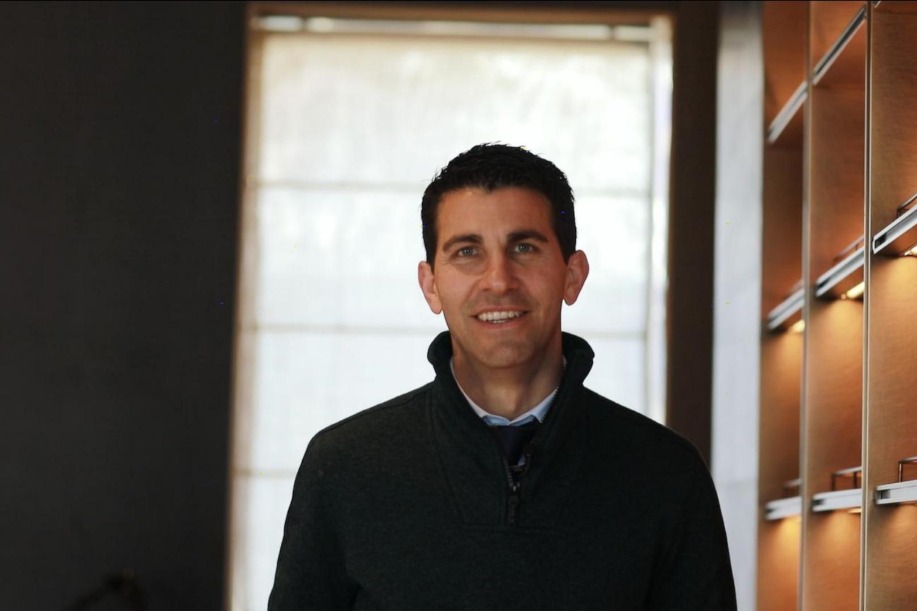
In the ancient and magical land of the East, Chinese ceramics have journeyed through time for thousands of years, showcasing their unique artistic charm and profound historical and cultural heritage. From their primitive forms, they have gradually evolved into a stunning expression of craftsmanship, becoming an important cultural symbol that connects the past and the present, and bridges China with the world. When Juan Ignacio Rafúente, vice-chairman of the Spanish National Research Council, and Marwa, an international faculty member from Egypt at Nanchang Hangkong University, first set foot in Jingdezhen—often referred to as the sacred land of ceramics — they not only experienced a legendary history of clay and fire, but also witnessed a cultural exchange and collision that transcends time and space.
Their first stop was the Ancient Ceramic Gene Bank of Jingdezhen, a treasure trove that houses the "DNA" of countless ceramic fragments. The establishment of this gene bank has offered an approach to research ancient societies, restore ancient crafts, authenticate ceramics, developing ceramic cultural products, and narrating the history of porcelain. Here, they witnessed the development of ceramics, from celadon in the Han Dynasty, and white porcelain in the Tang and Song dynasties, to blue-and-white, and pink porcelain in the Yuan, Ming, and Qing dynasties. Each exhibit carries the weight of history and tells the story of the dedication and wisdom of the artisans. Juan was deeply impressed by the delicacy and jade-like quality of celadon in the Song Dynasty and admired its minimalist yet elegant design, which still holds great aesthetic value today. Marwa was captivated by the intricate paintings on Famille Rose porcelain from the Ming and Qing dynasties. She felt that these pieces were like living dreams that reflected the Chinese people's endless longing for a beautiful life.
The group next visited the Jingdezhen Imperial Kiln Institute, historically recognized as a pivotal production center for porcelain used by the imperial court during the Ming and Qing dynasties. Each brick and tile in the museum exuded royal dignity and authority. As they wandered through the exhibits, they experienced a sense of temporal displacement, witnessing the palace's profound commitment to ceramic artistry. From intricately designed tea sets to grand ceremonial porcelain, every artifact exemplifies the exceptional skills and boundless creativity of its artisans. Marwa expressed her admiration for the complex yet harmonious patterns and the rich blue tones beneath the cobalt glaze, perceiving these creations not merely as technical achievements but as true works of art. Meanwhile, Juan was captivated by the production techniques and management strategies employed at the Imperial Kilns, considering them invaluable references for industrialized manufacturing practices in later eras.
Upon departing from the institute, the group proceeded to the Ceramic Art Museum dedicated to Xu Lan, a renowned Chinese master of traditional craftsmanship and fine arts. They were profoundly impressed by an array of exquisite blue-and-white porcelain pieces. Among these, the most striking was "Guarding the Homeland", a uniquely crafted flat vase resembling a "flying saucer". This innovative design emitted a sculptural vitality, seemingly encapsulating the essence of creation. Master Xu Lan cleverly integrated various techniques such as carving, painting, and drawing, using the well-known chestnut tree and birds in nature as her creative themes, as if a melody of life is flowing within them. Juan expressed his high praise for Xu Lan's perfect composition in blue-and-white porcelain and pastel, as well as her bold innovation in color use.
Their next stop was the Sculpture Art Museum dedicated to the works of Lyu Pinchang, a prominent figure in ceramics and sculpture, who originated from Jingdezhen and gained international acclaim. In October of this year, he generously bequeathed his entire body of work produced over the last four decades to Jingdezhen, expressing his affection for the city but also honoring tradition through his distinctively crafted modern ceramics. Lyu Pinchang's sculpture "Faith" exemplifies his ability to encapsulate the magnificence of ceramics into a timeless narrative. In this creation, Lyu guided his team towards innovative advancements, successfully achieving a synthesis between a cohesive overall design characterized by a grid structure and allowing each artist the opportunity to showcase their unique creativity, style, and techniques. The artwork harmoniously integrates Western sculptural elements with traditional Chinese artistic expressions, such as sculpture, painting, architecture, and woodcut printing, resulting in a piece that is both solemn and rigorous while richly embodying national artistic heritage.
Lyu Pinchang's "Chinese Impression" series connects traditional and contemporary cultures, fostering a dialogue with history, reality, and the inner self through the medium of broken porcelain. He employs various narrative modes to construct a multifaceted visual experience that fully engages the viewer. In "Chinese Impression No 44", the audience is transported into the realm of a cultural relic collector, allowing them to profoundly perceive the weight of history and the richness of culture. Conversely, the Afu series incorporates elements from traditional Chinese sculpture, particularly figures derived from folk art, which are exaggerated and distorted in dramatic fashion. The interplay between the Chinese Impression series and the Afu series reveals a mutual support system as they explore the distinctions between figurative and abstract forms both practically and theoretically. Additionally, they probe the aesthetic dichotomy between flaw and perfection while investigating the integration of materiality with formal language. These works exemplify the artist's deep comprehension and distinctive perspectives on ceramic sculpture art.
The final destination was Jingdezhen University, recognized not only as a nurturing ground for talents in ceramic art but also as an experimental arena dedicated to cultivating innovative thinkers. This institution has pioneered the unique art form known as "Porcelain Music". Upon entering the concert hall, attendees were enveloped by melodies produced from ceramic instruments, including porcelain chimes, flutes, and drums. The crystalline and harmonious tones resonated like a celestial symphony, providing both an auditory delight and a spiritual rejuvenation. Juan expressed that this was his first experience with such distinctive and exquisite music, noting that it encapsulated the profound depth and boundless creativity inherent in Chinese ceramic culture — qualities that could be perceived through sight, sound, and touch. Marwa experienced a profound emotional response to this interdisciplinary amalgamation of artistic expressions. She posited that porcelain music not only exemplifies the tangible characteristics of ceramics but also mirrors the Chinese aspiration for beauty.
Juan and Marwa recognized the evolution of Chinese ceramics from its primitive simplicity to its striking brilliance but also cultivated a profound comprehension of the cultural essence and innovative prowess inherent in Chinese ceramic artistry. They asserted that Chinese ceramics will continue to illuminate the global cultural arena with its distinctive allure, serving as a conduit for fostering friendship and understanding among diverse nations and cultures.