



IoT new engine of socioeconomic development









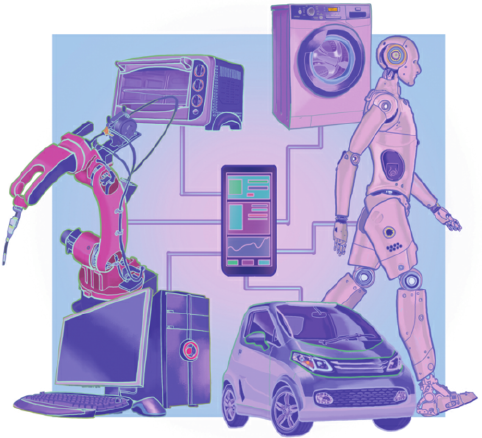
As the cornerstone of a fully interconnected world in the digital era, the internet of things has evolved into a powerful force propelling the latest wave of technological revolution and industrial transformation.
Through multi-network collaboration, the IoT fosters ubiquitous connectivity between people, machines and other objects, accelerating the integration of the physical and digital worlds and unlocking the potential of data-driven innovation.
According to the Ministry of Industry and Information Technology, by the end of August 2024, the number of IoT terminals in China had reached 2.57 billion, making the country the first major economy to have more IoT connections than its total population. The milestone shows China's immense potential in the "second phase" of the internet era. IoT technologies also serve as a solid foundation for advancing high-quality socioeconomic development.
The IoT is reshaping China's industrial landscape, having been deeply integrated into the entire production chain and propelling industries toward more intelligent and sustainable development. By enabling real-time data exchange, panoramic sensing and AI-driven decision-making, the IoT has been expeditiously shifting traditional industries toward smarter, greener forms of production.
In manufacturing, the integration of IoT, big data and artificial intelligence has already resulted in significant improvements in operational efficiency, while real-time monitoring and lean manufacturing are boosting productivity by as much as 20 percent to 25 percent.
In the agricultural field, IoT technologies such as smart sensors and automated controls are improving resource efficiency. For example, the application of precision irrigation systems on large farms has been reducing water usage while increasing crop yield.
More importantly, the IoT is strengthening product traceability and enhancing the value of agricultural brands. By helping transform fragmented small-scale farms into unified, large-scale farms, the IoT is promoting the creation of a modern, more efficient agricultural system.
In the service sector, the IoT is not only optimizing operations and improving customer experience, but also driving the growth of innovative business models such as unmanned supermarkets, smart logistics and the sharing economy. These changes are infusing new momentum into China's rapidly evolving service sector. Beyond economic transformation, the IoT is playing a critical role in reshaping social governance.
In terms of urban management, IoT technologies are enabling governments to make responsive decisions for better city management. In the field of smart transportation, IoT-based traffic monitoring and dynamic signal adjustments have helped ease congestion in urban areas. Statistics show that smart traffic systems in Nanjing, capital of Jiangsu province, have increased average speeds by 15 percent during peak hours and reduced commuting time by 20 percent.
When it comes to public safety, IoT sensors are providing valuable data for early warning systems that can predict environmental risks such as natural disasters, and even detect abnormal behavior at large events, helping prevent safety incidents.
The IoT's role in enhancing public service delivery is also noteworthy. By enabling cross-departmental data sharing through integrated platforms, the IoT is significantly improving the efficiency and accessibility of government services.
Shanghai's "one-stop online government services" platform, for instance, had processed more than 578 million transactions by 2024, achieving a 99.95 percent satisfaction rate. This is a prime example of how the IoT is driving efficient, responsive governance to meet the needs of modern society.
One of the most profound impacts of the IoT is its ability to narrow the digital divide, and promote greater inclusivity across sectors such as education, healthcare and culture. By facilitating the smooth flow and accessibility of information, the IoT is making it possible for remote and underserved communities to benefit from the digital revolution.
In the field of education, the IoT has increased the sharing of quality resources across geographical boundaries. Through 5G networks and IoT platforms, rural schools can now access real-time urban classrooms, enabling synchronous learning. For example, the introduction of shared educational resources in rural schools in Shaoxing, Zhejiang province, has greatly increased students' access to high-quality education.
And in the healthcare field, the IoT has made telemedicine more widely accessible, providing residents in remote regions with convenient, reliable medical services.
Moreover, the IoT has been fostering the digitalization of cultural resources, bridging the gap between urban and rural areas, thereby not only enriching rural residents' cultural experience but also strengthening social cohesion by ensuring easier access to information.
In fact, the IoT has been helping build a smarter, more efficient and greener future for China. As the country transitions to a high-quality growth model, the IoT has become an indispensable enabler, reshaping industries, improving governance and bridging societal divides.
To realize the full potential of the IoT, China must continue to prioritize technological innovation, accelerate the development of smart infrastructure and refine governance frameworks to support its growth. The IoT revolution has laid the foundation for a more interconnected, prosperous, and sustainable future.
To summarize, the IoT is not just transforming China's economy but also facilitating social progress, advancing technological innovation and helping build an inclusive society, which countries navigating the challenges and opportunities of the digital age can learn from and use to realize their respective goals.
The author is a professor at the School of Economics and Management, University of Chinese Academy of Sciences.
The views don't necessarily reflect those of China Daily.
If you have a specific expertise, or would like to share your thought about our stories, then send us your writings at opinion@chinadaily.com.cn, and comment@chinadaily.com.cn.





