



'Ferryman of souls' escorts cremains of veterans from Taiwan to mainland home









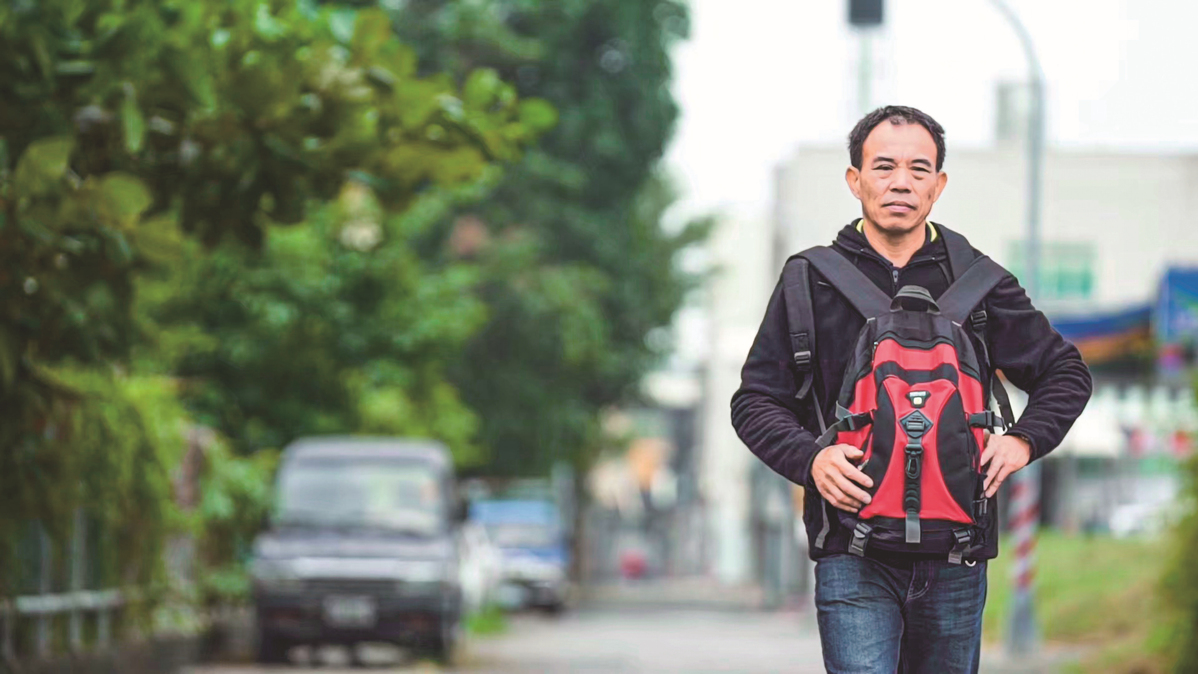
TAIPEI -- For Liu De-wen, who hails from southern Taiwan, the weight of a life is precisely 12 kilograms.
On the third day of 2025, the 58-year-old from Kaohsiung boarded a flight to Nanjing in East China's Jiangsu province. He carried two ash urns, each weighing 12 kilograms -- one strapped to his chest and the other secured to his back.
Over the past 21 years, Liu has carried the cremains of more than 300 veterans from Taiwan back to the Chinese mainland, fulfilling their dying wishes to return home.
These veterans were among the soldiers who arrived in Taiwan with the Kuomintang in 1949 during a civil war. For decades, as the two sides of the Taiwan Strait were trapped in protracted political confrontation, they were unable to return to the mainland to care for aging parents or reunite with siblings or wives.
Many of these men, considered outsiders on the island, remained unmarried and childless.
Liu, a native of Taiwan's Pingtung county, did not know much about these veterans until 1997 when he moved to a community of old military housing in Kaohsiung.
The community was home to more than 4,000 mainland veterans at its prime time, and when Liu moved in, around 1,800 old men were still living there.
"They often sat for hours during the Chinese New Year, gazing toward the mainland. On the traditional Tomb-Sweeping Day, they would perform rituals in the direction of their hometowns to honor their parents they hadn't seen in decades," Liu recalled.
These scenes resonated deeply with Liu, and over time, he became their confidant, listening to their stories of separation and longing.
Although the Taiwan authorities lifted the ban on visiting relatives on the mainland in 1987, many veterans did not make the trips due to their age or health conditions. Those who made mostly did not move back to their hometowns, due to various reasons.
In 2003, an 87-year-old veteran from Hunan province surnamed Wen entrusted Liu with his dying wish. "Can you take my ashes back home to be buried beside my parents? I've never fulfilled my duties as a son," a tearful Wen had said, as Liu recounted speaking to Xinhua.
After Wen's passing, Liu honored his promise, traveling by plane, train, and bus to deliver the urn to Wen's ancestral village in Hunan.
Word soon spread, and other veterans began reaching out for his help. As the requests multiplied, Liu devoted himself entirely to this mission, undeterred by the physical and financial challenges it entailed.
"I don't treat the urns as luggage. They hold the veterans' souls," Liu said, explaining why he often bought seats or beds for the urns, treating them as if the deceased were still alive.
In later years, Liu began receiving requests from families on the mainland to locate the remains of veteran relatives in Taiwan and bring them home.
These missions were uphill battles. Liu has combed through military cemeteries, untended graves, and even abandoned temples across Taiwan, piecing together clues from decades-old records and scattered memories.
The search for veteran Chen Bi-shou, for instance, took months. Chen's family in Jiangsu had not heard from him since the early 1980s and contacted Liu in 2018.
It was only through Liu's unwavering determination -- meticulously checking cemetery records and obscure archives -- that Chen's grave was finally located in Taiwan, 25 years after his death. Liu personally accompanied Chen's ashes back to Jiangsu.
The search trips are rarely easy. Liu has endured heatstroke while searching remote cemeteries, slept on train station floors, and once fractured ribs falling into a pit during a search. Yet, he continues to persevere.
"Doing good brings blessings," Liu said simply, attributing his survival from the fall to the unseen support of the veterans.
The reunions Liu facilitates are often profoundly emotional. In Yunnan, an elderly man whose father left for Taiwan when his mother was pregnant wept as he held the cremains in the urn. "I finally have a father," he said, overwhelmed with emotion.
In Shandong, a 90-year-old man knelt three times before Liu in gratitude for bringing his brother home.
In every case, Liu stays to ensure the ashes are buried properly. Having mapped out over 20 provinces and regions, with only Xizang, Qinghai, and Ningxia left untouched, he rarely took time for sightseeing, viewing his work as a solemn mission. "I am here to bring them home, not to tour," he said.
As technology advanced, Liu began documenting veterans' graves to create a comprehensive database and publishing the information online, enabling families to locate lost loved ones more efficiently.
Liu's efforts have garnered recognition across the Strait. Families on the mainland, once strangers, now call him "uncle" or "big brother."
"This is why I do what I do," Liu said. "We are one family, bound by the same roots and culture. Blood ties can never be severed."
Liu's life remains modest. His office, a converted shipping container, displays the motto: "Do good and keep a kind heart." Despite the growing public recognition of his work, he continues to live frugally, saving every penny to fund his missions.
"I've learned the essence of humanity through this work," Liu said. "It's about bringing closure and peace to those who've waited a lifetime to go home."
As the veterans pass away and their stories fade, Liu races against time to complete their final journeys.
In 2024, Liu escorted 47 urns in a single year, the most ever. In 2025, he has already scheduled trips for more than 20 deceased veterans.
"I have to walk faster," he said. "Their children are getting older too. They shouldn't have to wait any longer."





