



High cost of living
Inflation can mean a daily struggle for the working poor in Bangladesh









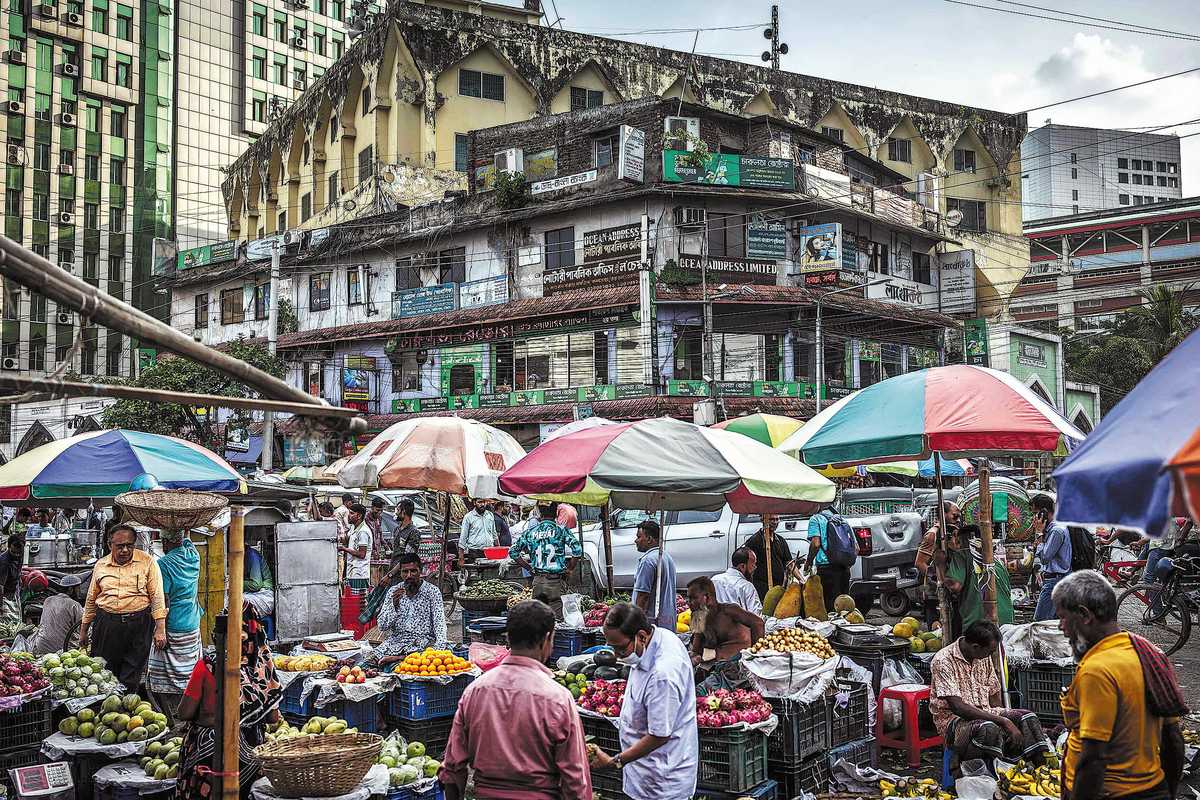
Editor's note: In this weekly feature China Daily gives voice to Asia and its people. The stories presented come mainly from the Asia News Network (ANN), of which China Daily is among its 20 leading titles.
As inflation greets Bangladeshis at breakfast time, even the humble paratha becomes a symbol of struggle. Once hearty and filling, the traditional flat-bread now seems to arrive thinner and lighter — a daily reminder of the unending calculations between hunger and affordability for many people.
Previously, a simple meal of three parathas and an accompanying plate of dal would commonly cost 39 taka (32 cents). Today the modest breakfast can demand 50 taka, as spiraling prices threaten the most vulnerable consumers — day laborers, marginal farmers and transport workers.
For Mofazzal Hossain, a 45-year-old rickshaw puller in Mirpur's Duaripara area, breakfast used to mean rice, vegetables and an occasional slice of fish. Now, it is a cup of tea and a single biscuit. His earnings have plummeted from 500 taka to 600 taka a day, to 350 taka to 400 taka. Feeding his family of six has become a painful calculation, with every meal a trade-off.
"I hardly remember the last time we ate meat," he said quietly, staring at his hands.
Mofazzal's plight mirrors that of many others across Bangladesh's capital Dhaka and beyond. In Karwan Bazar, Sattar Mia, a 38-year-old day laborer, often begins his day with an empty stomach. Once earning 600 taka daily, he now struggles to make 400 taka. The rising cost of basics has forced him to skip breakfast at times, pushing his first meal to late morning.
"Sometimes I eat at 11 am. Sometimes later," he said with a rueful smile. "It hurts, but what can be done?"
Food inflation soared to 14.1 percent in July last year, nearly doubling from 7.76 percent at the start of 2024, according to the Bangladesh Bureau of Statistics. But the statistics cannot completely capture the quiet sacrifices happening in homes like Sattar's where sending money to the village is scarcely possible.
For Bangladesh's working poor, each day can begin with a painful negotiation as essentials like sugar and cooking oil climb ever higher in price: What can be sacrificed? What can still be afforded? For them, inflation is not just an economic phenomenon — it is a test of survival.
In Barishal, grocery vendor Shambhu Nath Saha observes a shift in purchasing behavior. Customers who once bought five liters of cooking oil now opt for one or two, and those purchasing two kilograms of sugar now settle for one.
"Someone who used to spend 2,000 taka on groceries is now spending 1,000 or 1,200 taka," he said.
Economists have warned of serious implications. Fahmida Khatun, executive director of the Centre for Policy Dialogue, pointed out that lower food intake will affect nutritional and health conditions, with long-term consequences for children's growth and education.
She further said that the interim authorities have implemented several measures aimed at easing inflationary pressures. These include raising policy rates as part of monetary tightening, rationalizing public expenditure by prioritizing only critical development projects and removing tariffs on certain essential imports.
Fahmida, however, said she believes that winning the inflation battle hinges on improving the supply chain and increasing product availability in the market, a process that demands both time and sustained effort.
Price volatility had plagued neighboring countries like India, Sri Lanka and Pakistan, which have managed to bring food inflation down to about 5 percent, according to media reports. Fahmida expressed optimism that Bangladesh could achieve similar results, though not without sustained effort.
"To address inflation in the current context, the focus must be on improving supply chains and increasing the availability of products in the market," she said.
Fahmida also emphasized the importance of expanding open market sales of essential goods and broadening social safety net programs to alleviate the burden on vulnerable populations.
"These measures are crucial to mitigating the impact of rising prices on millions of households," she said.
A study by the Bangladesh Institute of Development Studies showed a striking shift in dietary patterns in rural areas amid rising food costs. The daily average rice consumption per person climbed to 412 grams in 2023, up from 349 grams in 2022.
In stark contrast, the consumption of protein-rich foods like mutton and beef has plummeted. The study found that daily average consumption per person dropped to just 0.28 grams of mutton and 4.02 grams of beef, down sharply from 1.23 grams and 10.25 grams, respectively, the previous year. These changes reflect the difficult trade-offs many households make to cope with inflationary pressures.










