


Agroforest vital for rare small apes
Skywalker gibbons display unexpected adaptability to environmental changes










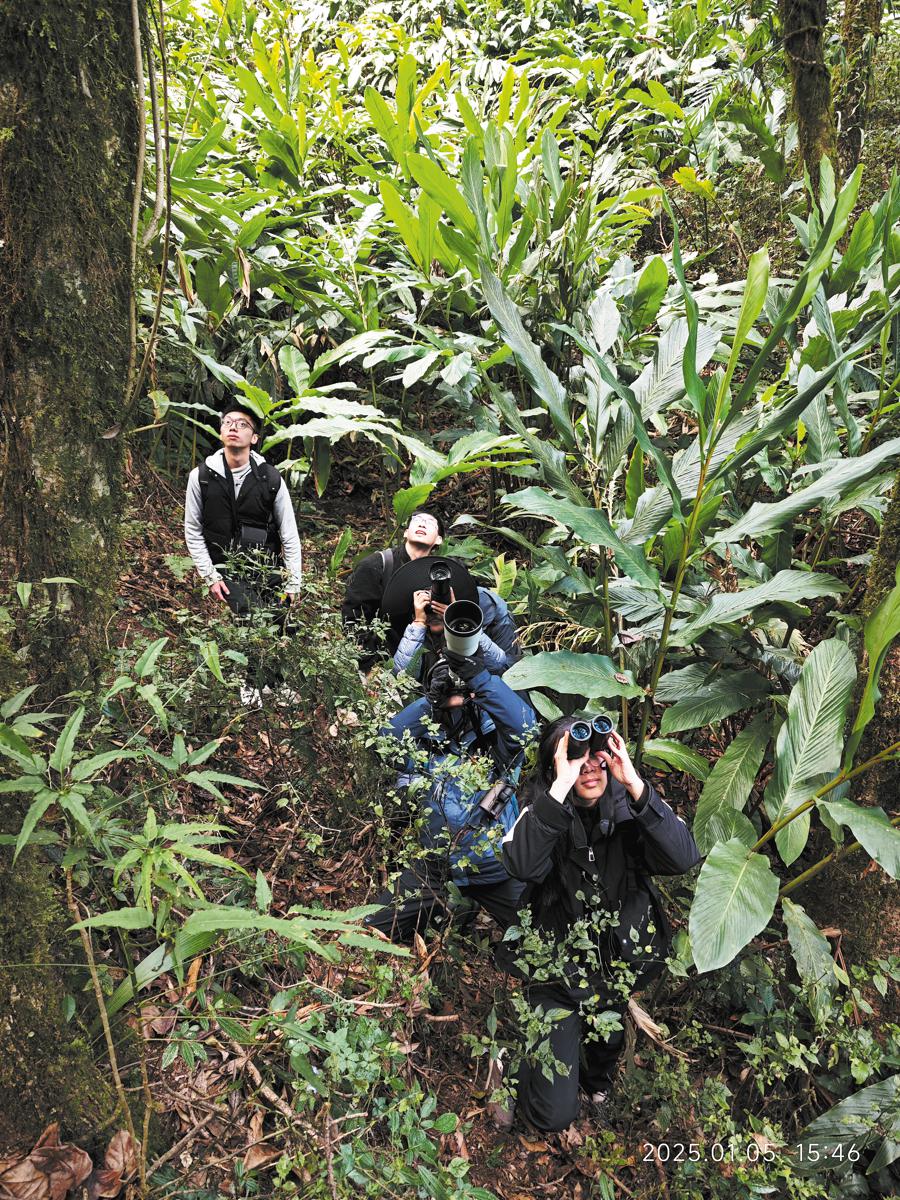
In the lush tropical and mountain forests of Southeast Asia reside various species of gibbons — small apes highly sensitive to environmental changes.
Serving as indicator species for forest conservation in many countries, all gibbon species face threats of habitat loss and degradation, with most now classified as endangered or critically endangered.
Similar to other gibbon species, the Skywalker hoolock gibbon (Hoolock tianxing) is a quintessential arboreal forest dweller, relying primarily on ripe fruit for sustenance.
Notably, the Skywalker hoolock gibbon is the first ape species named by Chinese scientists.
A 2017 survey estimated that fewer than 200 Skywalker hoolock gibbons inhabit China, primarily in the Gaoligongshan National Nature Reserve in Baoshan, Yunnan province, and parts of Yingjiang and Tengchong counties in the province.
Because the Lisu people harbor a traditional culture of protecting the gibbons, nearly half of China's Skywalker gibbon population inhabit collective forests near Lisu villages in Yingjiang and Tengchong.
The collective forests, about 45 kilometers from the Gaoligongshan nature reserve where the Skywalker hoolock gibbon's southern population lives, serve as habitats for the species and vital income sources for local villagers.
Cultivating Chinese black cardamom (Amomum tsaoko), also known as caoguo, a shade-loving plant, in these forests has become a significant economic activity for the communities.
In Southeast Asia, Chinese black cardamom cultivation stands as a time-honored and widely embraced agroforestry practice. By 2018, global cardamom cultivation covered nearly 300,000 hectares, with China accounting for 78 percent, primarily in Yunnan.
To optimize the yield of cardamom, professor Fan Pengfei from the Life Science College of Sun Yat-sen University in Guangzhou, Guangdong province, explained that "farmers choose to fell trees and clear portions of the undergrowth in forests".
This practice aims to augment sunlight exposure while maintaining the necessary shade levels conducive to the robust growth of cardamom.





