Nations in eye of US tariff storm
Economies could face 'mortal blow' if Washington carries out threat, experts say










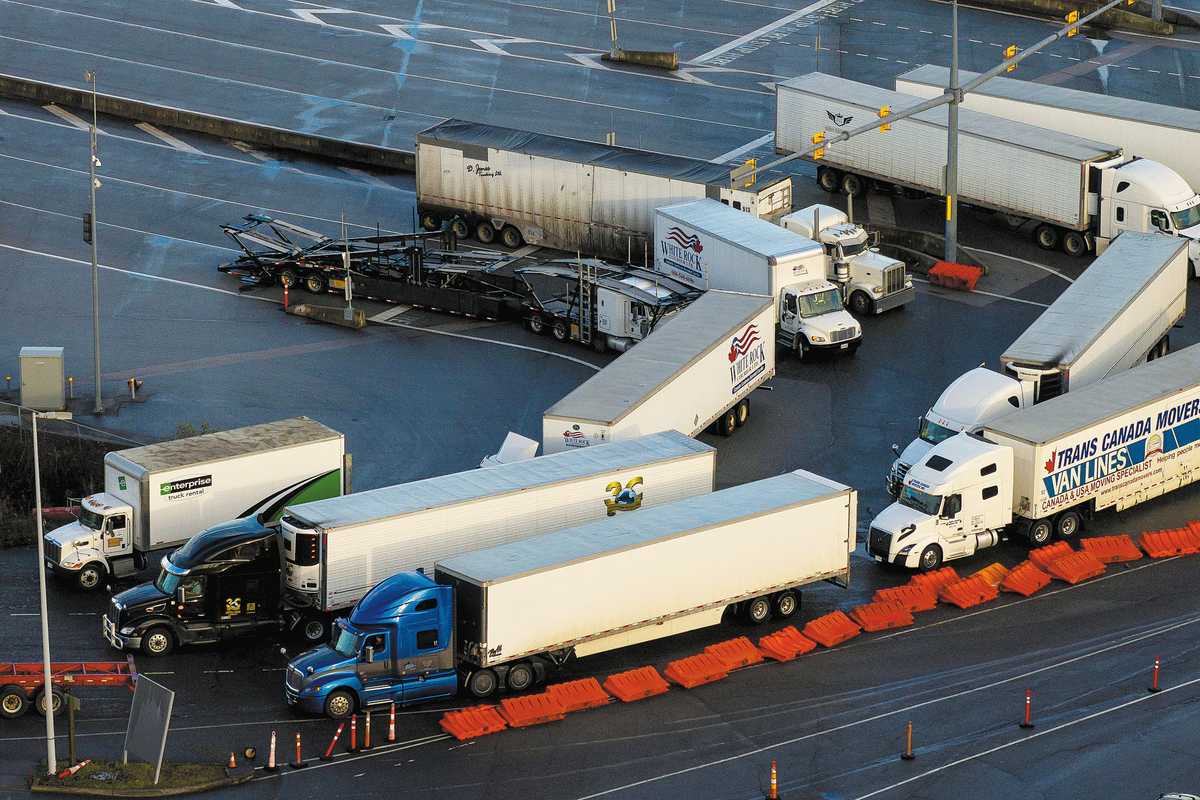
While potential US tariffs on Canada and Mexico have received much attention, experts warn that the South American nations of Brazil and Argentina also could be affected.
"The US, Brazil's second-largest trading partner after China, plays a crucial role in Brazil's export market, particularly in medium- and high-tech goods," Jose Luis Oreiro, an associate professor of the Department of Economics of the University of Brasilia, told China Daily.
"These tariffs, if they are really implemented, will be a mortal blow to the recent surge of manufacturing industry in Brazil after almost 15 years of stagnation (in) manufacturing output," Oreiro said.
According to Oreiro, the manufacturing output has been crucial to the economic boom in Brazil.
However, he mentioned that increasing tariffs will hinder that, leading to higher unemployment and income inequality.
"Manufacturing jobs offer higher wages, which is critical for reducing inequality," Oreiro said. "If these jobs vanish, workers will be pushed into lower-paying service sector roles.
"In 2022, 62.4 percent of entrepreneurial R&D investments in Brazil were tied to manufacturing. Without robust exports, these investments will shrink, dragging down the technological competitiveness of the sector," he said.
Oreiro also pointed to risks in Brazil's monetary policy. A decline in exports could lead to currency depreciation, triggering inflation and forcing the central bank to raise interest rates, potentially to as high as 20 percent annually.
"This would increase government deficits and hurt long-term investment," he said.
Despite the challenges, Oreiro sees opportunities for Brazil to strengthen trade ties with other partners, such as the European Union and Asian countries. He cited the recent Mercosur-EU free trade agreement finalized on Dec 6 as a promising step forward.
'Simplistic view'
Referring to US President-elect Donald Trump's remarks defending tariffs, Welber Barral, former foreign trade secretary in Brazil's Ministry of Development, Industry, Trade and Service, told China Daily, "This is a simplistic view of international trade."
Trump has argued that tariffs would make the US "rich" while accusing countries like Brazil of unfair trade practices.
"For one, Brazil doesn't even set national tariffs; we follow the Mercosur's common (external) tariff," said Barral, who has served as an arbitrator at the Permanent Review Tribunal of Mercosur and in the dispute settlement system of the World Trade Organization.
"While average tariffs may seem high, most US imports, such as electronics and equipment, face much lower rates," he said.
"On the other hand, the US imposes high tariffs on our competitive products like orange juice, steel and aluminum," he added.
"Unilateral tariffs have historically had negative consequences, prompting retaliation and global economic downturns," Barral said.
He said the impact of potential US tariffs on Brazil might be sector-specific. While crude oil, Brazil's top export to the United States, is unlikely to face new tariffs, industries like metals could bear the brunt.
"Steel, aluminum, and copper are critical to the US industry but remain vulnerable to tariff hikes," he noted.
Barral criticized what he called the US' protectionist policies, arguing their unpredictability harms not just global trade but also US interests.
"Unexpected and unpredictable economic measures deter international investments. The Trump administration's threats could complicate bilateral investments and reduce US investment in Brazil," he said.
He also expressed doubts over the feasibility of a broader bilateral trade agreement between Brazil and the US.
"I don't foresee any large trade agreement due to the US protectionism in the agricultural sector," Barral said, highlighting a longstanding obstacle in the relationship.
"Since 2008, the US has not been Brazil's most significant trading partner; that title belongs to China, followed by the European Union. The EU-Mercosur trade agreement could further boost Brazilian exports to Europe," he said.
Barral also mentioned the ongoing Mercosur negotiations with European Free Trade Association countries, Canada, and the United Arab Emirates as evidence of diversification.
"Brazil must focus on reducing trade barriers, improving logistics and facilitating financing for smaller exporters," Barral noted. Such measures, he said, require long-term political coordination in Brazil's complex and diverse economic landscape.
"Latin America is a peaceful region with a young, growing population and expanding consumer markets. It has plentiful natural resources and a stable political climate compared to other parts of the world," he said.
Those characteristics provide the region with a unique opportunity to strengthen the region's global trade presence, he said.
Argentina, South America's second-largest economy, has its own set of challenges under the shadow of US tariff policy. The country's fragile economic recovery, led by President Javier Milei's reforms, from years of stagnation and hyperinflation leaves it particularly vulnerable to external shocks.
"If tariffs like 10 percent on most countries, including Argentina, or even 25 percent on Canada and Mexico, are implemented, the global economy will face slower growth and higher prices," Luciano Campos, a professor at the University of Buenos Aires and a senior economist for Numera Analytics' Macro Research practice, told China Daily.
"High taxes, rigid labor markets and outdated price controls have further weakened its competitiveness," Campos said. "The stabilization plan has lowered inflation significantly and brought some economic growth," Campos said, but added that Argentina's economy remains vulnerable.
"Tariffs would hurt Argentina, particularly in sectors like oil, minerals and commodities such as aluminum and gold, which are key exports to the US," Campos said.
More concerning, Campos suggested, are the indirect effects.
"If the US imposes tariffs on China and other major economies, the resulting global slowdown would affect the demand for Argentine goods," he said.
"Free trade lowers costs by allowing countries to specialize. Disrupting that creates inefficiencies, driving up prices for everyone," he said.
Emerging markets like Argentina could be particularly vulnerable, as higher global inflation may worsen debt servicing and fiscal stability.
"For Argentina, the bigger concern is maintaining domestic economic stability," Campos said.
Campos suggested that Argentina could mitigate potential trade shocks by diversifying its economic partnerships.