Bearer of hope to patients in Xinjiang
Significant progress made in academic exchanges and talent cultivation lights up doctors' confidence









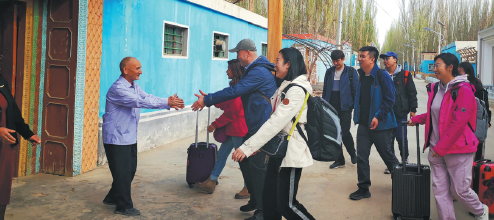
Since its establishment in 1985, the Internal Medicine Professional Committee of the Xinjiang Medical Association has been dedicated to fostering academic exchanges within the field of internal medicine.
Through a series of well-organized conferences and seminars, the committee has provided a vital platform for experts, scholars and doctors in Northwest China's Xinjiang Uygur autonomous region to share ideas, disseminate new knowledge and promote the adoption of cutting-edge technologies.
Distinctive activities
In December, for example, the committee hosted a cardiology conference in Urumqi, the capital of Xinjiang, which brought together a diverse group of distinguished international and domestic professionals.
This conference, conducted both online and offline, featured advanced academic presentations, clinical experience sharing and practical skills training tailored to grassroots physicians.
In addition to the cardiology conference, the committee has recently organized events such as a seminar on advanced internal medicine diagnosis and treatment technology and a forum focused on chronic disease management in grassroots hospitals.
These initiatives have facilitated the integration of innovative technologies, such as artificial intelligence-assisted diagnostic tools, to enhance the diagnostic accuracy in complex cases in Xinjiang.
"The true effect of academic conferences transcends mere learning; it ultimately benefits a greater number of patients," said Ma Xiang, the committee's chairman and director of the cardiology center at the First Affiliated Hospital of Xinjiang Medical University.
International cooperation
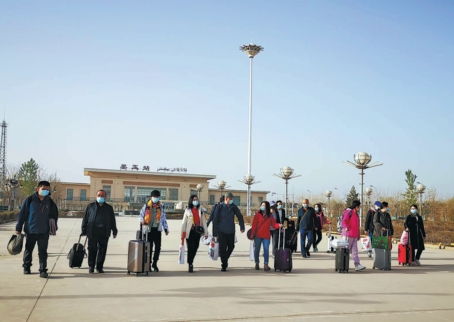
Furthermore, the committee engages in international exchanges by sending outstanding doctors to prominent global medical events such as the World Congress of Cardiology.
By showcasing research outcomes and discussing treatment methods with international peers, the community not only enhances its global visibility but brings back advanced concepts and technologies in cardiovascular disease diagnosis and treatment for local implementation.
Moreover, it has established a robust expert exchange mechanism with medical institutions in other parts of China and Central Asian countries, fostering mutual learning and collaboration. Through leveraging modern communication technologies, the committee facilitates remote medical collaborations with institutions beyond Xinjiang, exemplified by successful partnerships such as the one between academician Zhong Nanshan's team in Guangzhou and the First People's Hospital of Kashgar.
By inviting foreign experts for lectures and surgical demonstrations in Xinjiang and sending local doctors to other countries to learn advanced treatment techniques, the committee is advancing the internationalization of internal medicine diagnosis and treatment within the region.
Such collaborations enhance research capabilities and strengthen disease prevention and control efforts in Xinjiang.
The committee is also engaged in international research cooperation projects, collaborating with research institutions in Europe, Asia and other regions to conduct epidemiological surveys and research on the prevention and treatment of chronic diseases, notably cardiovascular diseases and diabetes.
By sharing research data and resources, these collaborations have significantly bolstered the research and disease prevention capabilities of hospitals in Xinjiang.
"International cooperation not only introduces advanced technologies but creates a shared language in medicine, forging stronger connections between the autonomous region and the global medical community," Ma noted.
Looking ahead, the committee plans to establish long-term and stable cooperative relationships with more internationally renowned medical institutions to carry out joint research projects.
It also aims to host more internationally influential academic conferences and thematic seminars, inviting top experts and scholars worldwide to explore cutting-edge issues.
Essential support
To support young and mid-career doctors and researchers, the committee plans to establish a special fund facilitating their study at esteemed medical institutions and research centers abroad and participation in international clinical practice and research projects.
This fund is also expected to attract foreign talents to Xinjiang for academic exchanges, short-term lectures, clinical teaching and other activities.
Through external exchanges and cooperation, the committee aspires to shine on the international stage, establishing advantages and wielding significant international influence in specific disease research domains, Ma added.
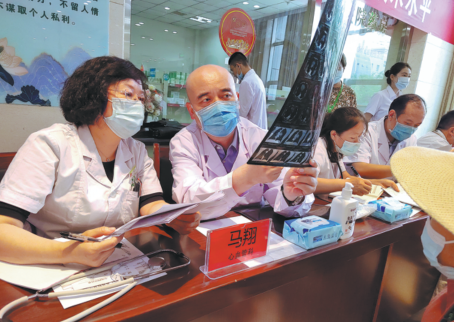
In terms of benefiting the people, the committee provides tangible health benefits to local residents by organizing large-scale free clinics, offering technical assistance to grassroots hospitals and implementing health management projects.
Expert teams deliver free medical services, including on-site physical examinations such as blood pressure measurements and electrocardiograms, in communities or remote areas of Xinjiang. For residents with chronic diseases, experts devise personalized treatment plans based on examination outcomes, along with free medications and health guidance.
Furthermore, the committee conducts health knowledge lectures in local community centers and schools. For instance, during a diabetes prevention and control lecture, endocrinology experts explain the onset mechanism, symptoms, risks and daily preventive measures of diabetes in easily understandable terms.
They also participate in screening programs for chronic and infectious diseases, establishing resident health records to facilitate early detection, diagnosis, treatment and standardized management of diseases.
"The true value of benefiting the people in healthcare lies not in the scale of activities, but in the hope and peace of mind that each patient receives," Ma said.
In the future, the committee will further advance intelligent healthcare by integrating AI and big data to establish a more precise diagnostic system, enabling patients to receive treatment more quickly and more accurately.
Additionally, it will continue to strengthen the primary healthcare system and promote remote medical collaboration, ensuring residents in remote areas have access to high-quality medical resources and expertise from both within and beyond the autonomous region.
Broadened horizons
Conducting research on the high incidence of cardiovascular diseases among different ethnic groups holds special significance in Xinjiang, Ma said.
Ma was born in Xinjiang and has been interested in medicine since childhood, especially after witnessing many people around him suffering from cardiovascular diseases.
He completed his undergraduate, master's and doctoral studies at Xinjiang Medical University. After studying under renowned professor Ma Yitong, he gained a solid foundation in treating cardiovascular diseases. He later went on two overseas study programs, which gave him first-hand experience of cutting-edge medical technologies and international concepts.
In 2005, as a key member of the team from Xinjiang Medical University visiting Harvard Medical School in the United States on an academic exchange, Ma underwent a 4.5-month training program at the world renowned medical school.
"My time there, at the age of 30, broadened my horizons, allowing me to interact with advanced hospitals and experts globally at that time. It was my study at HMS that paved the way for my broader understanding and development in my professional field. In 2007, a related research project was awarded as an excellent doctoral thesis in the autonomous region."
Xinjiang's vast territory, with significant distances between various counties and cities, faces a scarcity of medical resources and a dispersed patient population. The incidence of various cardiovascular diseases continues to rise without a turning point or a noticeable downward trend, Ma said.
This is partly due to inadequate early prevention and education efforts. With limited medical personnel unable to reach every household, this presents the greatest challenge in future preventive work, Ma said.
There are still many areas in Xinjiang's medical system that need improvement, such as enhancing the capacity of primary healthcare and talent cultivation. The future of medicine should not only treat diseases, but also advance prevention and health management. Therefore, improving basic medical facilities and enhancing primary healthcare conditions in Xinjiang are key goals, Ma said.
On Dec 25, 2016, the Xinjiang Chest Pain Center Alliance was officially established with the aim of integrating medical resources within the region and assisting in improving the level of medical treatment in Xinjiang's remote areas. Through the training of professional personnel, comprehensive treatment capabilities are enhanced to ensure that patients with acute chest pain receive timely and standardized treatment services.
As of now, the Xinjiang Chest Pain Center Alliance has grown from three to 128 member units. This is a multiethnic team rooted in Xinjiang. In this region, peoples of various ethnic groups are united like the seeds of a pomegranate, Ma said.
"In Xinjiang's vast and fertile land, doctors are not just healers but also bearers of hope. With the improvement of medical services in Xinjiang, the residents there are enjoying better services, thanks to the support and leadership of the government," Ma said.



- China achieves breakthrough in extracting lithium from salt lakes
- Shenzhen logs milestone in green shipping progress
- China's icy regions attract Southeast Asian tourists
- Century-old TCM pharmacy pivots to become fashionable wellness brand
- Agri sector reaps fruit of tech advances
- Central government appoints new foreign ministry commissioner in Macao SAR