



Shopping gala develops new paradigm









JIN DING/CHINA DAILY
After the inclusion of Spring Festival on the UNESCO's Intangible Cultural Heritage List, the 2025 National Online New Year Shopping Festival seems poised to become a landmark in e-commerce. The ongoing shopping festival is a testament to the dynamic evolution of the digital economy in China.
Since its modest start in 2015 as a promotional event, the National Online New Year Shopping Festival set a new record for online retail sales in 2024 — more than 1.2 trillion yuan ($163.7 billion) — highlighting the growing demand for Chinese New Year goods. From a seasonal sales event, the shopping festival has transformed into a platform, redefining the very essence of consumer experience in the digital age.
The rise of online shopping is no accident. It has been shaped by the constructive efforts of multiple sectors guided by the Ministry of Commerce and other key government departments. This year's national online shopping festival runs from Jan 7 to Feb 5. On Jan 8, the National Development and Reform Commission and the Ministry of Finance issued a notice, saying subsidies will be granted for smart devices and home appliances with the aim of encouraging spending. The result is a dramatic reshaping of the e-commerce landscape, one that is as much about embracing innovation as it is about promoting tradition.
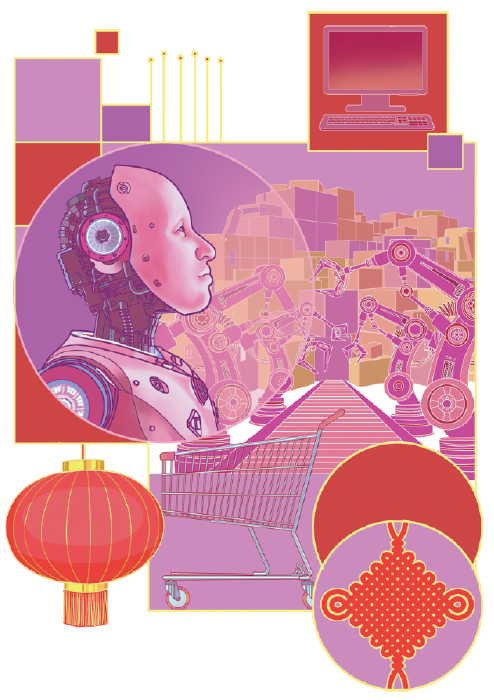
At the heart of this transformation lies artificial intelligence. E-commerce platforms are using AI to decode hidden consumer desires — digging deeper into shopping histories of consumers, analyzing their preferences and giving hyper-targeted product recommendations. AI-backed customization is transforming people's shopping experience and making online shopping more convenient.
Take Xiaohongshu, also known as RedNote, for example. By leveraging AI to understand users' individual needs, the platform has pioneered the "lifestyle e-commerce" model, increasing the number of merchants by 5.4 times and sales by tens of millions of yuan during the 2024 "Double 11" shopping gala. This strategy has allowed Red-Note to carve a niche in an increasingly saturated market while increasing consumer loyalty and satisfaction.
Similarly, Taobao's "AI Treasure Hunt" event drew an increasing number of users by offering a fun way to discover hidden discounts and New Year's goods tailored to their preferences.
E-commerce platforms are also using generative AI to create marketing visuals, short videos and even intelligent customer service systems that improve the overall user experience. For example, DFGOU developed an "AI Intelligent Customer Service" system that responds to consumer inquiries, boosting service efficiency and satisfaction. Through these innovations, the 2025 New Year Shopping Festival offers a glimpse into the future when technology would optimize consumers' journey and help businesses stay competitive in a fast-changing market.
While AI has been playing a key role in transforming shopping experiences, it's the integration of instant retail and online platforms that truly redefines how consumers engage with local culture. Different regions in China have their own specialties: Peking duck, Tianjin mahua (fried dough twists), and Sichuan spicy sausages to name a few. By offering them for sale on e-commerce platforms, retailers are not only meeting consumers' demand for unique, high-quality products but also making higher profits.
By partnering with community and convenience stores, the platforms are ensuring the fast delivery of regional goodies. JD's "Send New Year's Goods to My Hometown" initiative, for example, has expanded delivery services in rural and remote areas during the festival, ensuring everyone enjoys the shopping experience and JD makes higher profits. Meituan's Flash Sale is another example of how platforms can tap into their expertise to source regional specialties and offer quick deliveries.
The 2025 National Online New Year Shopping Festival isn't just an event; it's a celebration of local pride and a demonstration of how technology can bring people closer to their cultural roots. Perhaps the most exciting development in this year's festival is the integration of intangible cultural heritage into the shopping experience.
Besides, e-commerce platforms are playing a critical role in keeping traditional crafts and customs alive by promoting ICH (Intangible Cultural Heritage) products as part of the Chinese New Year's celebration. This isn't just about preserving heritage; it's also about reimagining it for a new generation of consumers.
Using big data, some platforms are analyzing younger shoppers' preferences and blending modern design with traditional ICH techniques to create products that feel both new and familiar. For example, Taobao's "Intangible Heritage Channel" showcases a wide range of heritage products, while JD's "Craftsmen Channel" features traditional handicrafts like Beijing's cloisonné. And Pinduoduo's "Duoduo New Craftsmanship" initiative supports traditional artisans.
Governments at different levels are also playing a role in the cultural revival. In Xi'an, for example, local authorities are using livestreaming and immersive technology to introduce consumers to ICH products, blending online and offline elements to create a stronger connection with tradition.
By embracing new technologies while honoring traditional cultural values, the 2025 National Online New Year Shopping Festival is charting a course for the future of e-commerce, a future where cultural heritage is not only preserved but also celebrated, where consumers are empowered and technology brings us closer to the very essence of what it means to be Chinese.
Wang Dujuan is a professor at the Business School, Sichuan University; and Yin Yunqiang is a professor at the School of Management and Economics, University of Electronic Science and Technology of China.
The views don't necessarily reflect those of China Daily.
If you have a specific expertise, or would like to share your thought about our stories, then send us your writings at opinion@chinadaily.com.cn, and comment@chinadaily.com.cn.





