Monitoring of blood glucose revolutionized









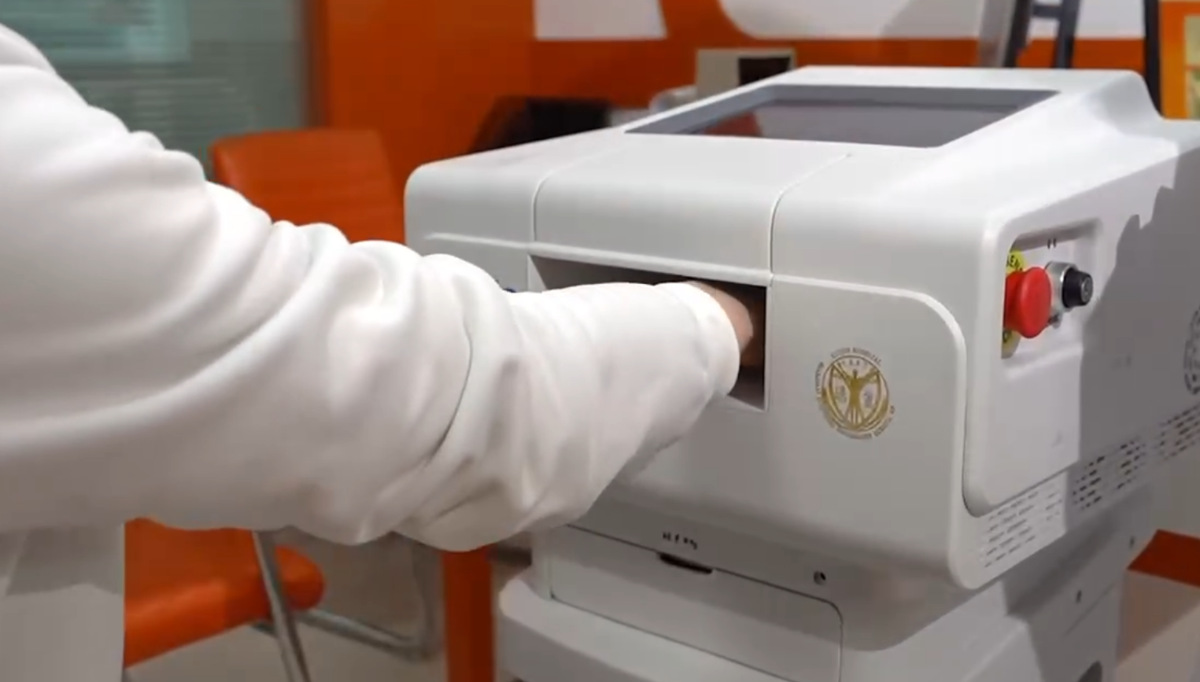
Researchers have devised a revolutionary, noninvasive method to monitor blood glucose, allowing for accurate measurements of blood glucose level by simply placing a palm on a monitoring device, Ruijin Hospital in Shanghai said on Wednesday.
Medical experts said that such an innovative monitoring method, which eliminates the need for painful finger pricks or blood draws associated with traditional glucose monitoring methods, may significantly enhance patients' compliance with regular blood glucose monitoring and improve their quality of life.
Diabetes is a serious public health problem, affecting more than 500 million people around the world. The prevalence of diabetes among adults in China is as high as 12 percent, according to national data from last year.
Effective and regular blood glucose monitoring is the foundation of diabetes management, and the commonly used blood glucose monitoring methods require invasive actions involving the skin, which may cause problems, such as pain and infection, and pose challenges for patients' compliance with long-term monitoring.
Noninvasive blood glucose detection technology has been at the frontier of research in recent decades, but it has faced challenges in accuracy and versatility.
In the new research, a team used optical coherence tomography technology to determine the distribution range of human epidermal thickness, enabling the targeted development of the noninvasive blood glucose monitoring technique based on what is known as multiple μ-spatially offset Raman spectroscopy (mμSORS).
The technology enables simultaneous detection of subcutaneous tissues at different depths while effectively reducing background signal interference from the epidermis, or outermost layer of skin, and thus enhances glucose monitoring accuracy, according to the researchers.
"In the first phase of the study, we determined that the optimal detection depth of noninvasive blood glucose monitoring comes from or below the dermal-epidermal junction, where there are rich capillaries and interstitial fluid carrying information about blood glucose," said Wang Weiqing, a leading researcher on the team.
"Also, we confirmed that (the new method) can effectively collect human blood glucose-related Raman spectral signals in a completely noninvasive manner. And an analytical algorithm showed that the spectra of the extracted main factors are found to be highly consistent with the Raman spectra of glucose," said Wang, who is a professor at the National Clinical Research Center for Metabolic Diseases at Ruijin Hospital Affiliated with Shanghai Jiao Tong University School of Medicine.
In the second phase of the research, the team validated the accuracy and universality of the technology through clinical studies involving 200 patients with diabetes and 30 healthy individuals. Their study confirmed that the average absolute error between the noninvasive blood glucose readings and venous blood glucose readings was 14.6 percent, with 99.4 percent of the noninvasive readings falling within the acceptable range regarding clinical error.
"Another advantage is that the technology doesn't require calibration for different individuals, and is suitable for diverse populations across various age groups, skin colors and body shapes, laying the foundation for future large-scale applications," Wang said.
A paper about the study, which was a joint effort by researchers from the National Clinical Research Center for Metabolic Diseases at Ruijin Hospital, the Medical Chip Research Institute of Ruijin Hospital, and PhoVie, a Shanghai-based enterprise that focuses on combining integrated circuit chip technology and biotechnology, was published on Wednesday on the website of online-only journal Nature Metabolism.
zhouwenting@chinadaily.com.cn






- China moves to set national standards for pre-made dishes
- Chinese company unveils plans for commercial space flights
- Latest addition to Shiziyang Bridge constructions brings main tower above 300 meters
- Hebei's 'ancient pressure cooker' setting internet ablaze
- Major urban renovation restores Xi'an's ancient moat
- China launches nationwide employment assistance program