Nation boldly builds on scientific breakthroughs
From lunar samples to AI, advancements came thick and fast in 2024










One such example has been China's lunar missions to the far side of the moon.
The research findings based on lunar soil samples brought back by the nation's Chang'e 6 mission have been featured in international news and academic journals in the past months.
The Chang'e 6 mission's achievement of bringing back the world's first soil samples from the far side of the moon was recognized as one of the top 10 scientific events of 2024 by specialist newspaper and media outlet Science and Technology Daily.
Previously, the global scientific community's understanding of the far side of the moon was primarily based on remote sensing studies.
On June 25, the Chang'e 6 lunar probe brought nearly 2 kilograms of lunar samples to the Earth for the first time in human history. These samples were collected from the South Pole-Aitken Basin, the largest, deepest and oldest basin on the moon.
These samples provide important evidence to clarify the differences in material composition between the near side and far side of the moon and to unravel the mystery of the moon's dichotomy.
Professor Li Qiuli from the Institute of Geology and Geophysics at the Chinese Academy of Sciences underpinned this importance.
"Unraveling the volcanic history of the lunar far side is crucial for understanding the hemispheric dichotomy of the moon," he said.
In November, Chinese scientists published two independent research studies in the international academic journals Nature and Science, utilizing far side lunar samples returned by the Chang'e 6 mission.
These studies revealed magma activity on the lunar surface around 4.2 billion years ago, lasting for at least 1.4 billion years, further enriching the scientific understanding of the moon's evolution.
Reviewers of the study published in Nature described it as "incredibly exciting".
Since 2021, Chinese scientists have also used lunar soil samples returned by the Chang'e 5 mission to demonstrate that significant magma activity still existed on the near side of the moon 2 billion years ago, and minor volcanic activity persisted as recently as 120 million years ago.
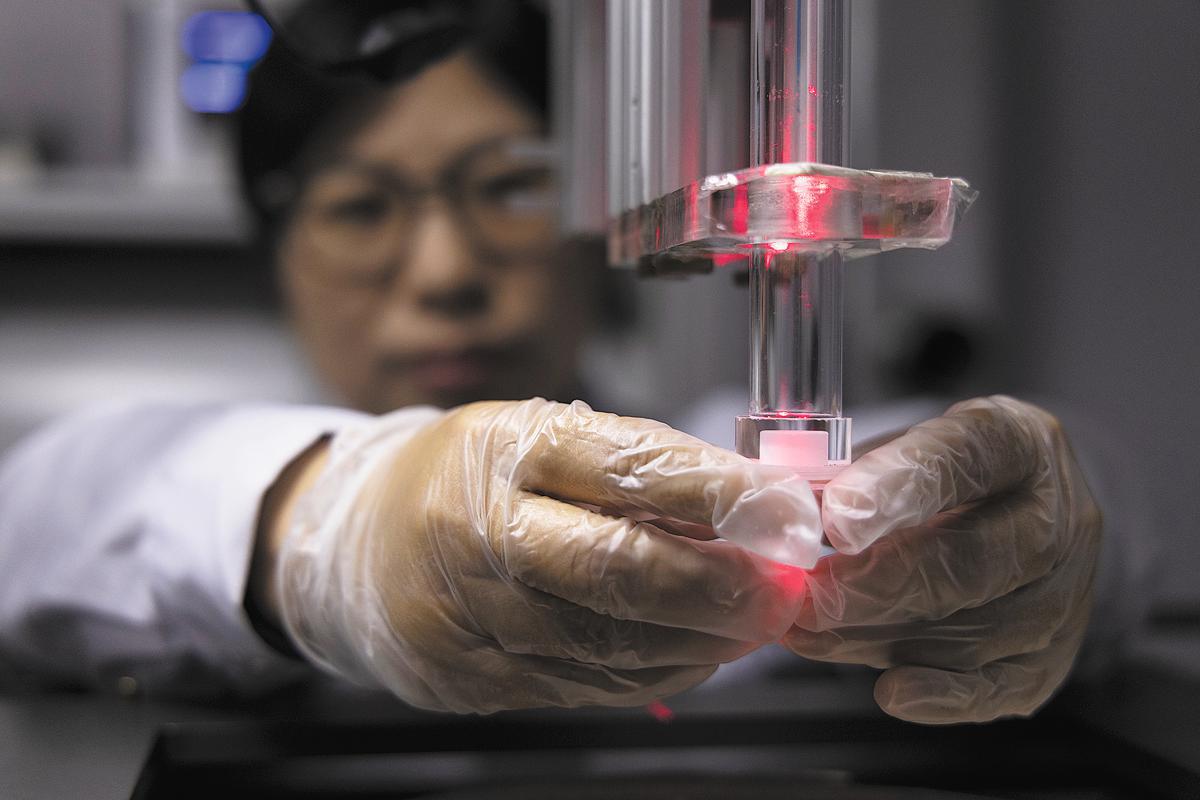
In July, another groundbreaking discovery attracted global attention when Chinese scientists found molecular water in lunar soil samples returned by Chang'e 5.
"On the lunar surface, due to high temperatures and the vacuum, liquid water cannot exist, so what has been discovered this time is crystalline water. This means that water molecules have combined with other ions to form crystals," said Jin Shifeng, an associate researcher at the Institute of Physics at the CAS.
Crystalline water is more common on Earth in forms such as common copper sulfate pentahydrate, which contains crystalline water. However, the discovery of crystalline water on the moon is a first.
"This is a real water molecule. When slightly heated under vacuum conditions on the moon, it is estimated that water vapor can be released at around 70 C," Jin said. "Of course, if it were on Earth, with the presence of air, it would likely need to be heated to 100 C."
Previously, signs of molecular water had been discovered through remote sensing technology, as well as "water" in geology, which refers to anything that contains hydroxide ions, but this is different from water as it is known in daily life.
The presence of water on the moon is crucial for lunar evolution studies and resource development.
The absence of water-bearing minerals in the lunar soil samples brought back from the Apollo missions led to the basic assumption in lunar science that the moon was devoid of water, Jin said.