African Union summit amplifies collective call of emerging Global South









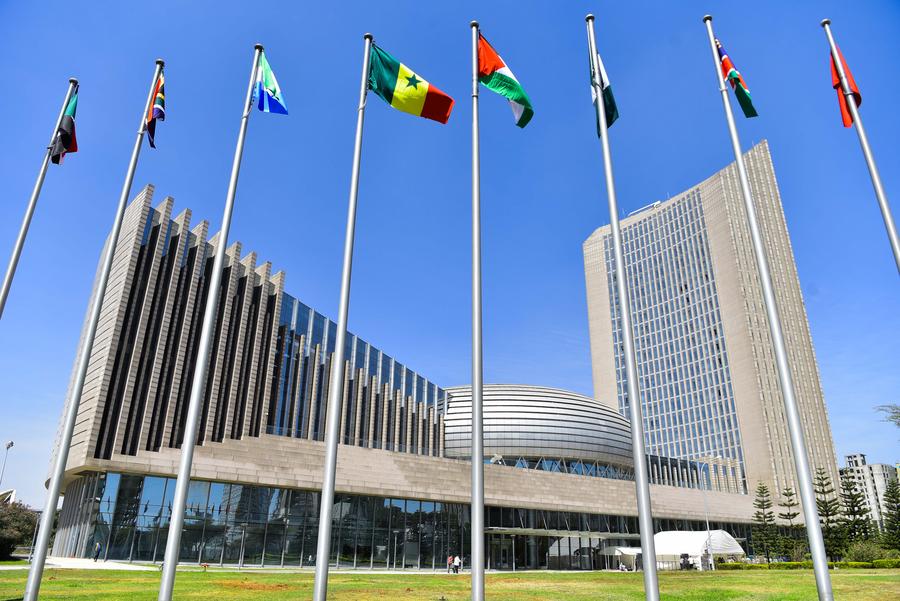
ADDIS ABABA - Leaders of African countries gathered here from Wednesday to Sunday for their annual summit, focusing on the continent's pursuit of self-reliance, efforts to rectify historical injustices, and solid progress toward the modernization goals set in Agenda 2063.
With the Global South emerging as a powerful force reshaping the world order, the 38th African Union (AU) Summit, held under the theme of "Justice for Africans and People of African Descent Through Reparations", has amplified the group's collective call for justice and equality within the international governance system.
Modernization is an inalienable right of all nations. Yet the West pursued its own modernization at the expense of many developing countries. Colonialism, the transatlantic slave trade, apartheid, and systemic racial discrimination brutally afflicted the African continent, with the once-thriving land reduced to mere suppliers of raw materials and dumping grounds for Western goods.
United Nations Secretary-General Antonio Guterres told African heads of state and government during the summit that the continent was under colonial domination when today's multilateral system was created, and that injustice endures.
However, following the end of World War II, the Third World, including the African countries, gained independence and embarked on a development process, continuously redressing historical injustices throughout their modernization process.
In May 1963, 32 heads of independent African States gathered in Addis Ababa, Ethiopia, inking the Charter of the Organization of African Unity (OAU) to establish Africa's first post-independence continental institution, also the predecessor of the AU.
The OAU adopted a series of key resolutions against imperialism, colonialism, and hegemonism. It played an active role in defending national sovereignty, developing national economies, supporting the independence and liberation of African colonies, strengthening unity and solidarity among African nations, and maintaining global peace.
Today, a new wave of awakening is sweeping across the African continent, with calls for reparations growing ever louder.
African leaders have urged former colonial powers to formally recognize historical injustices inflicted on their peoples, provide financial compensation to affected regions, restitute land and cultural artifacts, and amend inequitable policies.
During the summit, Executive Secretary of the United Nations Economic Commission for Africa (UNECA) Claver Gatete stressed that Africa has faced entrenched structural barriers that keep countries on the continent in a cycle of economic dependency.
"The transatlantic slave trade and colonial exploitation robbed Africa of its people, resources, and dignity, and left behind inequalities that persist in global financial systems, trade structures, and governance institutions till this day," Gatete told the session attended by African foreign ministers.
He called for a reform of the global financial architecture, debt restructuring, establishing an African-led credit rating agency, promoting the African Continental Free Trade Area, and prioritizing value addition within the continent.
In an interview with Xinhua, Costantinos Bt. Costantinos, a former advisor to the AU and the UNECA, said the AU's focus on reparatory justice is "bold and commendable," reflecting the unity of African nations on the international stage.
On the path to self-reliance and development, the AU has also turned its focus inward, facilitating progress by activating the continent's own vitality.
During the summit, African leaders participated in discussions over visa openness, the African Continental Free Trade Zone (AfCFTA), and the establishment of the Africa Credit Rating Agency.
African leaders have long envisioned a future where trade is no longer hindered by geographical borders. For example, an Ivorian can effortlessly order Mozambique-designed clothing online with a single click, and South African-made cars are more affordable than European imports. The establishment of the AfCFTA marks a pivotal step in transforming this vision into reality.
To date, 47 out of 55 AU member states have ratified the AfCFTA agreement. The tariff-free trade between African nations is expanding, with the free flow of goods becoming more tangible and impactful.
The World Bank estimated that the trade pact would lift 30 million people out of extreme poverty by 2035, boost regional income by 450 billion US dollars, and increase intra-continental exports by 81 percent.
"The African Continental Free Trade Area has the potential to increase employment opportunities and incomes, helping to expand opportunities for all Africans," said Albert Zeufack, the World Bank's chief economist for Africa.
According to Gatete, Africa holds 30 percent of the world's mineral reserves, including 40 percent of its gold and up to 90 percent of its chromium and platinum. However, the continent just accounts for less than 3 percent of international trade and only 1 percent of the world's manufacturing output.
"Africa's resources must benefit Africans first, rather than being exported in raw form and re-imported at higher costs. True reparative justice means that Africa's resources must work for Africa," he stressed.
Injustice also extends to Africa's credit ratings, which are dominated by external agencies that often apply biased and subjective assessments to African economies. Gatete noted that Botswana and Mauritius are the only two African countries with investment-grade ratings, while others are labeled with high risks despite their sound performance.
As Africa advances toward greater economic integration and resilience, the need for a regional credit rating agency has been put on the table. On Friday, the AU summit held a presidential dialogue on the creation of the Africa Credit Rating Agency.
Participants emphasized the move as a critical step in strengthening the continent's financial sovereignty and securing its position in global financial governance.