Science education needs more than 'double reduction'









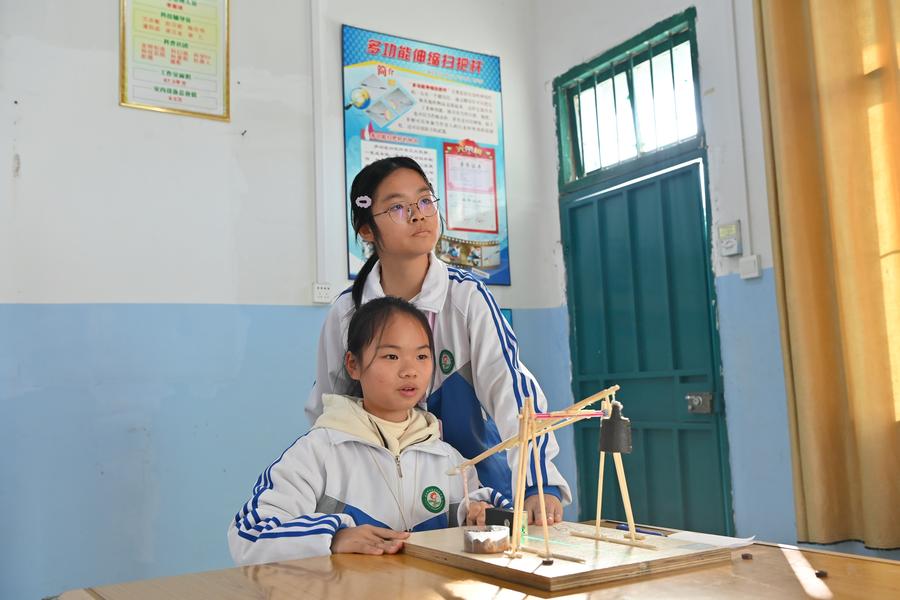
China has implemented the "double reduction" policy to reduce the burden of homework and off-campus classes of students, and spark their curiosity in science, boost their imagination, and raise their desire to explore and innovate.
But the policy alone cannot encourage children to develop an interest in science. To better cultivate scientific talents, it is important to break the education inertia. High thresholds for technological innovation, insufficient science education resources, and the overemphasis on test scores, along with other problems, have reduced the effectiveness of the "double reduction" policy.
So schools should consider organizing special lectures by scientists to help parents understand the importance of scientific and technological innovation, and encourage students to participate in science-related activities and reduce their fear of science subjects. Science exhibitions and practical activities that showcase the achievements of students, and create an atmosphere that values science can also spark youths' passion for science. Promoting technological innovation among the youth is the responsibility of not only the education department but society as a whole.
What's more, the education authorities should take measures to ensure children get more time and space for science education. At present, curriculums focus more on studying science theories than on hands-on experience, and many schools, especially rural schools, have inadequate resources for experiments, which is obstructing the development of science education.
Establishing more science clubs and forming interest groups can create more opportunities for children to gain practical experience in scientific activities, while schools should allocate more funds for science education and acquire sufficient science equipment to popularize subjects like aerospace and space studies.
Besides, giving talented students access to university and company labs can help form more science education groups, and encourage cross-school and mixed-age research teams to engage in more science-related activities under the guidance of university professors and corporate engineers who are involved in research projects. And by establishing virtual experiment platforms that simulate real lab scenes, which allow access to students interested in science, the authorities can address the space and funding problems.
China needs to cultivate more efficient teachers to improve science education. Interdisciplinary studies in China are still in their early exploratory stages, and since written tests require students to acquire mostly theoretical knowledge, and teachers focus on delivering lectures and teaching from textbooks, youngsters' opportunities and motivation to take part in scientific activities are further reduced.
To change such practices in order to promote science education, schools should arrange for teachers to get high-quality professional training, and create more opportunities for them to conduct research and take part in other scientific practices. There is also a need to encourage university professors, scientists and engineers from leading enterprises to conduct special classes for elementary and secondary school students in order to develop in them the love for science.
Moreover, educators should improve the evaluation system for students, by introducing a diversified evaluation system to accurately assess the depth of knowledge, hands-on ability and innovation acumen in potential scientists. And schools should use "innovation files" to record students' participation in scientific projects to identify young scientific talents.
New channels should be created to put patented inventions of school students, if any, to use in industry, and rewards for young innovators should be instituted to stimulate students' interest in innovation.
Making science subjects comprehensible for all and encouraging students to enhance their scientific knowledge and try their hand at practical applications are the new trend in science education. For instance, Anqing Normal University is offering science teaching major with a well-designed curriculum. The university has also introduced entrepreneurship courses for students, and established cross-school, interdisciplinary and cross-major mechanisms to cultivate scientific talents, provide platforms to test the potential of projects, and develop an education system that encompasses "teaching, projects, academic competitions and internship".
Scientific talents will emerge if institutions build "incubators of possibilities" and consider failures in experiments as "unsuccessful explorations", because the cycle of confusion, breakthroughs and creation is bound to produce scientific talents.
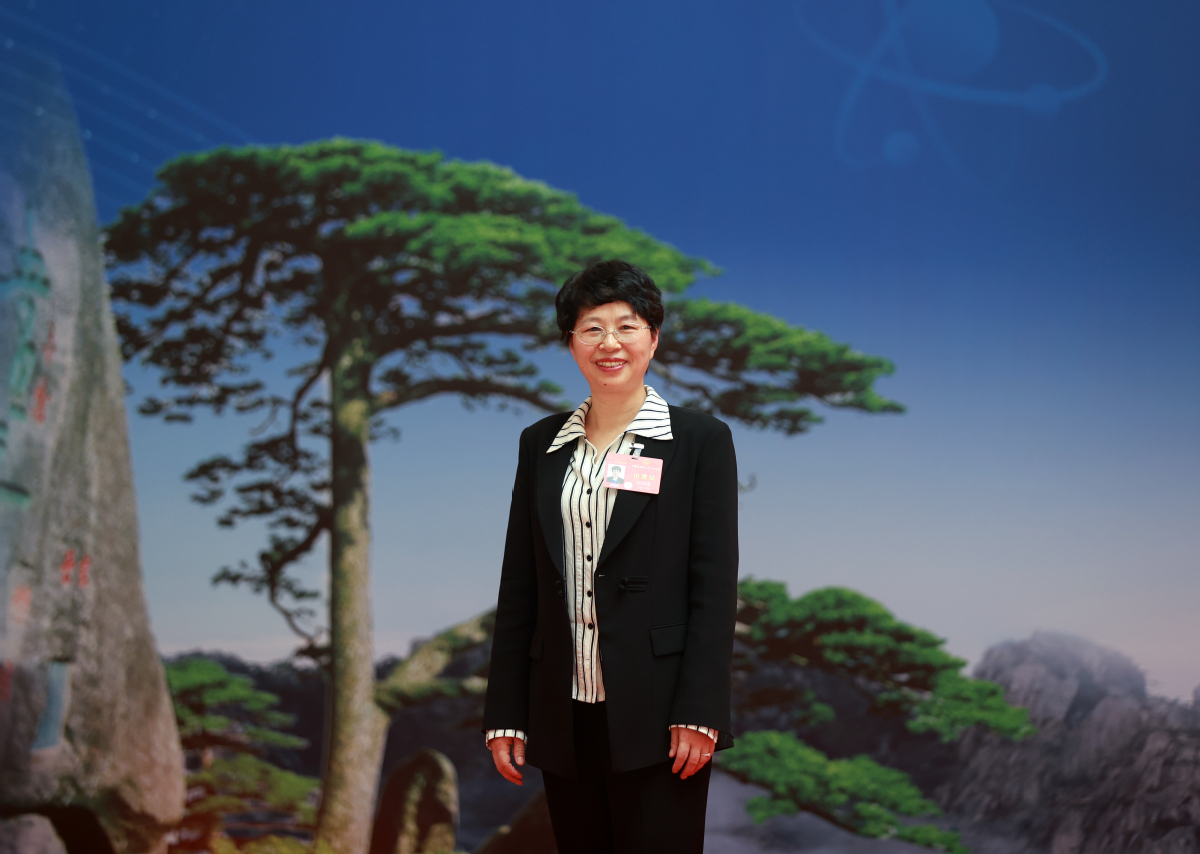
The author is principal of Anqing Normal University in Anhui province, and a deputy to the 14th National People's Congress.
The views don't necessarily reflect those of China Daily.