How China helps Africa redefine its place on the world stage









In the context of Immanuel Wallerstein's world-systems theory — which claims that rich core capitalist societies succeed by exploiting poorer peripheral ones — Africa has long occupied the periphery of the global economic system. For centuries, the continent was consigned to a position of dependency, serving as a source of raw materials for industrialized nations while importing finished goods at inflated prices. This economic structure reinforced cycles of poverty, underdevelopment and reliance on foreign aid.
However, in recent decades, Africa's relationship with the global system has begun to shift, and China has been a key catalyst in this transformation. Through a unique approach to partnership, China is enabling Africa to break free from traditional economic hierarchies, moving the continent closer to the core of the global economy.
China's economic rise and its focus on global engagement have created a blueprint for Africa's development aspirations. Over the last two decades, China has emerged as Africa's largest trading partner, with bilateral trade exceeding $282 billion in 2023. Investments from China span critical sectors, including infrastructure, manufacturing and technology. These investments are not merely transactional; they represent a deliberate strategy to address structural impediments to Africa's development.
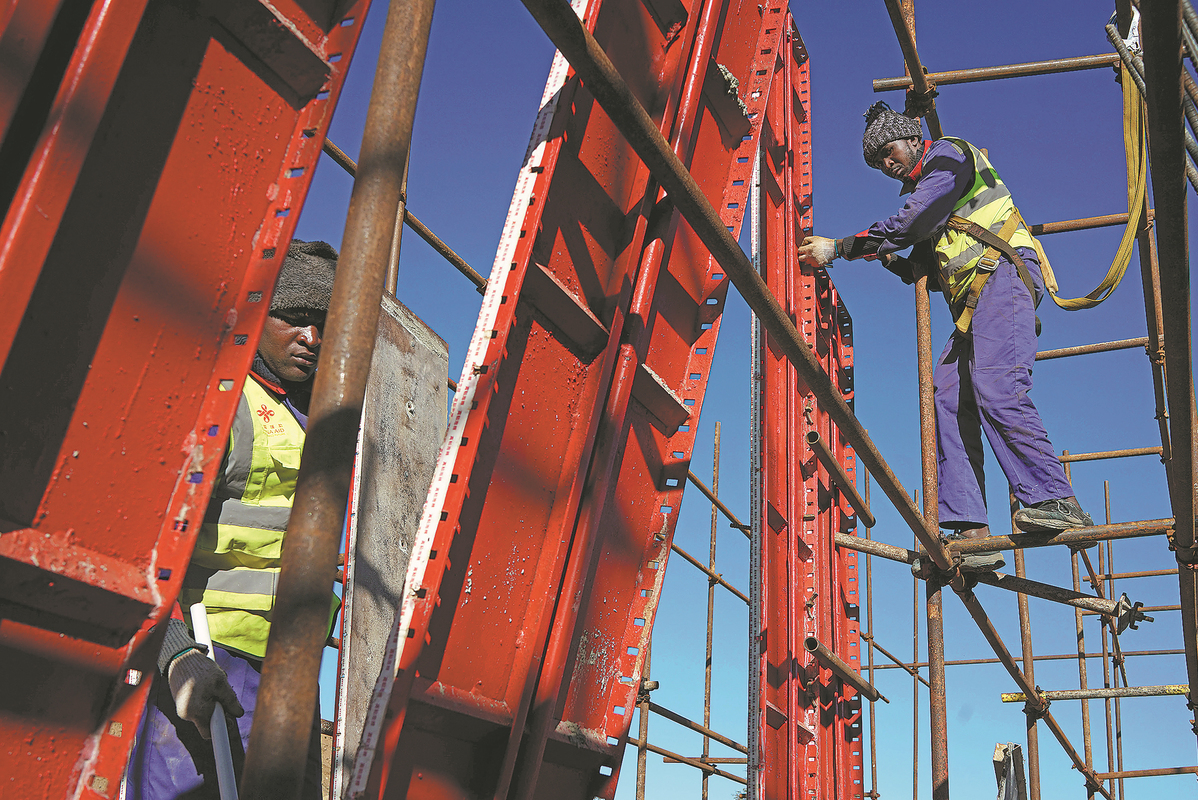
One of the most transformative aspects of China's involvement in Africa is its focus on infrastructure development. According to the African Development Bank, the continent's infrastructure financing gap is estimated at $68 billion to $108 billion annually. By stepping into this space, China is addressing one of the most significant barriers to Africa's economic progress. The construction of industrial parks, special economic zones and energy plants demonstrates China's commitment to fostering long-term industrialization.
Ethiopia's Hawassa Industrial Park, developed with Chinese support, has become a hub for textile and apparel manufacturing, creating tens of thousands of jobs and boosting the country's export capacity. Similar projects across Africa signal a shift from dependency on raw material exports to the development of value-added industries.
Historically, Africa's reliance on Western aid and markets has stifled its ability to pursue self-determined growth. Structural adjustment programs imposed by institutions such as the International Monetary Fund and the World Bank often prioritized fiscal austerity over developmental needs, leaving African economies vulnerable to external shocks. In contrast, China's engagement is characterized by a policy of noninterference and mutual benefit. Loans and investments from China are often free of the political conditions that have traditionally accompanied Western assistance, allowing African governments to chart their own development agendas.
Trade between Africa and China has also evolved significantly. While Africa's exports to the West have historically been dominated by raw materials such as oil, minerals and agricultural products, China has expanded its imports to include a broader range of goods. This diversification incentivizes local value addition and industrialization, enabling African countries to climb the global value chain.
For example, China's increasing demand for processed agricultural products from Africa has spurred the development of agro-processing industries in countries such as Ghana and Kenya. By fostering these industries, China is helping Africa reduce its dependency on volatile commodity markets and to build more resilient economies.
China's role in Africa is not limited to trade and infrastructure. It has also become a key partner in technology transfer and capacity building. Through scholarships, training programs and technical assistance, China is equipping African professionals with the skills needed to manage and sustain development projects.
The establishment of technology hubs and digital infrastructure by Chinese companies, such as Huawei and ZTE, is bridging Africa's digital divide and positioning the continent as a player in the global technology ecosystem. According to the International Telecommunication Union, Africa's internet penetration is projected to reach 50 percent by 2030, up from 22 percent in 2020, with much of this growth attributed to Chinese investment in digital infrastructure.
Critics of China's involvement in Africa often raise concerns about debt sustainability and potential neocolonialism. However, the broader picture reveals a more nuanced reality. Chinese loans are typically used to finance revenue-generating projects, such as toll roads and power plants, that can repay themselves over time.
Moreover, China has demonstrated flexibility in renegotiating loan terms with African countries facing repayment challenges, contrasting with the often rigid approach of Western creditors. For instance, in 2020, China suspended debt repayments for several African countries under the G20's Debt Service Suspension Initiative, providing much-needed fiscal relief during the devastating COVID-19 pandemic.
The strategic alignment between Africa and China extends to geopolitical cooperation. China's support for Africa's representation in global institutions, such as the United Nations Security Council, reflects a commitment to amplifying Africa's voice on the international stage. Initiatives like the BRICS, and China's backing of the African Continental Free Trade Area underscore a shared vision for a multipolar world where Africa plays a central role. The AfCFTA, the largest free trade area in the world by number of countries, has the potential to boost intra-African trade by 52 percent by 2025, according to the United Nations Economic Commission for Africa. China's investment in the infrastructure needed to support this trade is a testament to its long-term commitment to Africa's integration into the global economy.
Future projections suggest that the China-Africa partnership will continue to deepen. The World Bank estimates that Africa's population will double to 2.5 billion by 2050, making it a critical market for global economic growth. China's engagement with Africa is likely to evolve to meet the continent's changing needs, with a growing focus on green energy, climate adaptation and sustainable development. Investments in renewable energy projects, such as solar and wind farms, are already underway, reflecting a shift toward environmentally conscious development. These initiatives align with Africa's own aspirations to transition to a low-carbon economy and to mitigate the impacts of climate change.
The transformative potential of the China-Africa partnership is perhaps best illustrated by its impact on perceptions about Africa's future. For decades, the continent was seen as a land of perpetual crisis, characterized by poverty, conflict and dependency. Today, Africa is increasingly viewed as a continent of opportunity, with China playing a pivotal role in reshaping this narrative.
As Africa continues to engage with China, the prospect of moving from the periphery to the core of the global economic system becomes increasingly tangible. This transformation is not merely a theoretical possibility but a present reality, evidenced by the infrastructure, industries, and institutions that are emerging across the continent. China's approach, which emphasizes mutual respect and shared prosperity, offers a compelling alternative to the exploitative relationships that have historically defined Africa's interactions with the world.
The story of China and Africa is ultimately one of hope and transformation. It is a testament to what can be achieved when nations prioritize collaboration over exploitation, and when development is driven by a shared vision of mutual benefit. Africa's ascent, anchored by its collaboration with China, is no longer a distant dream but a dynamic reality that promises to reshape the world for generations to come.
The author is the executive director of South-South Dialogues, a Nairobi-based communications development think tank.