



US getting into deep water with exorbitant port fees proposal: China Daily editorial









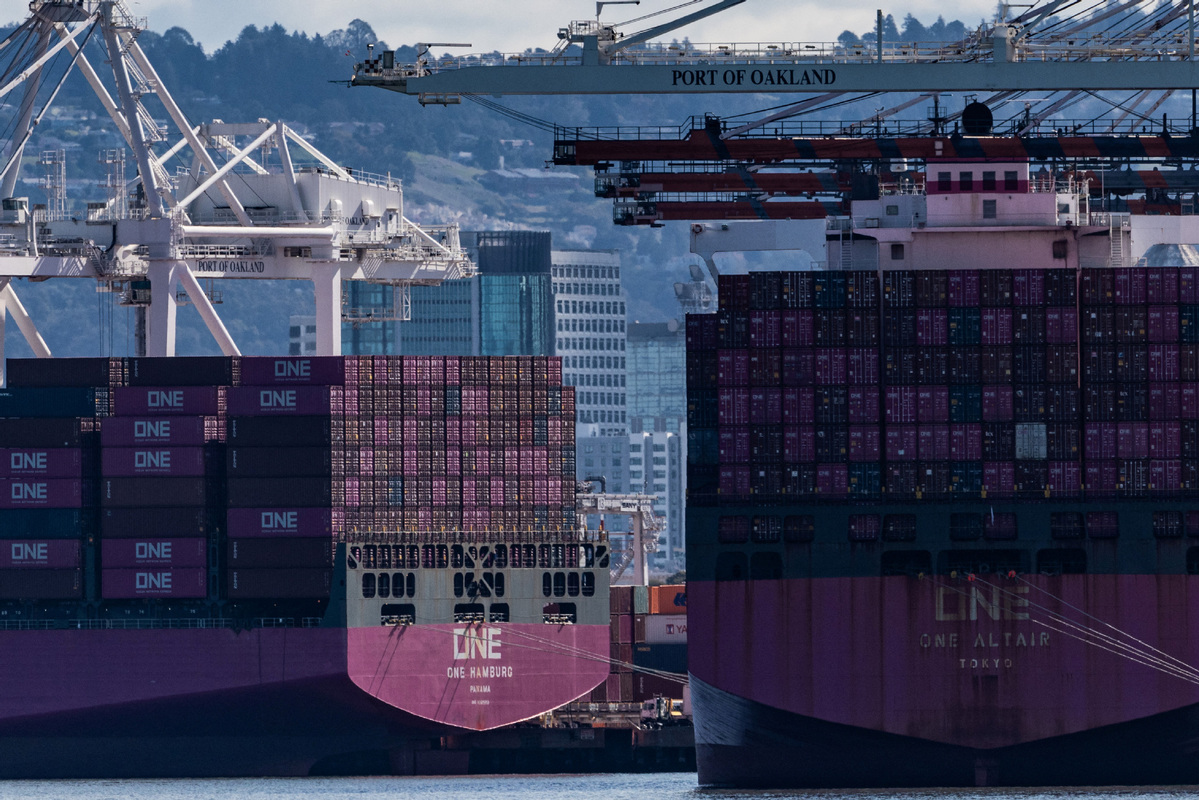
The United States Trade Representative's recent proposal to levy punitive charges on Chinese-built and -operated vessels entering US ports is yet another example of Washington's protectionist and politically motivated tactics aimed at constraining China's development. This move, justified under the guise of addressing so-called "unfair practices", is not only baseless but also harmful to global trade, US businesses, and the already strained relations between the two countries.
The USTR's proposal, which includes exorbitant port entry fees of up to $1 million per vessel owned by Chinese maritime operators and even higher fees for non-Chinese operators using Chinese-built ships, is being justified on the conclusions of a Section 301 investigation initiated in March 2024. This investigation, prompted by a petition from five US labor unions, alleges that China's dominance in the global shipbuilding, maritime and logistics sectors is the result of unfair subsidies, intellectual property theft, and other nonmarket practices. However, these accusations are unfounded and reflect a deliberate attempt to scapegoat China for the long-standing decline of the US' maritime industries.
The truth is that the US shipbuilding industry has been struggling for decades, long before China emerged as a major player in the global market. By the 1970s, the US had already lost its dominant position to competitors such as Japan and the Republic of Korea due to its high costs and low efficiency. Instead of addressing these internal challenges, the US has chosen to blame China for its own failures. This is not only preposterous but also counterproductive.
If the US is serious about reviving its shipbuilding industry, it should focus on reducing costs, improving efficiency, and fostering innovation — not resorting to protectionist measures that distort market competition.
But the US move is not just about protecting domestic industries; it is part of a broader strategy to contain China's rise and maintain the US' primacy in critical sectors. By targeting Chinese maritime and logistics industries, the US aims to safeguard its own trade and defense interests while undermining those of China and constraining China's legitimate economic development. This approach is driven by the bipartisan anti-China sentiment in Congress, which prioritizes geopolitical rivalry over constructive dialogue and cooperation.
It would be remiss not to mention that the US accusations of unfair subsidies and state support are also hypocritical. While criticizing China's industrial policies, the US is simultaneously seeking to bolster its own industries through tax credits, grants and other incentives. This double standard only serves to highlight the true nature of Washington's complaints: it is not about fairness but about maintaining the US' economic and strategic dominance.
The proposed charges, if implemented, will have far-reaching consequences. Industry experts have warned that such measures could lead to logistical disruptions, harm US businesses, and damage the broader economy. As a Florida-based ship broker pointed out, there is no evidence that China is deliberately targeting the US maritime sector. Instead, China, along with other shipbuilding nations such as the ROK, Japan, and Turkiye, has simply been meeting the global demand for maritime transportation. Punishing Chinese-built vessel operators would disproportionately affect smaller and medium-sized logistics enterprises, particularly those trading with regions such as the Caribbean, Latin America, and Africa, ultimately harming US economic interests.
China firmly denies the US allegations and points to the success of its maritime industries as being the result of economies of scale, legitimate policies, and market-driven growth. The US investigation and its proposed punitive charges are unjustified, politically driven, and inconsistent with international trade rules. They undermine the principles of free trade and multilateralism, both of which the US claims to uphold.
Rather than resorting to protectionism and economic coercion, the US should engage in constructive dialogue with China to address their trade issues. Its autocratic trade practices will not revive the US' shipbuilding industry but will instead harm global trade, damage US businesses, and further destabilize US-China relations, which are already strained due to disputes over trade, technology and geopolitics.
The US should abandon its all-harming protectionist agenda and work with China to foster a fair and rules-based international trading system that yields the shared dividends of global economic stability and growth.





