Promising outlook for private enterprises
Government policies, economic conditions, market opportunities, technological advancements all point to significant potential for growth of nonpublic sector









Manufacturing innovation
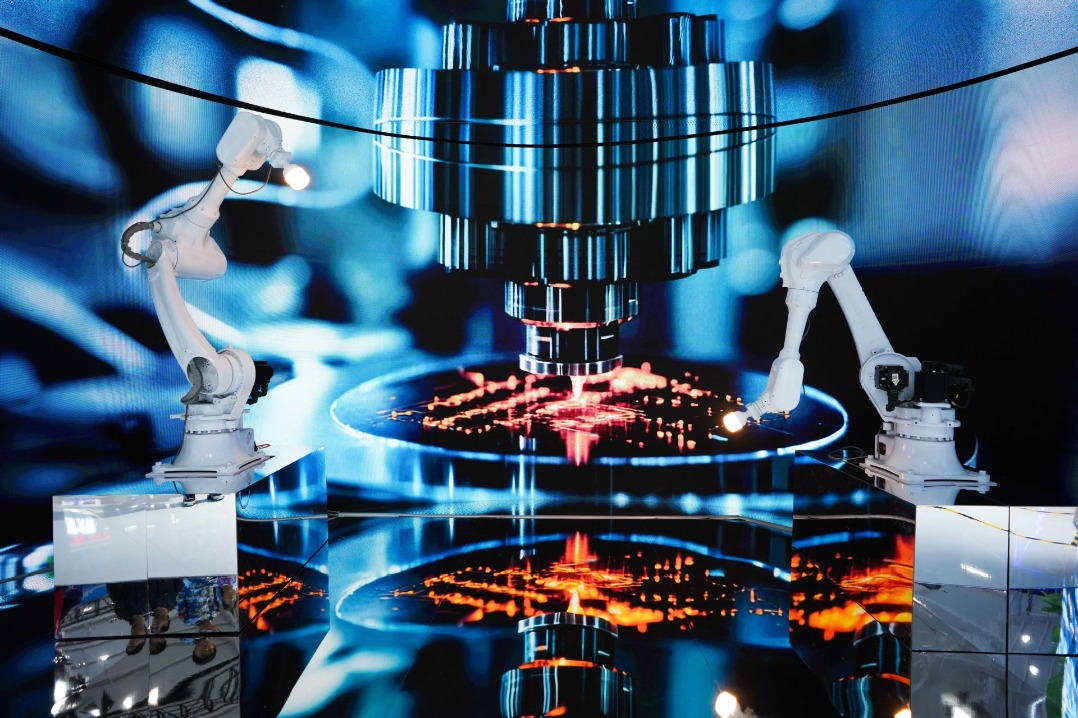
In 2012, Peng first encountered 3D printing technology abroad and realized that this would be a revolutionary breakthrough for the casting industry. However, the integration of traditional casting with 3D printing posed exceptionally high difficulties, and internal opposition was relentless.
"There were voices that (said) once we fail, we'll lose everything."
Peng defied the odds, investing 2 billion yuan in R&D and embarking on a multiyear challenge.
During the R&D process, there were several years of investment exceeding profits, he said.
"We invested over 2 billion yuan, unsure if it would succeed, and at one point, I was very anxious," he said.
Looking back now, Peng's decision at the time proved undoubtedly right.
In recent years, there have been heated discussions of the hyper competition in the manufacturing industry.
Many manufacturing companies have competed for market share through low-quality and homogeneous products, manifesting as price wars and surplus outdated capacity, without improving efficiency or technological progress, leading to an overall decline in industry profits.
On the reasons for the hyper-competition, Zhu Keli, executive director of the China Information Industry Association, highlighted several key factors: Constrained market capacity compels certain companies to engage in "price wars", a significant level of product homogenization, and a proliferation of low-level redundant construction of products.
At the policy level, a clear governance direction is evident.
The Central Economic Work Conference in December explicitly called for systemic regulation of cutthroat competition. Building upon this move, the 2025 Government Work Report underscored the removal of market barriers, advocating for strategic actions like eliminating entry and exit obstacles, enhancing factor allocation mechanisms, and establishing a unified national market.
In this context, intelligent manufacturing and differentiated competition offer a path forward for enterprises.
Peng cited Charles Handy's Second Curve theory to tell the transformation and upgrade story of his company.
The theory emphasizes that organizations must cultivate new growth drivers before their existing businesses reach maturity, and companies should consistently explore and pursue innovative revenue sources.
He said innovation and the adoption of new technologies are crucial for the traditional manufacturing sector to transition to value-added, future-oriented strategies.
Talking about the pressure that a company may face by investing heavily on innovation and not knowing if it works out, Peng said: "Innovation can be likened to embracing change, whereas stagnation is akin to inviting demise. Remaining stagnant inevitably leads to decline, while embracing change, though one may fail, offers a potential solution."
Peng and his team's striving for innovation has paid off.
Today, the company's 3D printing equipment has been among the top in global sales for five consecutive years, supplying a large group of the world's top 500 companies.
Its digital factory model has been promoted to areas such as the Yangtze River Delta region, with a fivefold increase in per capita efficiency and a 50 percent reduction in production cycles.
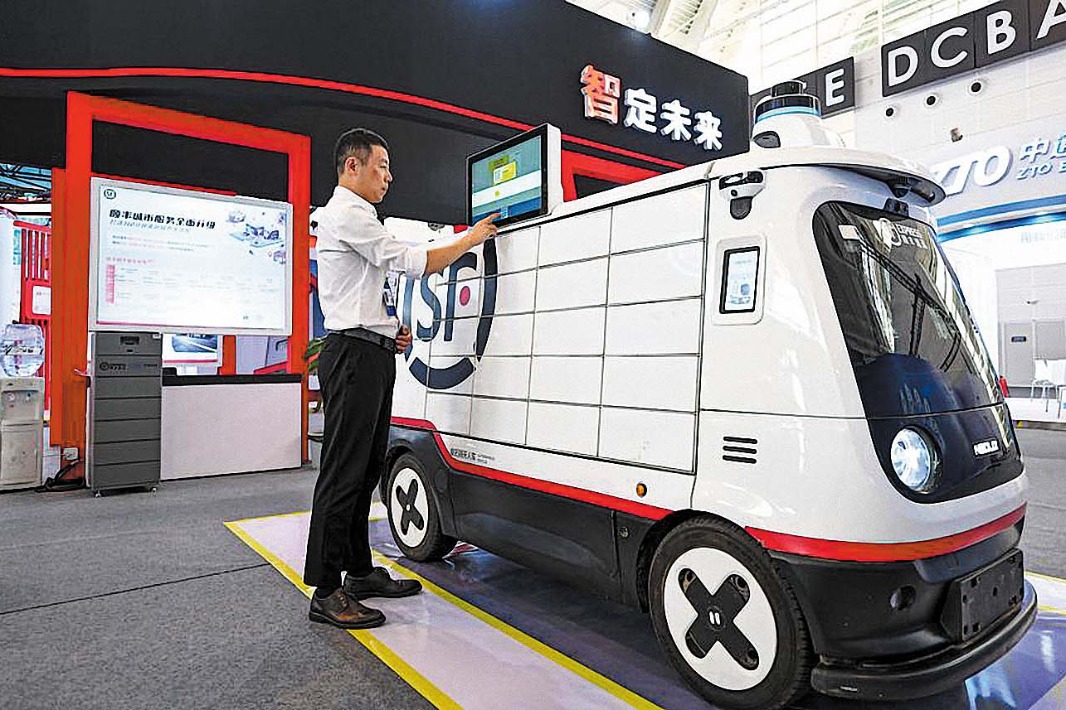
Peng said that at present, there are many AI models in industrial scenarios, such as those empowering production lines, factories, and management in manufacturing, which will trigger an intelligent transformation in production manufacturing.
"We have a plan for three to five years to develop AI models and scenarios and conduct small-scale verification and promotion in industrial scenarios. Our annual R&D investment accounts for more than 8 percent of sales revenue, investing about 100-200 million yuan," he said.
"Our goal is to achieve intelligence in high-end equipment manufacturing, 3D printing, and intelligent manufacturing services, further deepening AI empowerment and application. Later, we will conduct AI research development in different scenarios in the industrial field in the first three years, apply our technology in production, and promote the experience to other players in the industry," he added.
Peng said that the current environment, policies, economic situation, market space, and technological area have brought broad development prospects for enterprises.
"The government supports the development of the private economy, and the rest is to roll up our sleeves and work. In terms of innovation capability, adapting to the market, and development, private enterprises have unique advantages. In an era of technology as the driving force for the fourth industrial revolution transformation and development, private enterprises have broad prospects and great potential," he said.
The remarks echoed the primary objectives outlined in the Government Work Report, emphasizing the crucial need for the effective implementation of policies and measures to bolster the growth of the private sector, all the while safeguarding the lawful rights and interests of private enterprises and entrepreneurs.
Furthermore, the report advocated for capable private companies to cultivate a robust modern corporate framework infused with distinct Chinese characteristics, positioning this as a focal point in the government's agenda for 2025.
According to data released by the State Administration for Market Regulation, as of the end of January, the total number of private enterprises in China had surged to 56.7 million, marking a 4.2-fold increase compared to the number recorded in 2012.
Contact the writers at liuyukun@chinadaily.com.cn