



Tech fueling vast shift in auto industry
As cars transform into computers, entire sector must evolve to keep up, say experts









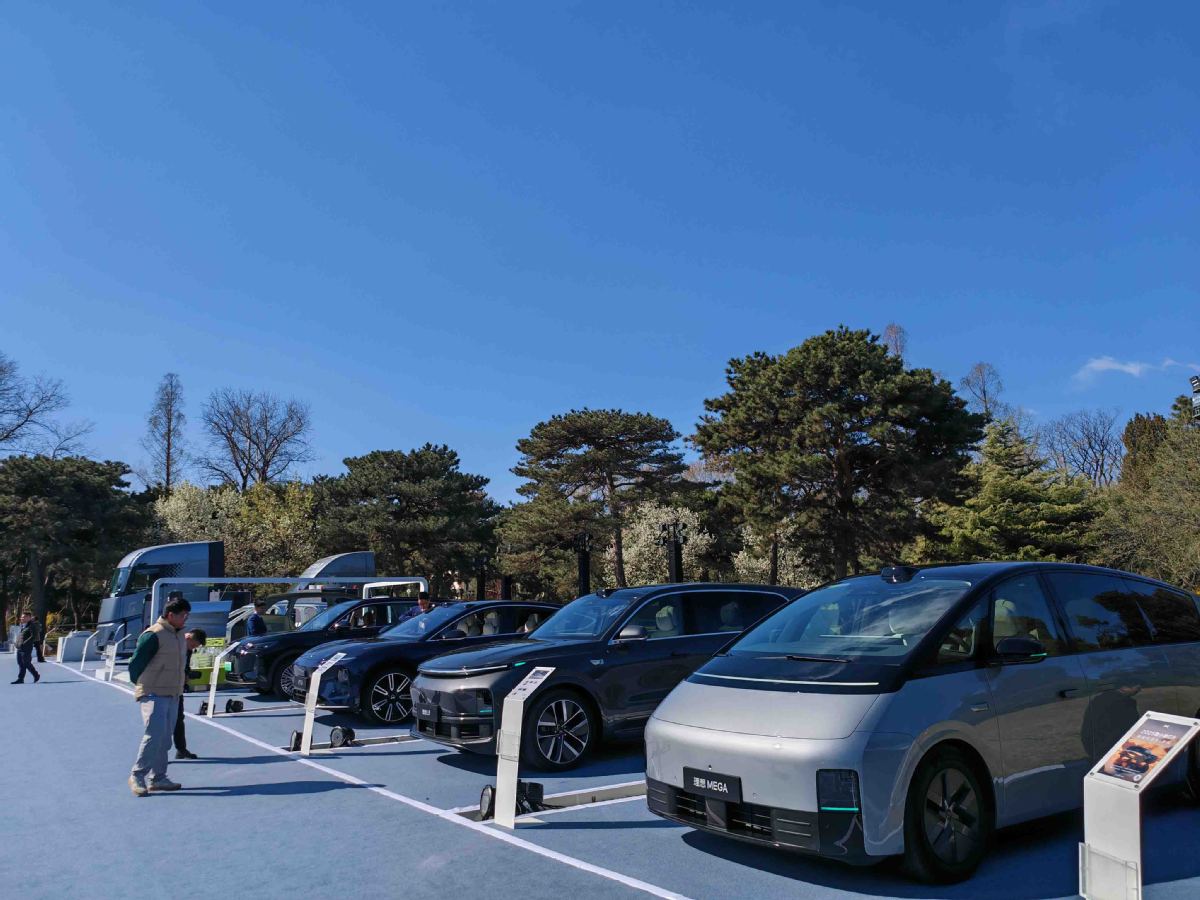
The Chinese automotive industry is experiencing a profound transformation fueled by electrification, intelligence and globalization, with cross-border integration and technological innovation serving as the key drivers of industry advancement.
Automobiles are evolving into a technology integrator and smart terminal, incorporating a range of artificial intelligence technologies, communication systems and semiconductor chips, said Zhang Yongwei, secretary-general of the industry's leading think tank, China EV100.
Speaking at the China EV100 Forum held in late March in Beijing, Zhang said that the integrated ecosystem formed by intelligent development extends beyond smart vehicles to low-altitude mobility and robotics.
Data from the Ministry of Industry and Information Technology show that in first half of 2024, new passenger vehicles equipped with Level 2 intelligent driving capabilities in China accounted for 55.7 percent of sales, a figure expected to approach 65 percent by 2025.
Chen Qingtai, president of the China EV100, said that China's vehicle intelligence has exceeded industry and public expectations. At this stage, cutting-edge AI technologies are accelerating the transformation of the NEV sector, reshaping vehicles in the process.
Industry experts at the forum emphasized that integration and collaborative innovation across industries are vital for automakers to meet computing demands.
Wu Hequan, an academician at the Chinese Academy of Engineering, said: "The computing power required for intelligent driving cannot be achieved by individual cities or automakers."
He suggested that China should adopt a unified national training model for autonomous driving, allowing cities to fine-tune it locally with regional data, ensuring standardization and adaptability.
Zhang Yaqin, an academician at the Chinese Academy of Engineering and dean of Tsinghua University's Institute for AI Industry Research, said that the emergence of large models, particularly generative AI, has propelled the advancement of autonomous driving.
He estimated that 10 percent of new vehicles would possess L4 capabilities by 2030. After the adoption of fully autonomous driving, mobility costs are expected to decrease by one-third to a half, while safety levels are anticipated to see a significant improvement, he added.
EV startup Xpeng plans to mass-produce flying cars in 2026. CEO He Xiaopeng expressed optimism about the market prospects for flying cars at the forum, forecasting that they will constitute 3-5 percent of the auto market size in the next 10-20 years, with sales revenue accounting for 20 percent of the total vehicle market.
He estimated that the flying car market could reach $2 trillion in the next 20 years.
China's vehicle production and sales exceeded 30 million units for the second consecutive year in 2024, maintaining its top position globally for 16 years. NEVs and exports remain key growth areas for the industry.
The production of NEVs exceeded 10 million for the first time, reaching 12.89 million units in 2024. It accounted for 65 percent of global total production, maintaining China's position as the world's top producer for the 10th consecutive year.
Xin Guobin, vice-minister of industry and information technology, noted that 24 Chinese automakers have been listed among the top 100 most valuable automobiles brands by UK valuation agency Brand Finance.
According to Brand Finance's report, BYD's brand value surged by 16 percent to $14 billion in 2024, fueled by robust global sales, cutting-edge technology and favorable market dynamics.
Wang Chuanfu, chairman of BYD, said at the forum that China's NEVs lead the world by three to five years in terms of technology and industry chain. He stressed the importance of leveraging complementary strengths, engaging in open collaboration, expanding overseas and maintaining domestic production to capitalize on this.
China's auto exports exceeded 5 million units for the first time in 2024, maintaining its position as the world's largest auto exporter.
Continuous investment in research and development is a key factor propelling Chinese automakers forward.
EV startup Nio has invested around 60 billion yuan ($8.25 billion) on R&D, including 13 billion yuan in 2024. CEO William Li said Nio has one of the highest R&D investment-to-revenue ratios in the auto industry globally.
Despite operational challenges, Nio remains committed to full-stack R&D, focusing on 12 areas related to intelligent EVs, including chips, operating systems, intelligent chassis and steer-by-wire technology, Li added.
Nio has also invested heavily in establishing a nationwide battery-swapping network, with 3,206 such stations by March 28. It has provided nearly 70 million battery swaps and more than 25 million charging services — with 80 percent going to other marques.
Xiaomi CEO Lei Jun said that the company has invested around 105 billion yuan on EVs in past five years and plans to exceed 30 billion in investments this year. He urged industry peers to collaborate, standardize and innovate for better solutions.
Xiaomi has partnered with several companies to share its ecosystem, with its components soon to be integrated into peers' vehicles.




















