



Self-driving cars speeding toward market
Chinese automakers plan to roll out new vehicles equipped with Level 3 autonomous driving capabilities this year









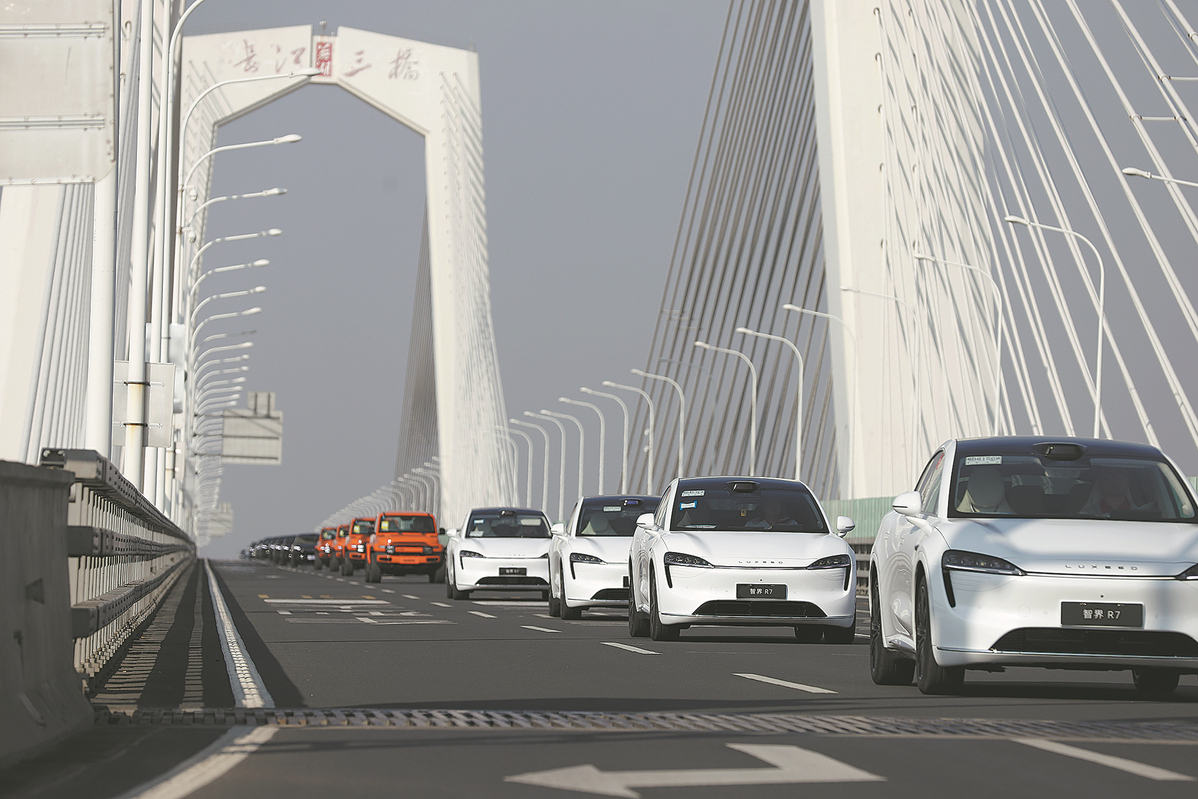
The large-scale commercial application of autonomous driving vehicles will likely become a reality sooner than expected, with cutting-edge intelligent driving technology having the potential to revolutionize future urban transportation due to its greater efficiency and declining costs, experts said.
They highlighted that 2025 marks a pivotal member for the commercialization of intelligent connected vehicles fueled by technological innovation and advancements in artificial intelligence, which has emerged as a critical strategic opportunity for the automotive industry.
Heightened efforts are needed to improve the laws and regulations to clarify liabilities about autonomous vehicles and speed up the construction of an intelligent transportation infrastructure, so as to bolster the deployment and popularization of self-driving vehicles and the robust growth of an intelligent driving sector, they added.
Global consultancy McKinsey & Company expects China will become the world's largest market for self-driving vehicles, with revenue from such vehicles and mobility services exceeding $500 billion by 2030.
The nation has been at the forefront of autonomous driving development and has introduced a series of policies to promote the commercial use of self-driving technology. The Ministry of Industry and Information Technology said, the country supports the commercial application of Level 3 and above autonomous driving systems.
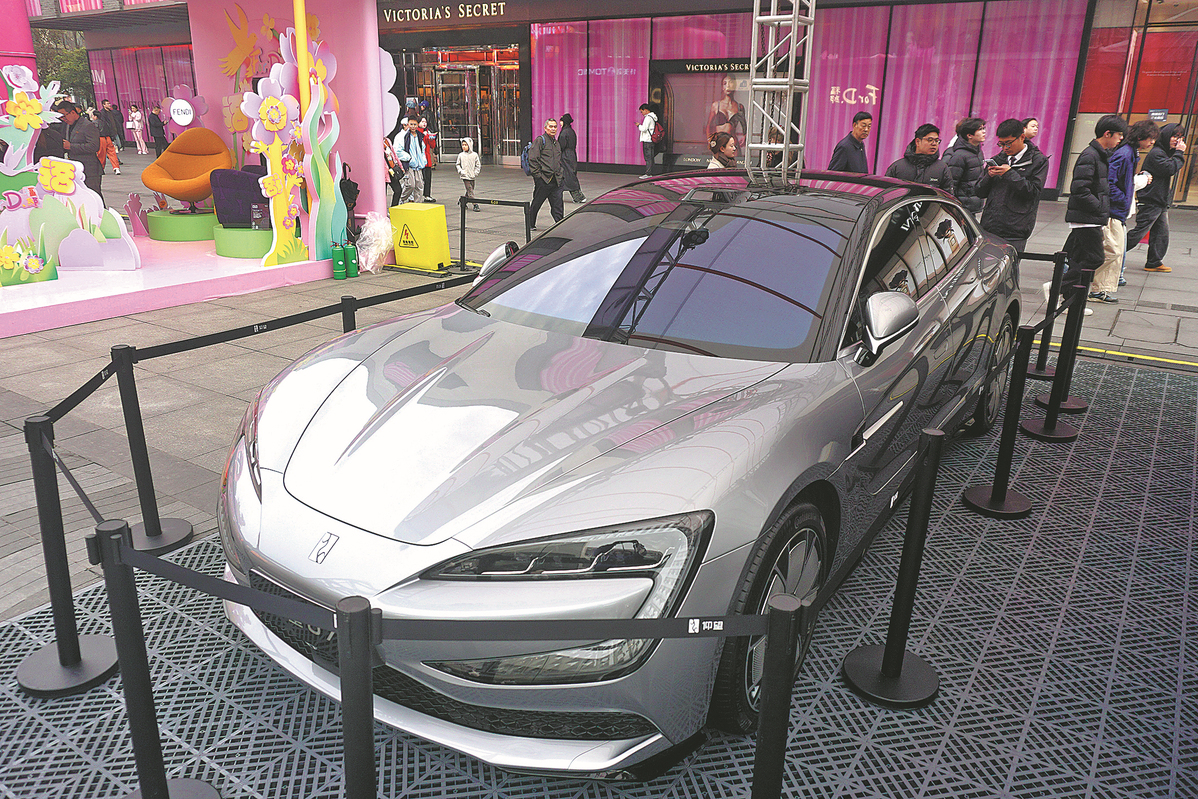
Autonomous driving is categorized from Level 0 to Level 5. The higher the level, the more intelligent the technology and the lesser the involvement of humans.
Level 3 refers to conditional automation, which allows vehicles to perform autonomous driving tasks under certain conditions. Such vehicles have "environmental detection" capabilities and can make some informed decisions, but are still subject to human override.
Level 4 vehicles can intervene if there is a system failure and do not require human assistance in most circumstances. However, a manual override option is still available.
Chinese technology companies have been striving to advance the technology and accelerate the commercialization of robotaxi services based on L4 autonomy.
Tech heavyweight Baidu Inc has invested heavily in developing self-driving technology. Its autonomous ride-hailing service Apollo Go is currently operational across 11 cities nationwide, while fully driverless robotaxis are running in designated areas of Beijing; Chongqing; Wuhan, Hubei province; and Shenzhen, Guangdong province.
Robin Li, co-founder and CEO of Baidu, said 2025 will be a pivotal year for Apollo Go's growth and it plans to expand its fleet size and ride volumes. Li said the company is actively seeking partnerships with mobility service providers, local taxi companies and third-party fleet operators to scale up efficiently through an asset-light model.
Apollo Go provided over 1.1 million rides in the fourth quarter of last year, up 36 percent year-on-year. In November 2024, it was granted permits to conduct autonomous driving tests on public roads in Hong Kong, becoming the first and only service in the region authorized for robotaxi testing.
Self-driving company Pony.ai recently became the first company authorized to operate paid fully driverless robotaxis in Shenzhen's Nanshan district, marking a milestone as the city's inaugural permit for paid autonomous ride-hailing services within its city centers.
The company plans to expand the number of its robotaxi fleet to about 1,000 this year, and increase investment in R&D. It has already obtained licenses for fully driverless robotaxi services in Beijing, Shanghai and Guangdong provinces.
Zhang Ning, vice-president of Pony.ai, said the company will be able to break even in operations when its robotaxi fleet exceeds 1,000 and begins to move toward large-scale commercialization this year. "When we cross over that 1,000-level, the cost of running additional robotaxis will be reduced, while the gross profit margin will be higher," Zhang said.
Pony.ai has established joint ventures with Japanese carmaker Toyota and its Chinese JV, GAC Toyota, to bolster the commercial operation of robotaxis, and inked strategic partnerships with Chinese automakers such as BAIC and GAC Aion to operate its seventh-generation robotaxi vehicles.
Local government support is critical for promoting the commercial operation of autonomous vehicles. Currently, over 50 cities nationwide have released autonomous driving pilot demonstration policies and stepped up efforts to expand the application scenarios of self-driving technology, laying solid cornerstones for the future operation of driverless vehicles.
In December 2024, Beijing approved new regulations on autonomous vehicles, marking significant progress in advancing self-driving technology in the capital. These regulations, which took effect on April 1, encourage and support policies and measures for technological innovation and industrial development of autonomous vehicles.
The guidelines cover areas such as infrastructure planning and construction, on-road traffic management and safety assurance, providing a clear regulatory framework for autonomous vehicles equipped with Level 3 and higher systems.
Wuhan has already implemented regulations to promote the development of intelligent connected vehicles and support the commercial application of self-driving vehicles with Level 3 capabilities.
Moreover, Chinese authorities have selected 20 cities, including Beijing, Shanghai, Chongqing and Shenzhen, as participants in a pilot program for the application of "vehicle-road-cloud integration", with aims to link intelligent vehicles with roadside perception and cloud-based control, paving the way for enhanced safety and efficiency in self-driving technology.
Wang Xianjin, vice-president and chief engineer of the China Academy of Transportation Sciences, said the testing and operation of self-driving vehicles have accelerated significantly in China, laying a good foundation for the commercialization of autonomous driving, a tech frontier in which all major economies are scrambling to establish a beachhead.
Wang called for efforts to speed up formulation and revision of policies and regulations concerning the commercial application of self-driving technology, and continuously expand the scale of pilot operations of autonomous vehicles in more scenarios on the premise of ensuring safety and stability of such vehicles.
Meanwhile, a slew of Chinese automakers have announced plans to roll out new vehicles equipped with Level 3 autonomous driving capabilities this year.
He Xiaopeng, chairman and CEO of Chinese EV maker Xpeng Motors, said the company is planning to roll out its Level 3 capabilities in the second half, adding that by 2026 it aims to explore Level 4 capabilities, including fully driverless parking.
A transformative AI era is approaching, and AI will accelerate the arrival of self-driving vehicles and even driverless vehicles, said He.
He said he believes that this year will be a significant turning point in intelligent driving. With the continuous advancements and breakthroughs in core technologies such as algorithms, sensors and computing platforms, it might be appropriate to bolster the mass production of Level 3 autonomous driving technology, he added.
Chinese automobile manufacturer GAC Group plans to mass produce and sell autonomous vehicles equipped with Level 3 systems in the fourth quarter, and launch more such types of vehicles next year.
It will provide private car buyers with Level 4 self-driving vehicles in 2027. GAC was among the first batch of carmakers obtaining approval from authorities to test Level 3 autonomous vehicles on public roads last year.
Feng Xingya, chairman of GAC Group, said intelligent driving capabilities will be an undeniable trend for the automotive industry. Feng added that autonomous driving serves as the core technology of intelligent connected vehicles and a vital link in intelligent transportation systems.
The advancements in AI technology are becoming the core driving force bolstering the development of intelligent connected vehicles, and the application of AI will help reshape the automotive industry, he added.
Changan Automobile said it hopes to achieve full-scenario Level 3 autonomous driving in 2026, with plans to reach Level 4 capabilities in 2028.
Zhang Xiang, a visiting professor at the engineering department of Huanghe Science and Technology University, said Level 3 autonomous driving vehicles can replace human drivers in certain situations, sense changes in the surrounding environment in real time and make more accurate decisions, further improving the safety of driving.
Zhang noted that the commercialization of autonomous driving is expected to be first realized in specific application scenarios like mines, ports, some designated areas and fixed routes, where traffic conditions are relatively simple. Moreover, along with the technical maturity and mass production of lidar sensors, the costs of intelligent driving systems have fallen significantly.
He said ensuring the safety and stability of self-driving vehicles remains a top priority, adding that more efforts are needed to enhance self-driving testing and application scenarios, continuously optimize algorithms, as well as reduce the manufacturing costs of driverless vehicle components.
Li Xinbo, an automotive industry expert at China Auto Information Technology (Tianjin) Co Ltd, stressed the need to strengthen construction of an intelligent transportation infrastructure, including the 5G-enabled vehicle-to-everything system, which supports the transfer of information from a vehicle to moving parts of the traffic system to improve efficiency.
fanfeifei@chinadaily.com.cn




















