US strategic shift alarms world
Experts warn of aggressive nationalism amid Washington's economic coercion









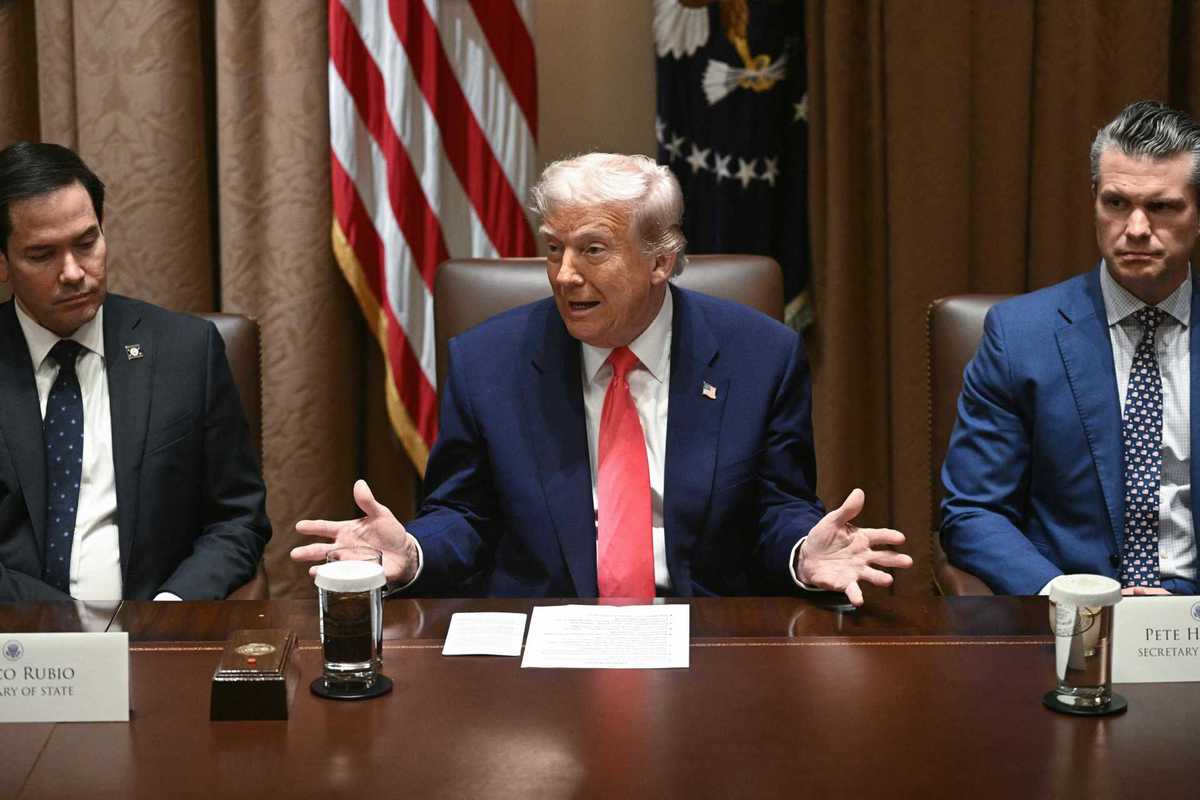
To realize its "Make America Great Again" vision, the United States has clearly shifted its strategic focus. Its revised approach, based on the "America First" doctrine, includes using tariffs to coerce other nations to make policy concessions and decreasing foreign involvement.
Since US President Donald Trump started his second term on Jan 20, his administration has taken a series of measures that have garnered global attention. It has made significant moves to address domestic matters, such as declaring a national emergency over immigration and establishing the Department of Government Efficiency to reduce spending and regulations.
It also swiftly decided to exit international organizations and agreements, including the World Health Organization and the Paris Climate Agreement, to avoid global responsibilities.
In particular, Trump has been using tariffs as a weapon against other countries.
He has also expressed his wish to annex the mineral-rich Greenland and take back control of the Panama Canal, as well as claimed that Canada should be the 51st state of the US, triggering anger in Ottawa.
Li Haidong, a professor at China Foreign Affairs University's Institute of International Relations, said there is no doubt that the strategic focus of the US has undergone significant changes.
"The shift is not toward traditional globalism but toward a stronger nationalism," he said. "From a historical perspective, it exhibits characteristics of a 'new isolationism'. This means that the US is seeking a different way of interacting with other countries."
Li pointed out two key reasons for the strategic shift. First, Trump and other influential figures in the US have recognized that the world is now multipolar — a departure from the traditional belief that the US is the sole dominant power. Second, the US is dealing with numerous domestic crises, contrasting with its former image as a prosperous and stable country.
Zhang Yifei, an associate researcher at the Institute of American Studies, Chinese Academy of Social Sciences, said that throughout US history, there have been several times when the country has demonstrated "greatness". For instance, after World War II, the US spearheaded the creation of a capitalist world economic system and a global order. After the Cold War, US political, economic and military strength dominated the world.
"However, the current administration's vision of 'greatness' is reminiscent of the economic boom around the 1900s, known as the Gilded Age, when the US was less interested in international affairs," Zhang said.
He agreed there has been a notable shift in US global strategy. "The US is now more focused on domestic issues and seems less inclined to take on international responsibilities as a major power."
US proposals to acquire Greenland and the Panama Canal were largely motivated by the desire to secure mineral resources and vital transportation routes, he added.
"US actions are driven only by its own interests and abide by the 'America First' doctrine. Any moral expectations from the international community should be reconsidered," Zhang said. "For the US, everything is about business and tariffs are one of its primary tools for gaining global advantages, though their effectiveness is debatable."
Robert Gulotty, an associate professor in the Department of Political Science at the University of Chicago, said there is a broader concern within the Trump administration, which is to correct the trade imbalance the US has with the rest of the world.
"Tariffs aren't a particularly effective way to do that, but that's a goal they have," he said.
The US is also using tariffs as a bargaining chip to coerce its allies and trade partners to make policy concessions. "It will be an interesting process. I don't think it will go very well," Gulotty said, adding that many countries are taking countermeasures.
Decades ago, the US developed international rules to favor itself and create regularity in the international trading system, he said. But now, by undermining these rules with tariffs, it is harming US multinationals that have thrived under this system.
Politically, raising tariffs against close allies such as Canada and Mexico alienates their populations, fueling nationalist sentiments that hinder cooperative efforts with the US, he added.
The only potential benefit is coercing other countries to comply with US demands, though the importance of these demands is unclear, Gulotty said.
Regarding foreign policy, Trump has also placed greater emphasis on increasing influence in Latin America, as US Secretary of State Marco Rubio made his first overseas visit there rather than the Asia-Pacific region as usual.
Marginalizing Europe
The US has also marginalized its long-standing ally Europe during its discussions with Russia regarding the Ukraine crisis, highlighting the differing perspectives between the US and Europe on how to address the issue.
At the Munich Security Conference in February, US Vice-President JD Vance questioned whether European values are worth defending while mentioning a "threat from within", shocking European leaders seated in the audience.
Sven Biscop, director of the Europe in the World Programme at the Egmont-Royal Institute for International Relations in Brussels, said the Barack Obama administration was the first to state that, while Europe remained important to the United States, it was no longer the top priority, with the primary focus having since shifted to the Asia-Pacific region.
"What is new is that the Trump administration seems to be ideologically opposed to the European Union as such," Biscop said, adding that Vance's performance at the Munich Security Conference was seen in Europe as "direct interference in European elections, notably in Germany and Romania".
"Many European leaders assumed that despite the US focus on Asia, they could always count on the US to defend Europe. Since Munich, they are not so sure," he said. "This may lead, not to the end of NATO, but to a major reconfiguration, in which the Europeans create a militarily autonomous force package that can deter and defend against any conventional threat to Europe even without American assets."
One question is whether Europe will also strengthen its own nuclear deterrence, led by France, he added.
Researcher Zhang said that for regions such as Europe, the Middle East and the Asia-Pacific, the US is expected to reduce direct involvement and adopt an offshore balancing strategy.
"This approach encourages regional powers to counterbalance each other, allowing the US to intervene only when necessary to prevent any one power from becoming dominant in strategically important areas," he said.
Regarding the strategy toward China, professor Li said Trump has made it clear that the competitive tone remains unchanged, though the language used by him and his team members might differ.
The China-US relationship is going through a phase of readjustment, and one should not be overly pessimistic or optimistic about it, he said.
"Trump's policies have introduced uncertainties for all parties involved. Ultimately, China should find a certainty that aligns with our interests, minimize negative factors and turn potential opportunities into optimistic outcomes."
However, as the world's two largest economies, if the US aims to achieve the goal of "Make America Great Again", it is essential that the nation manages well its relations with China, Li said.
chenyingqun@chinadaily.com.cn