



Weaponizing 'fentanyl' toxic prescription









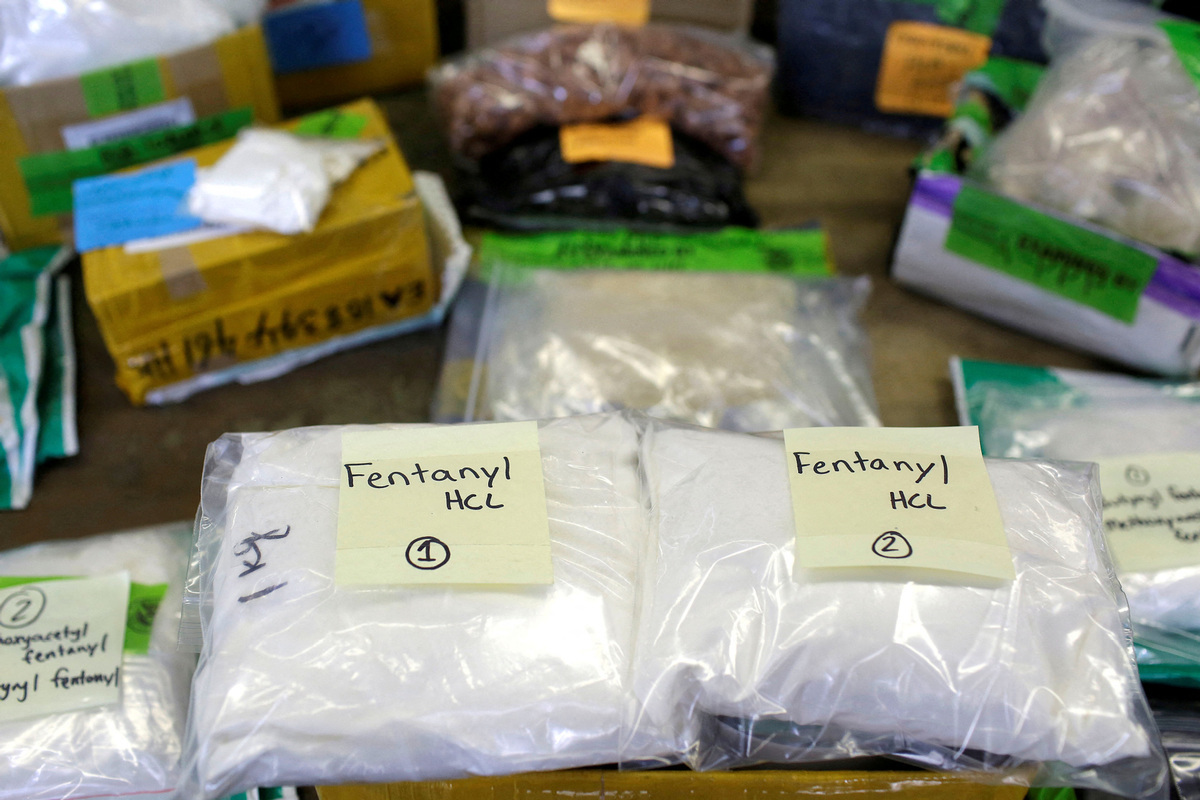
By imposing additional tariffs up to 125 percent on Chinese goods, US President Donald Trump has surpassed the coercive economic actions he took during his first term. The US' tariff rate on Chinese imports now effectively totals 145 percent. The US leader's tariff strategy naturally evokes memories of his first term during which his administration triggered a prolonged trade dispute partly by blaming China for the fentanyl crisis in the US.
The US' "war on drugs" has never been a campaign to address abuse of narcotics. Instead, it is a ploy to discriminate against marginalized communities. Since its inception in the 1930s under Harry Anslinger, the doyen of the US' narcotics policy implemented through the Federal Bureau of Narcotics, the predecessor to the Drug Enforcement Administration, the campaign has targeted minority communities.
The weaponization of the US' drug policy during the Richard Nixon and Ronald Reagan administrations extended the ambit of the "war on drugs" overseas. Central and South American nations were targeted by the US' "war on drugs", with the two regions facing discrimination and heavy-handed US actions that have continued to this day.
During the last century, although the nature of drug use in the US has changed, from cannabis to heroin to crack cocaine to opioids, the root causes behind widespread drug abuse and addiction have largely remained unchanged. This is because the US' drug policy gives precedence to supply-side solutions, that is, to measures to stem the flow of illegal substances into the country.
The fallout of the "war on drugs" has been devastating for marginalized groups in the US. Over the last five decades, the US has denied several communities of their social and economic rights, thus triggering a cycle of exclusion and poverty.
It is true that fentanyl, a synthetic opioid originally developed for pain management, is now the leading cause of drugs-related deaths in the US — fentanyl and fentanyl-like drugs have been responsible for nearly 75 percent of 100,000 drug overdose deaths each year.
At the core of this epidemic is the US' medical care system, which for decades has promoted opioids as pain relievers, backed by aggressive pharmaceutical lobbying and lax regulation.
The key to tackling widespread drug abuse in the US is to devise policies designed to understand the causes behind the demand for illegal drugs, and then address the demand-side problems. For that, however, the US needs to shift its focus from the "war on drugs" and prioritize public health and social justice initiatives, and community-led grassroots efforts to de-stigmatize addiction and prevent drug abuse.
Yet rather than focusing on these systemic issues and domestic challenges, the US has been blaming other countries for the drug crisis. Since 2018, when the fentanyl issue came up for bilateral discussion for the first time, China has addressed it with utmost sincerity.
China's approach to drug control is characterized by a strict legal framework and robust law enforcement. For the Chinese government, drug control has been a top priority for years. It has adopted a "zero-tolerance policy" toward drug trafficking and drug abuse. In fact, law enforcement agencies have resolved thousands of fentanyl-related cases, seizing vast quantities of illicit fentanyl. This rigorous approach has disrupted the supply chains of fentanyl-related substances.
As a responsible major power, China has acted in good faith and taken strict measures to curb the illegal fentanyl trade. As a matter of fact, on May 1, 2019, China became the first country in the world to officially control all forms of fentanyl as a class of drugs, completing a process that began with controls on the fentanyl "precursors" such as NPP and ANPP in 2017.
In addition to these domestic measures, China has led the battle against fentanyl at the bilateral level with the US, through the Bilateral Drug Intelligence Working Group and the Counternarcotics Working Group. At the global level, China has championed regulations of existing and novel fentanyl precursor chemicals, including at the Commission on Narcotic Drugs, the central drug policy-making body under the United Nations' international drugs regulatory framework.
The "reciprocal tariffs" strategy, therefore, needs to be seen in light of the US' previous uses of tariffs, trade barriers and/or regulatory frameworks to impose its will on other countries, including China.
The US' tariff war has jeopardized the bilateral dialogue on fentanyl control, which was revived in January 2024 after three years of COVID-19 pandemic. The US needs to control the domestic demand for illegal drugs, rather than relying on supply-side law enforcement measures to address the fentanyl issue.
A coordinated global effort is arguably the only solution to the US' opioid crisis, just as targeted economic measures, not punitive tariffs, are the only treatment to cure its economic malaise.
The author is director of the International Center for Drug Policy Studies at Shanghai University. The views don't necessarily reflect those of China Daily.
If you have a specific expertise, or would like to share your thought about our stories, then send us your writings at opinion@chinadaily.com.cn, and comment@chinadaily.com.cn.





