Digital trade offers alternative amid tariff tensions









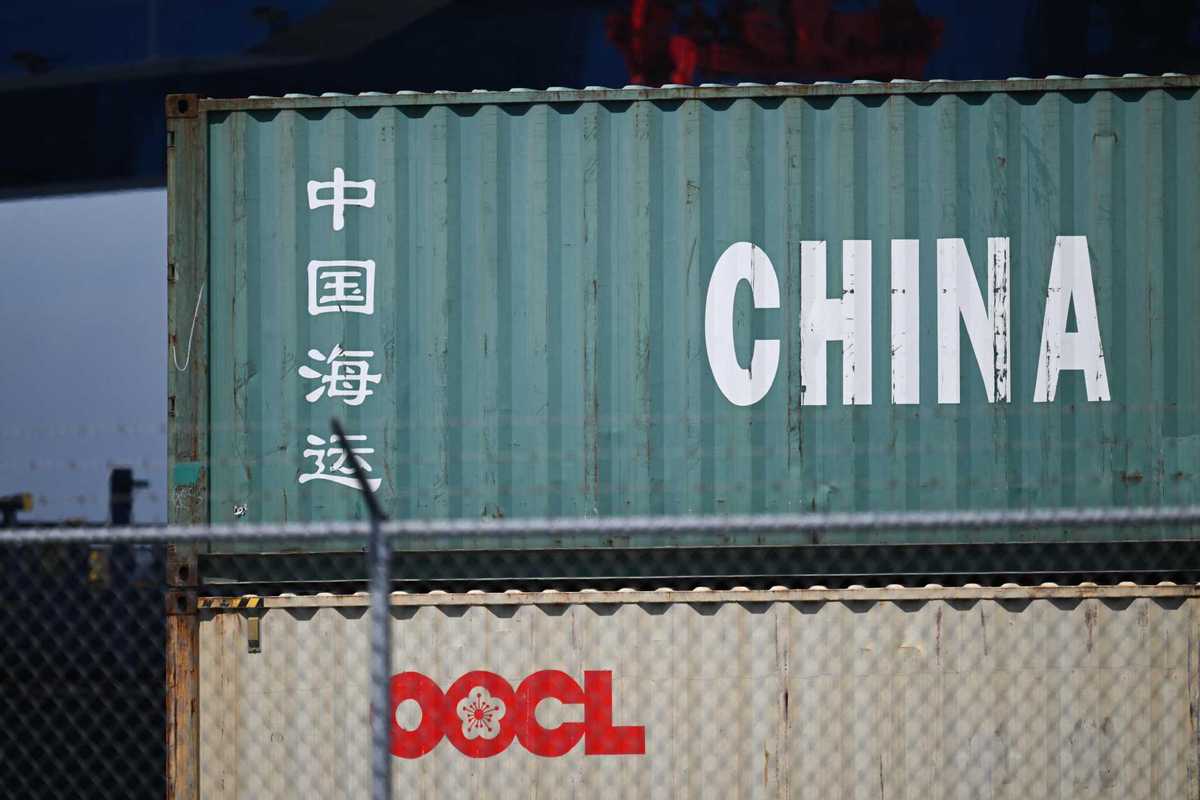
Digital trade offers potential avenues for global economic cooperation even as traditional trade faces new tensions, notably US tariffs, experts said.
Panelists explored how trade in the digital realm is reshaping international markets, presenting both significant opportunities and governance challenges during a recent event hosted by the Peterson Institute for International Economics, or PIIE, and the TradeExperettes network.
At the panel discussion titled "Shaping tomorrow's global economy: The transformative power and potential of digital trade", they underscored digital trade's potential as a force for growth and cooperation, even amid global economic uncertainty and evolving technological landscapes.
While acknowledging recent attention on tariffs, Cecilia Malmstroem, a nonresident senior fellow at the PIIE who moderated the discussion, suggested looking toward more "constructive areas".
"What can we do to support and facilitate digital trade? How can we draw the potential of digital trade in innovation and growth?"
Hanna Norberg, founder and president of TradeExperettes, said that digital trade is a fundamental shift from traditional commerce based on tangible goods crossing physical borders. In the digital world, goods are often intangible, residing "in the cloud", and transactions can involve data exchange rather than monetary payment.
"Every time your heart beats, you're actually doing international trade in this new scenario," Norberg said, referencing data collected by smartwatches. This shift challenges existing rules built for physical trade and blurs lines with domestic policy areas like regulation and taxation, she said.
Joshua Meltzer, a senior fellow at the Brookings Institution, contrasted the potential of digital trade with recent US tariff actions, which he characterized as part of possibly "the most fundamental change in US international economic policy since… World War II". He said it is a move away from the long-standing principle of comparative advantage.
Meltzer said that digital trade, especially involving artificial intelligence, represents a "huge opportunity space", though it lacks the established economic frameworks of traditional trade and faces complexities like national security concerns and heavy concentration in the US private sector.
Meltzer said that in his observation, the US policy on digital trade itself has fluctuated, citing ambitious digital chapters in agreements like the US-Mexico-Canada Agreement followed by a pullback from supporting global data flow rules during the Joe Biden administration. He added that the current administration might shift policy again, possibly signaled by recent trade reports.
Payment hurdles
Cross-border payments are a critical element, said Martin Chorzempa, a PIIE senior fellow. In his view, while domestic digital payments have advanced, international payments face hurdles due to varying regulations across jurisdictions. Chorzempa also said that the global system relies heavily on the US dollar, with about half of world trade and 75 percent of Asian trade invoiced in the currency, making access to US financial infrastructure vital.
Chorzempa said that the unpredictability of the US, including tariffs, could spur other nations "to continue integrating with each other" and explore nondollar payment systems. However, barriers like data localization rules and market access limits hinder progress. He said that solutions include adopting international standards and pursuing digital trade agreements, while also warning that countries might retaliate against US tariffs by targeting US services trade, where the US has a surplus.
Kat Duffy, a senior fellow at the Council on Foreign Relations, talked about the centrality of data flow to the modern economy and AI. She highlighted the historical US bipartisan commitment to a "free global interoperable and secure internet", questioning whether that leadership role can be maintained amid current foreign policy shifts.
Duffy said that trade experts need to engage more deeply with internet governance issues, which are often handled in separate silos. She urged more cross-disciplinary collaboration.
yifanxu@chinadailyusa.com