


History, ethos and strategic vision define China's global appeal









Chinese civilization — described by President Xi Jinping as embodying consistency, originality, unity, inclusiveness, and peacefulness — has endured through the ages, serving as a testament to a deeply rooted cultural ethos. Drawing from this heritage, China offers a distinctive alternative to Western-centric models of international relations. Through initiatives in sustainable development, cultural diplomacy, and global governance improvement, China presents a perspective shaped by historical consciousness and a long-term strategic vision.
For these values to evolve from historical legacies into active forces in global discourse, further work is needed. A broader appreciation of Chinese culture must be cultivated, and enduring misunderstandings addressed. For traditional culture to take a meaningful role in China's international presence, those tasked with conveying it must be equipped to bridge the cultural divide between a historically rich China and the wider world.
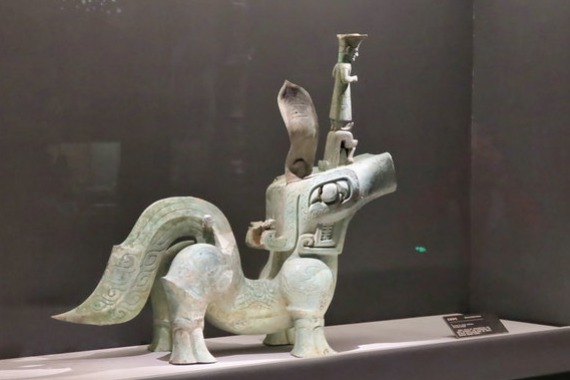
Chinese civilization is embodied in a wealth of cultural symbols that reflect deep philosophical, aesthetic and moral traditions. These range from tangible elements — museum artifacts, the Great Wall, literati gardens — to intangible ones like Confucian teachings, traditional medicine and Spring Festival. To make these symbols resonate globally, their historical context must be revealed, and emotional connections with contemporary audiences thoughtfully fostered.
One compelling example is the story of Daniel Bergmann, an autistic graduate of Harvard Extension School. As a nonverbal child, he often visited the Metropolitan Museum of Art in New York with his artist mother. There, he formed a profound connection with a Chinese garden modeled on the style of the Ming Dynasty (1368-1644). Sitting by the fishpond and waterfall, he experienced a moment of clarity — realizing that sound and sight were not separate phenomena but parts of a whole, making the world "only half as complicated" to understand. His story, shared by the museum, exemplifies how a Chinese cultural symbol can carry emotional warmth and human resonance — key to effective cultural communication.
As the Chinese idiom says, "see the whole leopard through one spot" — a single object can reveal a broader cultural truth. A 12th to 13th-century lacquered leather chest in the Brooklyn Museum in New York, for instance, features design motifs influenced by Silk Road exchanges between the 6th and 8th centuries. Crafted in eastern China, similar chests were later exported across the Maritime Silk Road to Egypt, Iran and Central Asia. This one artifact encapsulates China's long history of cross-cultural exchange — an endeavor China continues to champion today.
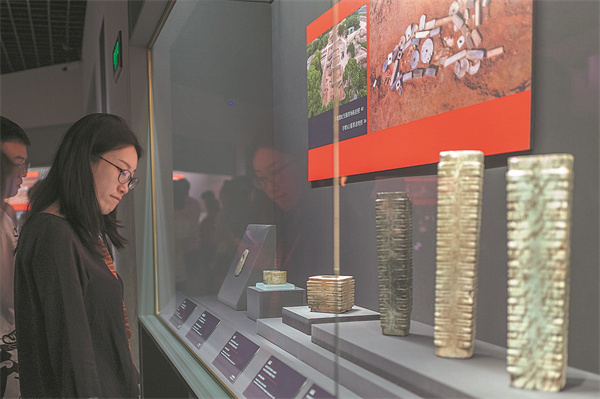
China's jade culture, spanning over 10,000 years, reflects the civilization's enduring cultural lineage. Fine jade, pure and smooth, symbolizes "the virtues of a gentleman" central to Confucian thought. During the Zhou Dynasty (c. 11th century-256 BC), jade became increasingly important in funerary rituals, replacing human sacrifice in alignment with the rise of human-centered philosophy and Confucianism. Like Confucianism, jade, by embodying moral aspiration and aesthetic sensibility, stands as a testament to Chinese civilization's commitment to cultural consistency.
This consistency is not accidental but rooted in a profound respect for heritage. The originality of Chinese civilization lies in its capacity for innovation within a framework of historical continuity — not discarding the past, but building upon it. Jade culture, particularly from the Song Dynasty (960-1279) onward, reflects this ethos. From the 10th century, antiquarianism became a guiding sentiment in jade aesthetics, driving both creative expression and cultural reinvention.
The emergence of jinshixue (the study of antiquities) during the Song Dynasty reflected a new cultural self-awareness among the literati. Under Emperor Huizong's patronage, hundreds of Shang (c.16th century-11th century BC) and Zhou bronze vessels were illustrated and cataloged — later serving as templates for jade craftsmen. This transformation — from bronze to jade — epitomizes China's tradition of cultural renewal and its enduring spirit of innovation.
In the Liao Dynasty (916-1125), founded by the nomadic Khitan people and contemporaneous with the Song Dynasty, jade carving techniques from the Song were adapted to reflect hunting and herding traditions. Likewise, jade hat ornaments from the Mongol-led Yuan Dynasty (1271-1368) were reimagined as incense burner lids in the succeeding Ming Dynasty. These continuous adaptations across dynasties and cultures highlight not only jade's enduring legacy but also the inclusive and unifying nature of Chinese civilization. The shared reverence for jade among the Han and other ethnic groups' regimes reveals a deep cultural harmony and a peaceful ethos that transcends political change and temporary fragmentation.
Thus, all five features of Chinese civilization are reflected in China's jade culture. These features hold significant contemporary relevance. Drawing from its uninterrupted past and ability to continuously redefine progress in relation to history, the modern Chinese state brings a wealth of historical wisdom to global governance, emphasizing long-term vision and strategic patience in addressing global challenges. By leveraging its history of innovation and unity, China offers a compelling model for building international consensus, which is needed more today than ever.
The international communication of Chinese civilization symbols is a key cultural strategy, supporting China's efforts to shape its global image and enhance its soft power. As China deepens global engagement and offers unique solutions to international challenges, its civilizational values provide both the rationale and methodology for addressing these issues, forming the foundation and the starting point of its approach.