Archaeological breakthroughs continue to deepen people's understanding of Chinese civilization and how China became a united country with ethnic diversity, as shown by the list of China's top 10 archaeological discoveries for 2024, which was released on Thursday in Beijing.
Although many of the sites on the list were discovered decades ago and have long been excavated, they yielded surprising new findings last year that have made them stand out once again.
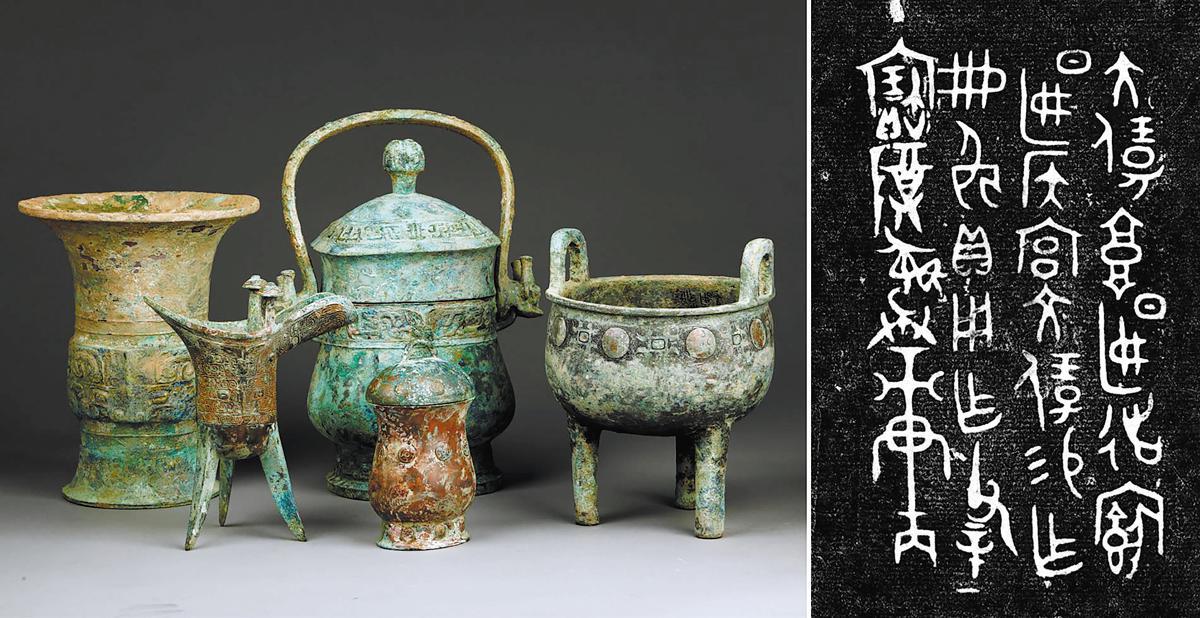
Among the highlights on the list is the Zhouyuan site in Baoji, Shaanxi province. The site is over 3,000 years old and has been excavated since 1976.
Although many archaeological remains had been previously found at the site, the findings were scattered, so it was difficult to gain a comprehensive understanding of the site. But scholars have now found that Zhouyuan was already the capital for the Zhou people before they overthrew the Shang Dynasty (c.16th century to 11th century BC) and established the Western Zhou Dynasty (c.11th century to 771 BC).
Archaeologists have also clarified the layout of the settlement during the Western Zhou period, when there were three layers of city walls, so that the scattered large-scale buildings, bronze-ware cellars and tombs that were previously discovered can now be placed in a whole-city context for better understanding.
"This can be described as one of the most important Western Zhou discoveries in China's archaeological studies," said Wang Wei, a veteran archaeologist at the Chinese Academy of Social Sciences.
The Xia (c.21st century-16th century BC), Shang and Zhou (c.11th century-256 BC) dynasties have long been considered by archaeologists as a key period for studying the formation of China in its early stages.
Lei Xingshan, an archaeology professor at Beijing Union University, said that the findings from this period stand as icons of Chinese culture and provide key references for understanding modern Chinese civilization.
More detailed information about Western Zhou's vassal state, Yan, has been obtained from studies of the Liulihe site in Beijing's Fangshan district. Archaeologists recently found that the city of Liulihe had two layers of city walls, with the site's scope expanding to 1 million square meters from the previously estimated 600,000 sq m. The city's layout is similar to that of the Western Zhou political center at the Zhouyuan site, Lei said.
Moreover, the analysis of DNA from human bones found at the site helps to provide a family tree, which Lei said marked a breakthrough in researching ancient family relationships and social structures.
The Panlongcheng site in Wuhan, Hubei province, after studies of more than half a century, was found to be a significant stronghold of the Shang Dynasty in the middle reaches of the Yangtze River, and it helped spread Shang's political ideas and metallurgical technology to neighboring areas.
New clues also fill in some gaps in decoding the origins of Chinese civilization.
The Siwa site in Lintao county, Gansu province, where archaeological work began in 1945, has provided crucial materials for understanding the role of the upper reaches of the Yellow River in the origins of Chinese civilization about 5,000 years ago.
"The new discoveries that we honor this time are actually the result of a long time of archaeological work," said Chen Xingcan, a researcher at the Chinese Academy of Social Sciences' Institute of Archaeology.
"New ideas on settlement archaeology, like prioritizing the making of a clear layout of the settlement, help decode the secrets of the sites discovered long ago and generate new fruit," he added.
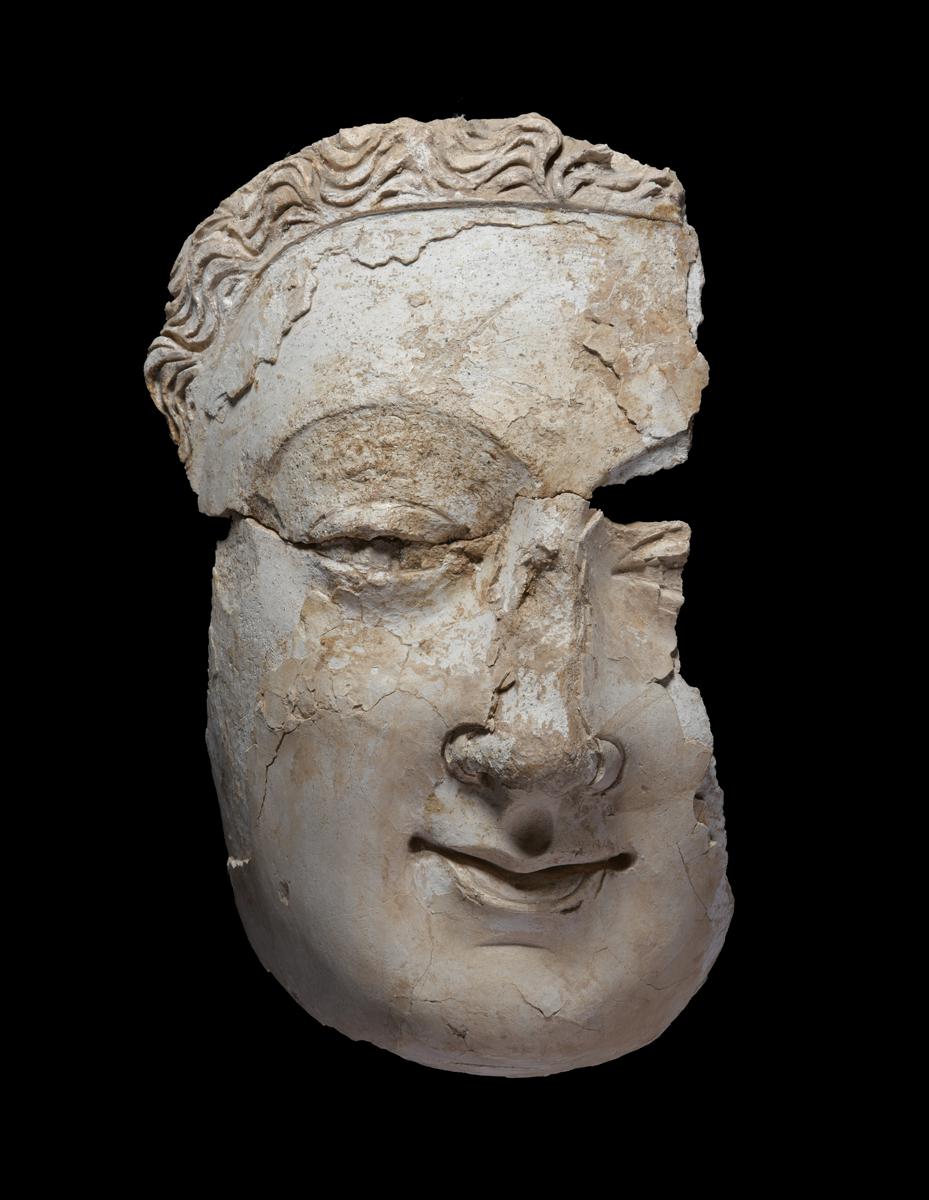
Border-area archaeological progress is another highlight of the list. Discoveries at the Mo'er Temple site in Kashgar, Xinjiang Uygur autonomous region, have vividly depicted the history of Buddhism's spread to China. The site dates from the first century to the 10th century AD.
It is widely known that after Buddhism's birth in India, the religion spread to China through Central Asia, and Xinjiang was where it gained its first foothold in the country.
In the past, people paid more attention to discoveries like Buddhist cave temples to study the progress of the religion in China, as there are few well-preserved, above-ground temples remaining.
The Mo'er Temple site fills the gap, as it spanned a long period of time and provided traces clearly showing the influence of Buddhism and its evolution in China, said Huo Wei, an archaeology professor at Sichuan University.
The Mabu Tsho site in Khangmar county of the Xizang autonomous region has offered rare materials for understanding the Xizang settlement's evolution and social development dating from around 5,000 to 2,000 years ago. The relics found there also show that the site had close links with the upper reaches of the Yangtze, shedding light on the history of cultural exchanges, Wang said.
The annual list of top archaeological discoveries, co-released by China Cultural Relics News and the Chinese Society of Cultural Relics, is considered to be one of the highest honors in the field in China.
Contact the writers at wangru1@chinadaily.com.cn