



Tariff will not be panacea for US woes









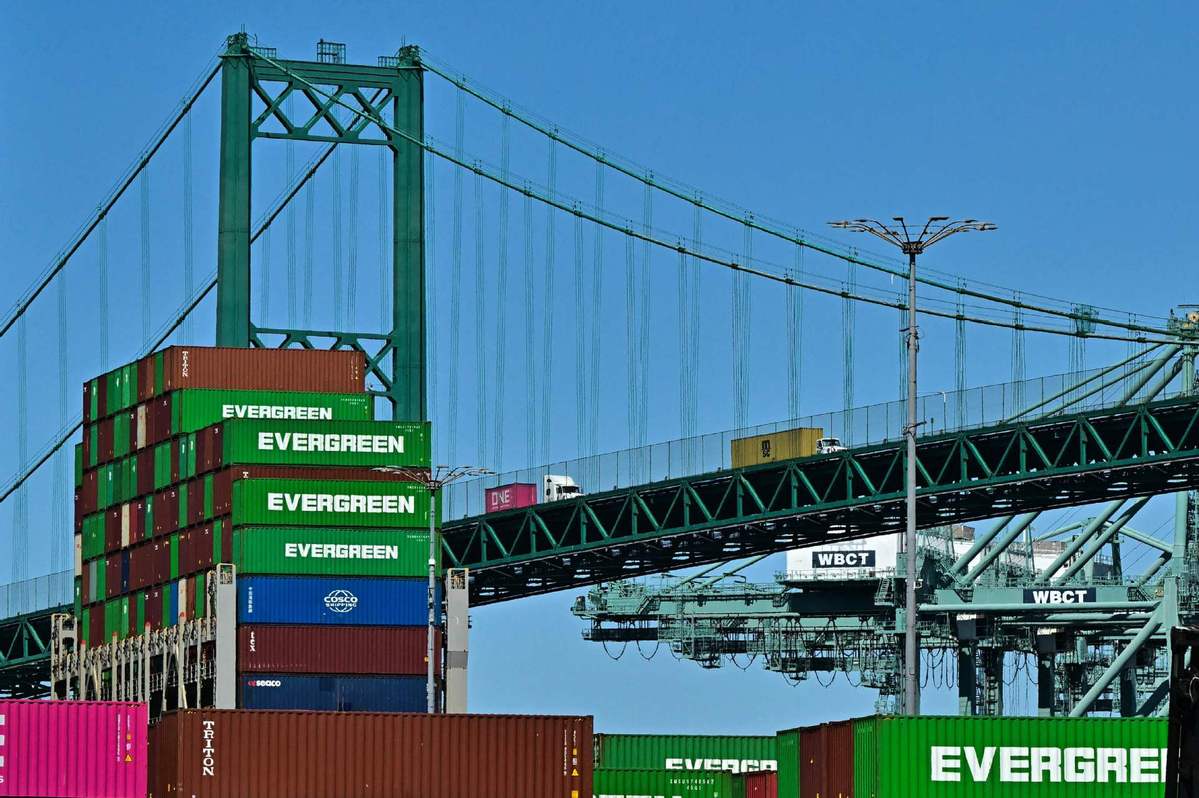
The global economy has endured major turbulence due to the United States' aggressive economic policy of imposing high punitive tariffs on imports to extract maximum economic benefits. True, markets have shown resilience, but only up to a certain point.
The volatility caused by the unexpected imposition of tariffs, sudden rollbacks, and communication strategies largely conducted via social media has created deep uncertainty for investors, corporations and global supply chains.
The very strong negative reactions of international stock markets played a key role in forcing the moderation of the US' most extreme tariff proposals. The fear of financial instability and backlash from investors contributed to the softening of positions and pushed the US administration toward partial rollbacks and renewed talks.
The US' trade strategy lacks consistency and economic rationale. High tariffs were presented as a means of protecting domestic industries, relocating jobs and forcing trade concessions. But these measures are expected to backfire in key areas: consumer prices in the US are expected to rise, household purchasing power to weaken, and investment to slow down.
Worse, supply chains that took decades to build are feared to have been disrupted, with the effects predicted to shift global trade routes and investment flows. The broader goals of the policy-namely, reducing dependence on foreign manufacturing and bringing jobs back to the US — are in conflict with the mechanisms used to pursue them. Trade wars undermine global specialization and the efficiency gains made possible by comparative advantage.
Economic theory dating as far back as to Adam Smith and David Ricardo teaches us that international trade enables countries to allocate resources where they are most productive. Even if one country could theoretically produce all goods more efficiently, mutual gains may still arise from specialization and trade. Today's supply chains reflect this logic. For instance, a single Apple computer integrates components and expertise from across the globe, particularly from China.
Instead of strengthening the US economy, the erratic use of tariffs as a policy tool creates distortions. The belief that tariffs can finance government budgets, stimulate domestic investment and accelerate growth overlooks both economic fundamentals and global interdependencies. What will occur instead are inflationary pressure, reduced consumer confidence, and a more fragile economic outlook.
At the core of Washington's strategy is an outdated model of economic nationalism combined with a view of geopolitics that treats trading partners as competitors and global leadership as a zero-sum game. The idea that the US can run the global economy like a monopolistic corporation — extracting tributes or concessions in exchange for market access or security guarantees — ignores the complexity of global governance. The US does enjoy certain advantages, such as issuing the world's reserve currency and having unmatched military power, but that doesn't mean it should act like a global hegemon.
China is the main target of the US tariff war. But it cannot afford to appear weak in the face of the public confrontation. Direct concessions will damage China's image, both domestically and internationally. The trade conflict has already escalated to the point where bilateral tariffs are well over 100 percent and, if sustained, trade flows between the two countries will likely come to a virtual standstill.
Beyond tariffs, China holds other strategic levers. As one of the largest holders of US Treasury securities, it could theoretically inflict financial pain by selling them in large volumes, although such a move would also hurt China's own interests.
Strategically, China may intend to rebalance its economic relationships. Investing in the European Union is one potential path, particularly in response to the US' export restrictions. Germany, as the economic heart of the EU, offers a possible destination for Chinese capital given its new government's intention to debt-finance huge infrastructure investments, in case the country (and the EU) moderates its recent de-risking strategy toward China.
This brings regional partnerships, such as the EU-China trade partnership, into sharper focus. These partnerships can serve as stabilizers in an increasingly fractured global trade environment. While the US-China rivalry dominates headlines, the EU has positioned itself as a balancing force, leveraging its commitment to multilateralism and rules-based trade.
By pursuing frameworks currently on hold, such as the Comprehensive Agreement on Investment, and working toward pragmatic compromises — such as minimum pricing on Chinese-made electric vehicles instead of outright tariffs — the EU may demonstrate that collaboration, not confrontation, is still possible. China has already implemented parts of the CAI such as easing financial sector restrictions and addressing forced technology transfers and environmental commitments. Unresolved issues, mainly concerning State-owned enterprises and subsidy transparency, are still crucial. If enforced, they could drive long-needed structural reforms in China, while also supporting free trade.
Considering these factors, what steps can be taken to end the global trade conflict?
A possible solution lies in rebuilding multilateral cooperation. Unilateralism and tariff wars fuel only uncertainty and fragmentation. Hence, countries should return to the negotiating table, not just to resolve specific disputes, but also to renew trust in international institutions and rules-based trade.
Ending the trade war also requires recognizing that global economic power is no longer unipolar. We must accept a world where leadership is earned through cooperation, not coercion. Trading partners cannot be coerced into agreement, and a sustainable global trade order depends on balanced relationships, where mutual benefit, not dominance, guides policy.
Tariffs should be replaced by clear, enforceable agreements that promote fair trade practices while preserving the benefits of openness, and mechanisms to address labor rights, environmental concerns, and intellectual property must be modernized.
The alternative to cooperation is long-term economic fragmentation — slower growth, higher prices and diminished global influence for all. With the right approach, the current crisis can be transformed into an opportunity to reinvigorate global trade and provide a course away from confrontation and toward sustainable, inclusive prosperity.
The author is a professor at the Free University of Berlin and president of the Global Labor Organization, a Germany-based worldwide network of researchers investigating the path of globalization. The views don't necessarily reflect those of China Daily.
If you have a specific expertise, or would like to share your thought about our stories, then send us your writings at opinion@chinadaily.com.cn, and comment@chinadaily.com.cn.





