



Wetlands projects protecting species









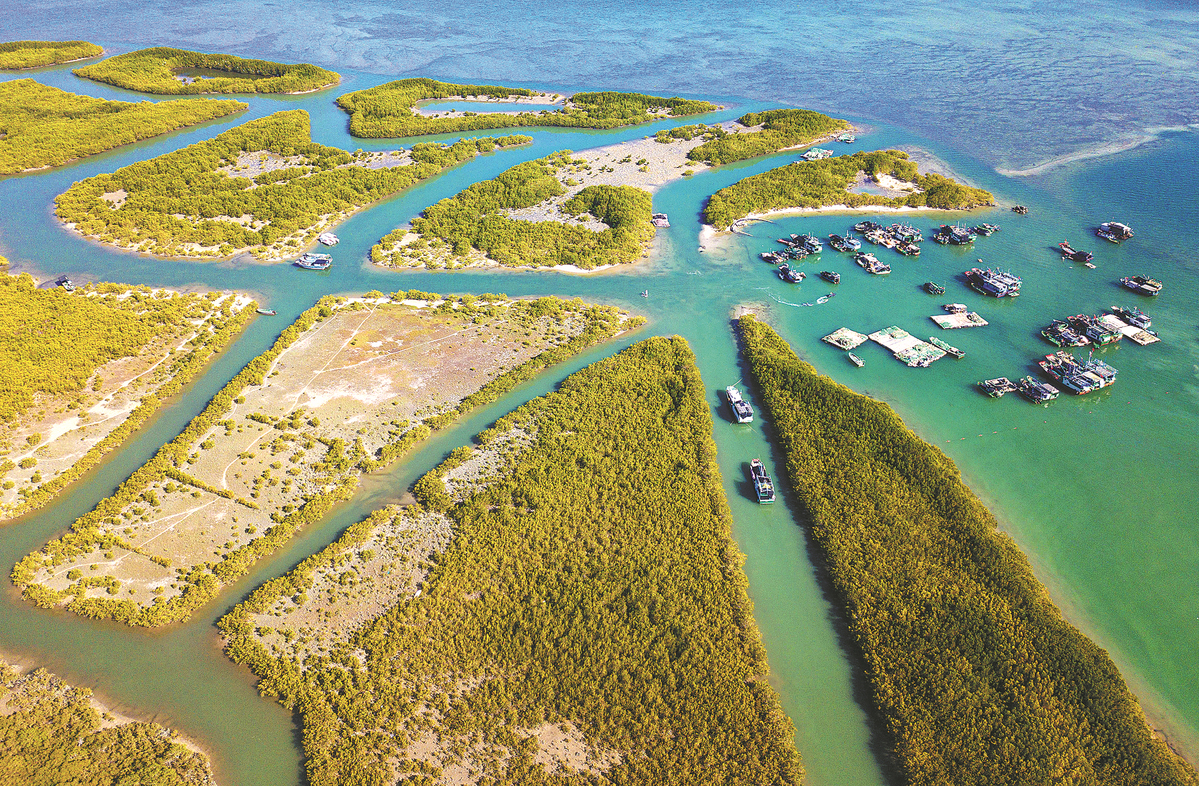
China has established 903 national wetland parks over the past two decades, protecting 2.4 million hectares of wetlands and providing vital habitats for endangered species such as the black stork and Chinese merganser, senior officials said recently.
Over 90 percent of these parks are free to the public, promoting eco-tourism, cultural activities and environmental education.
"Wetland parks exemplify China's commitment to harmonizing ecological protection and human well-being," said Wang Zhenbo, a researcher at the Institute of Geographical Sciences and Natural Resources Research of the Chinese Academy of Sciences, at an international wetland conservation symposium held in Hangzhou, Zhejiang province, early this week.
"By restoring degraded wetlands and integrating them into urban planning, we've not only revived biodiversity, but also created green havens that benefit millions," he said.
Since 2012, China has implemented over 3,700 wetland restoration projects, adding or rehabilitating more than 1 million hectares of wetlands under its National Wetland Protection Plan (2022-2030).
The country now boasts 82 internationally recognized wetlands and 58 nationally significant sites, with plans to integrate 11 million hectares into its national park system. Key initiatives, such as mangrove conservation and invasive species control, have further solidified China's role in global wetland governance.
As China's first national wetland park, the Xixi Wetland in Hangzhou has become a blueprint for sustainable urban development. By adhering to "ecological priority" principles, Hangzhou has transformed the 10.38-square-kilometer park into a biodiversity hot spot, with the number of vascular plant species increasing by 750, the number of insect species by 441 and the number of bird species by 155 since 2005.
"Xixi's 'gold-inlaid-jade' model — prioritizing wetland conservation while fostering surrounding economic growth — proves that ecology and prosperity can coexist," Wang said.
The park's 21-kilometer green-way and free-entry policies for local residents have drawn over 55 million visitors since 2005, generating 2.4 billion yuan ($330 million) in revenue.
Once a polluted orchard, Haizhu Wetland in Guangzhou, Guangdong province, now thrives as a biodiversity hub, documenting 835 plant species and 194 bird species, including two newly discovered insects. Its "Haizhu Model" of nature education — a collaboration between governments, schools and NGOs — has seen 1.6 million participants, who have courses on traditional culture and ecological conservation.
"China's leadership in wetland conservation, demonstrated through hosting COP14 of the Ramsar Convention, has set a global benchmark," said Jay Aldous, deputy secretary-general of the convention.
The 14th Meeting of the Conference of the Contracting Parties to the Ramsar Convention on Wetlands was held in November 2022 in Wuhan, Hubei province.
The National Forestry and Grassland Administration has planned to strengthen wetland protection networks, focusing on key areas such as the Yellow River Delta in Shandong province and Songnen crane habitats in Northeast China.
"Our goal is to ensure wetlands remain a legacy for future generations," Wang said. "Every restored hectare is a step toward global ecological resilience."
yandongjie@chinadaily.com.cn


- Spotted seals seen giving birth on land for the first time in China
- Nation's satellite data reception coverage reaches new heights
- Central govt to help build Shanghai into a green global shipping hub
- Grand community banquet attracts 2,600 guests in Chongqing
- Giant pandas filmed enjoying their meals at Shaanxi conservation base
- Smart Dragon 3 rocket lifts off at sea with seven satellites











