Renewed science agreement secures stable future for all









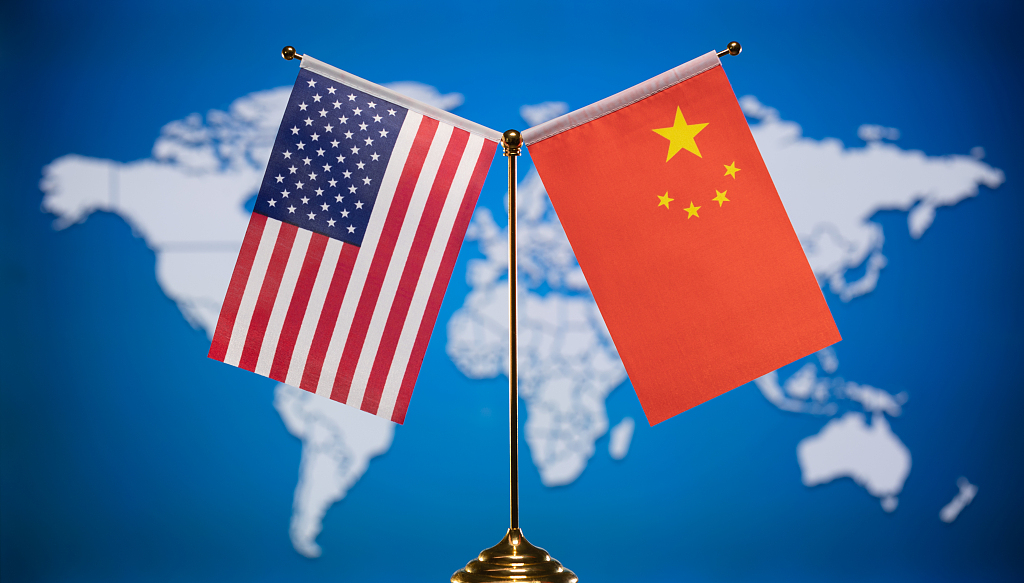
In one of its last acts involving US-China relations, the former administration of US president Joe Biden agreed with Beijing in December to extend the Agreement Between the United States and China on Cooperation in Science and Technology for another five years. While China recognized the renewal as an important step in advancing technological progress of both nations as well as enhancing bilateral collaboration on global challenges, some critics of China felt such a collaboration could bolster the Chinese military and lead to losses in critical and emerging technologies for the US.
Before the agreement expired last August, there were fears that Biden could terminate it. The previous renewal took place during the Donald Trump administration in September 2018.
While the new agreement has not yet been made public, various reports indicate that it differs from prior agreements as it only addresses government-to-government cooperation and avoids collaborations that pose security risks. But doubts aside, the agreement has the potential to strengthen intellectual property protection, create guardrails for protection of researchers and contain new provisions on transparency and data reciprocity. By focusing on basic research and information sharing in areas such as weather, oceanography, seismology and health, the agreement naturally benefits both sides. With time, its implementation will hopefully appease even its harshest critics.
The renewal of the agreement is more significant today than when it was first signed in 1979 by late Chinese leader Deng Xiaoping and former US president Jimmy Carter. In the initial decades, the US was likely the primary "technology donor". But now, cooperating with China is critical considering such factors as budget cuts made by the Trump administration in the National Science Foundation, National Institutes of Health and other science agencies. Furthermore, unlike in 1979, the US has more to learn from China as the latter's scientific ecosystem continues to develop rapidly.
China's investments in big science have the potential to expand global frontiers. Projects such as the Jiangmen Underground Neutrino Observatory in Guangdong province are intended to answer fundamental questions about particle physics.
China's lunar and Mars missions will advance planetary science, and its Five-hundred-meter Aperture Spherical Radio Telescope, the world's largest radio telescope, could help enhance astrophysical research. Its human brain project could help in addressing neurodegenerative diseases and brain-computer interfaces.
China is also a major player in sectors such as telecommunications, artificial intelligence and genomics. The renewed agreement provides for a collaborative approach that allows the US to stay engaged in developments that are shaping the future of the global economy. Moreover, apart from its scientific importance, the agreement also helps facilitate people-to-people exchanges, including maintaining trust between long-standing scientific partnerships.
Isolating US researchers from China risks their falling behind in fields where China is taking the lead. China's great success with DeepSeek and its increasingly important role in developing leading-edge pharmaceutical products also reveal the importance of the potential disruptive impact of private sector initiatives in US-China technological competition.
The improvements derived from cooperation are not one-sided. Numerous studies over the past several years have documented qualitative improvements in co-authored scientific papers from both countries.
In the past, the agreement worked as a framework for bilateral discussions on science, technology and related fields such as intellectual property. Effective discussions were held on topics such as national and local-level innovation policies, industry-academic research collaboration, the role of open-source collaboration, measurement of innovation performance, and importance of IP rights protection. Different from discussions between governments, these innovation-oriented dialogues were often among individuals who had collaborated in pursuing new discoveries and inventions and/or involved people who used the IP system to protect their inventions and discoveries. The meetings attested to the agreement's role in stabilizing personal relationships even when issues were contentious.
Looking forward, the accelerating pace of scientific change should require continuing flexibility by the US and China in addressing emerging scientific and technical challenges and opportunities. Hopefully, the agreement will also adopt and implement useful oversight mechanisms, such as tracking co-authored scientific publications and co-invented patents, and commercialized co-developed technologies that will demonstrate the practical benefits of the agreement.
My hope is that a revised agreement will serve as a model for other countries negotiating science and technology pacts in light of rapidly changing science, technology and regulatory challenges, as well as a reference tool for reviving US-China bilateral and private sector discussions on IP and innovation, such as through "Track I diplomacy" — government to government dialogues, or "Track II diplomacy" — dialogues among the private sectors.
Cooperation between the US and China, the two largest science powers in the world, is critical for the well-being of our planet and its people. Managing a balanced, thoughtful and collaborative science and technology agreement will help support a healthy and stable future for all.
The author is a senior technology fellow of the Asia Society of Northern California, the United States.