Plans on for China-Brazil transport link
Project will create faster alternative to current shipping routes, reducing costs









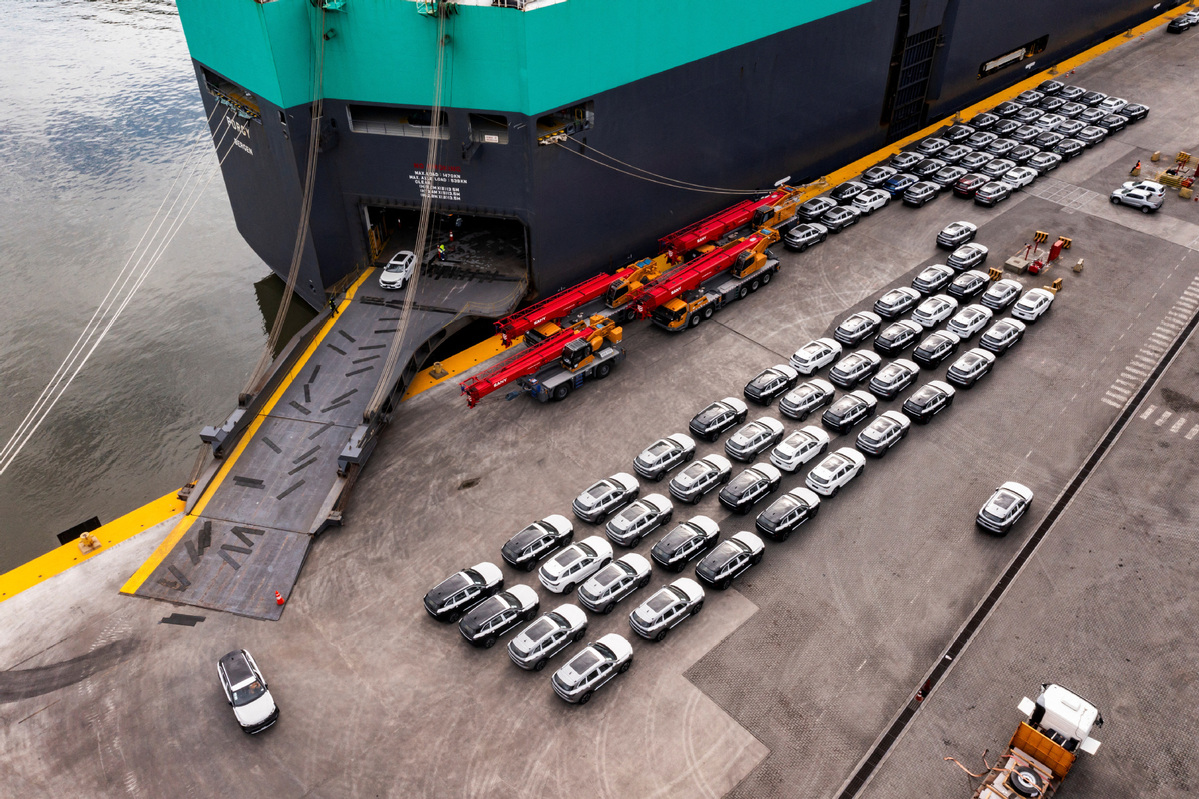
Plans are once again moving forward to develop a major transport corridor that would allow goods to move between Brazil and China faster across the Pacific Ocean.
When completed, the project would create a faster alternative to current Atlantic shipping routes, greatly reducing transport times and costs for Brazil's agricultural exports such as soy, beef and grains.
While a plan to create a faster Pacific Ocean route for Brazil-China trade has been under consideration since 2014, it was originally intended to move via Chile. The development of the Chancay Port and other infrastructure in the past few years has opened the door to the new route via Peru.
This is one of multiple projects underway between Brazil and China as cooperation between the two countries deepens.
Brazil's President Luiz Inacio Lula da Silva is on a five-day China visit that coincides with the fourth ministerial meeting of the China-CELAC Forum in Beijing on Tuesday. The forum aims to foster cooperation between China and Latin America. It connects China with the Community of Latin American and Caribbean States, or CELAC.
Last month, a Chinese delegation that included officials and experts from the Ministry of Transport and China State Railway Group conducted a weeklong feasibility study to consider the potential of a corridor that would traverse four Brazilian states and connect Brazil to the Chancay Port via road, rail and waterways. Joao Villaverde, secretary for institutional coordination at Brazil's Ministry of Planning, announced the visit on social media in mid-April.
"This is the beginning of a technical relationship for in-depth studies, particularly in railways, that revolve around these strategic pillars," Villaverde said.
The Brazil-Peru Bioceanic Corridor initiative would revive a plan first introduced in 2014 to link Brazil with port terminals along the Pacific Ocean. The idea regained momentum in November 2024.
"It will be something extraordinary, in the sense of economic development for the interior of Brazil, for the poorest regions," Minister of Planning Simone Tebet told the Brazilian outlet CartaCapital on Saturday.
Tebet, who is part of Lula's delegation this week, said she met with representatives of the China State Railway Group and found them to be "very interested" in helping Brazil expand its railway network across the country.
Comments from the Chinese Ministry of Transport and the China State Railway Group are not available.
The proposed new corridor, if built, would cut the distance goods have to travel from Brazil to China by as much as 10,000 kilometers by making it possible for goods to travel directly across the Pacific Ocean instead of the more roundabout route across the Atlantic and around the Cape of Good Hope in the southern tip of African continent or through the Panama Canal.
"Peru is Brazil's natural gateway to the Pacific, and there are two main routes," said Alejandro Indacochea, president of law firm Indacochea Asociados and founding professor at the Centrum Business School at Pontifical Catholic University of Peru.
The first route uses an existing interoceanic highway that connects Brazil's key industrial zones to Peru's Madre de Dios region. From there, goods move to the Port of Matarani and then to the Chancay Port for direct shipping to Shanghai.
The second proposed route involves a railway link between Cruzeiro do Sul and Pucallpa, cities separated by 100 km of dense Amazon rainforest.
Key player
"This infrastructure strategy will cut logistics costs and freight transportation time, making Brazilian products more competitive in Asian markets," said Robson Cardoch Valdez, a professor of international relations at the Brazilian Institute of Education, Development and Research. "It also reinforces Brazil's role as a key player in Atlantic-Pacific trade connections."
"Peru and Brazil share a long border through the Amazon, with a unique tri-border region … where Bolivia meets both countries. But the Amazon is still not fully integrated with the rest of Peru and Brazil," said Indacochea. "This new rail connection would provide direct access to the Chancay megaport for shipping goods to Asia."
The recently completed Chancay Port, built with $3.5 billion from the Chinese State-owned group COSCO Shipping, reduces shipping time to China by up to 20 days while cutting logistics costs by at least 20 percent. The facility is projected to generate $4.5 billion in annual revenue and create over 8,000 jobs in Peru.
Brazil has been China's largest trading partner for 14 years, becoming the first Latin American nation to surpass $100 billion in annual bilateral trade.
According to Valdez, the Brazil-Peru Bioceanic Corridor project will boost northern and northeastern Brazil's economies through the East-West railway project and create spillover benefits from the enhanced role of Porto Sul in Bahia.
"Brazil can expect substantial returns from this investment, both directly and indirectly," said Valdez. "For example, we'll see faster access to Asian markets and increased flow of Brazilian agricultural and mineral exports, especially from the Central-West region that is rich in raw materials."
The writer is a freelance journalist for China Daily.