Transformation of Chinese private equity industry picking up pace
Nation's PE market showed tentative signs of recovery in 2024 after contracting during previous two years










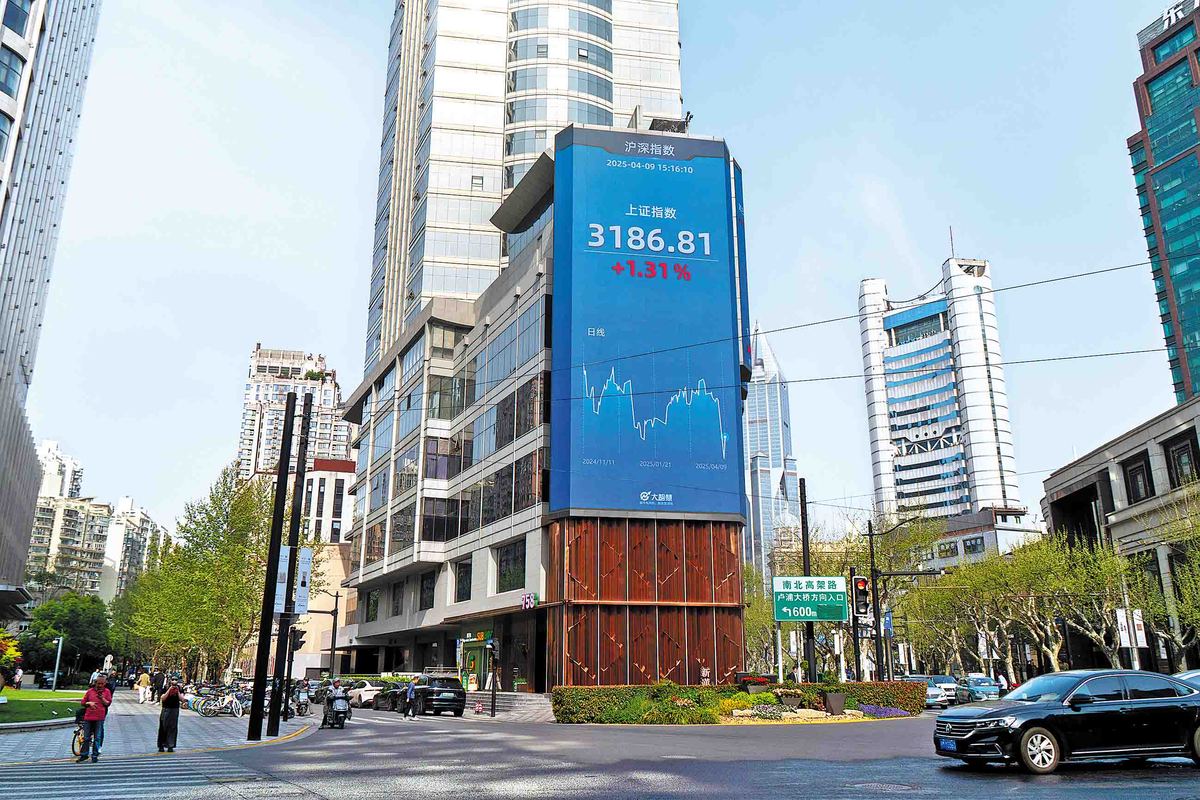
While transformation of the Chinese private equity sector has been advancing for years, the process will pick up pace as the types of deals are changing and industry leaders are playing a bigger role when fundraising becomes more difficult, according to market experts.
To look on the bright side, China's PE market showed tentative signs of recovery in 2024 after contracting during the previous two consecutive years. According to a report released by market consultancy Bain & Company in late April, the overall PE deal value totaled $47 billion in 2024, up 7 percent from a year earlier.
The uptick was mainly supported by a rise in mega-transactions exceeding $1 billion each. These include the $8.3 billion buyout of Dalian Newland Commercial Management by a consortium including Abu Dhabi Investment Authority and the $2.8 billion buyout of Beijing Electronics IC Manufacturing by E-Town Capital.
About a decade ago, Chinese general partners of PE, or those who manage PE funds, used to focus on investing in smaller-sized startups. But now, they have pivoted from such traditional growth capital to buyouts, and the trend will continue as China's PE sector matures, explained Zhou Hao, head of Bain's Greater China PE practice.
The reasons for this transition vary. Apart from slower economic growth, increasing the installed base of PE owned by companies is another major reason for the shift, as this has led to more buyout opportunities. Furthermore, founders of the invested companies now prioritize professional management and scalability, thus showing a more open attitude toward buyouts, said Zhou.
Traditional growth capital has been dominating the Chinese PE market and this continued to take up about 60 percent of deals last year. This is quite different from that of mature markets, said Nancy Zheng, head of Bain's Greater China M&A practice. But changes have been gradually taking place in China since 2023.
As the number of buyouts increase, the requirements on GPs have become different. While growth capital can largely depend on the maturity of the market and GPs' judgement on a specific industry or company, buyouts need GPs to better empower the invested company and bring more returns to limited partners, or the fund providers, when they exit, she said.
In 2024, the top 10 GPs accounted for about 70 percent of fundraising, while the ratio was only 30 percent in 2020, as Bain & Co has discovered. Large GPs' proven track record and operational expertise will make them more competitive in the following years.
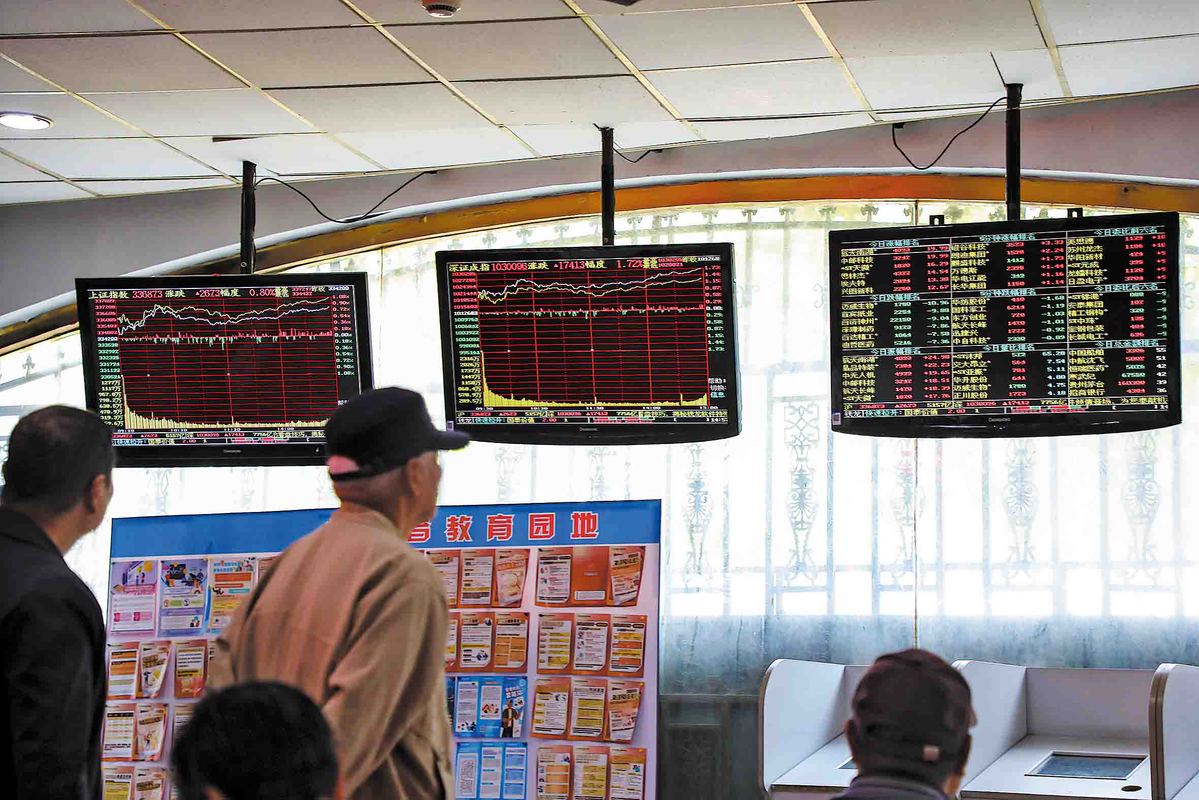
The trend is largely associated with financing difficulty in the Chinese market. In 2024, yuan-denominated PEs raised about $4.5 billion, down 20 percent from a year earlier. The contraction of dollar-denominated PEs came at a bigger 30 percent year-on-year decline, as their total fundraising last year was only $1 billion. Their combined financing of $5.5 billion last year had dropped drastically from the $24.8 billion raised in 2019, according to the report.
As Zhou further explained, the market may not see a recovery in fundraising this year. A rebound may not come until 2026 to 2029. On top of that, only the top 25 percent PEs are able to raise funds in the future. A landscape where industry leaders are entitled to more market resources will be increasingly noticeable, he said.
Another interesting trend that Bain & Co has found is the changing role of LPs in the Chinese PE sector. While they used to stay behind the scenes and chose the right GPs to manage the capital, LPs are now more actively involved in deals. They either participate in the transaction or choose the investment target directly.
As Zheng explained, LPs' increasing exposure to China assets is one major reason for their changing roles. They need the China assets to diversify risks. But the qualified GP resources are limited. The increase in mega-transactions has also promoted the change, as one single PE fund cannot cope with the capital demand.
LPs' direct involvement in investment can also help them arrive at an optimal portfolio both in terms of returns and risks, she said.
Cross-border deals by Chinese domestic GPs saw a strong rebound in 2024 compared to a year earlier. Most of these deals have turned out to be quite successful so far. Some international companies have sought rapid growth for their China business thanks to the GPs' understanding of the Chinese market and their local resources. For example, home appliances maker Versuni, the new company name of Philips Domestic Appliances, has built closer ties with local partners after being acquired by PE firm Hillhouse Investment.
International companies have also leveraged China's advantages in supply chain and research capabilities from these deals. Finland-based Amer Sports has set up a cost-effective supply chain after being acquired by a group of investors including Chinese peer Anta Sports.
State Development and Investment Corporation's investment in energy storage solutions provider Maxwell and mobility safety company Key Safety Systems, which were made in 2017 and 2018, respectively, are good examples of unlocking strong synergies across the value chain with the GPs' existing portfolios, according to Bain & Co.
On the other hand, the example of SDIC, a State-owned capital investment company, has shown the bigger role that State-backed capital has played in the PE market.
"This is in line with China's emphasis on technology development, industrial upgrading and the acceleration of domestic substitution. From the investment perspective, there should be funds leading the investment in emerging technologies or startups. The presence of more State-backed funds has helped to bring more vitality into the Chinese PE market," said Zhou.
These government-backed funds are also important from the exit perspective, as they have participated in the mergers of many large projects. Various yuan-denominated and dollar-denominated funds were thus able to exit, he added.
Indeed, deal exits plunged further in 2024 due to a lackluster initial public offering market. The uncertainties in the global macro-economy have added more difficulties, as the buyers and sellers may derive disparate valuations under such circumstances, said Zheng.
"The difficulty in exit will affect the PE firms' cash flow and their successive investment plans. In this sense, their top priority now is to exit from the companies that they have invested for a longer period. It is with a certain amount of capital returns that they can finance the next phase of the fund and make more investments," she said.
As to the tariff conflict, Bain & Co experts suggested that PE firms should first help their portfolio companies evaluate the risks and changes in cost structures. A plan B in purchasing and the ability to transfer costs to suppliers and clients are of much importance.
Meanwhile, PE firms should help to estimate the impact on invested companies' competitors as well. Clients' resilience in terms of expenditure in products and their fiscal stability when faced with higher tariffs should also be taken into consideration, they suggested.