Brazilian scientist wins World Food Prize for novel way to aid grain boom









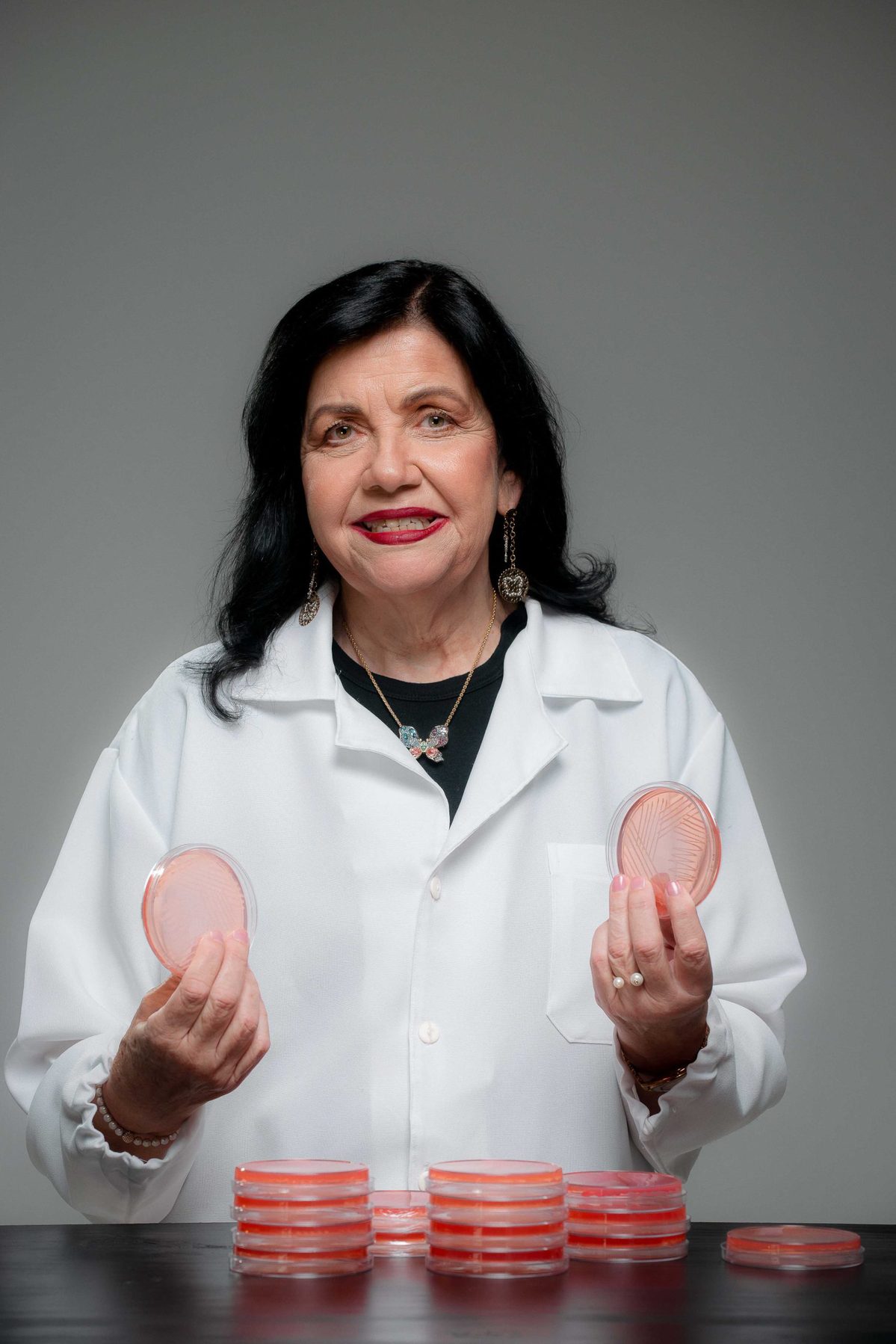
DES MOINES, Iowa — A Brazilian scientist who pushed back against chemical fertilizers and researched biologically based approaches for more robust food production has been honored with this year's World Food Prize, the organization announced on Tuesday.
Microbiologist Mariangela Hungria's research helped her country become an agricultural powerhouse, an accomplishment that has now won her $500,000 from the Iowa-based World Food Prize Foundation. Hungria has been researching biological seed and soil treatments for 40 years, and has worked with Brazilian farmers to implement her findings.
"I still cannot believe it. Everybody said, my whole life, it's improbable, you are going the wrong way, just go to things like chemicals and so on. And then, I received the most important prize in the world of agriculture," Hungria said in an interview.
Norman Borlaug, who received the Nobel Peace Prize in 1970 for his work to dramatically increase crop yields and reduce the threat of starvation in many countries, founded the World Food Prize. Since the first prize was handed out in 1987, 55 people have been honored.
Hungria said she grew up wanting to alleviate hunger. Early in her career, she decided to focus on a process called biological nitrogen fixation, in which soil bacteria could be used to promote plant growth.
At that time, farmers in Brazil and around the world were reluctant to reduce their use of nitrogen fertilizers, which dramatically increase crop production but lead to greenhouse gas emissions and pollute waterways.
Biological approach
Hungria studied how bacteria can interact with plant roots to naturally produce nitrogen. She then demonstrated her work on test plots and began working directly with farmers to convince them they wouldn't have to sacrifice high crop yields if they switched to a biological process.
The work is credited for increasing yields of several crops, including wheat, corn and beans, but it has been especially effective on soybeans. Brazil has since become the world's largest soybean producer, surpassing the United States and Argentina.
Although Hungria's research could be applied to farms in other countries, soybean production in the US is different from it is in Brazil. US farmers typically rotate crops on their land between growing corn and soybeans. Enough nitrate fertilizer applied to corn still remains in the soil when soybeans are planted that little or no fertilizer needs to be applied, Hungria said.
Brazilian agricultural companies have faced fierce criticism for clearing forested land to create farmland, largely to grow soybeans.
Much of that criticism is justified, Hungria said, but she added that her biological approach builds up the soil and makes further encroachment into forested areas less necessary.
"If you manage the crop well, the crop will enrich the soil with nitrogen. Soil health improves if you do the right things," she said.
Hungria will be awarded her prize at an annual October gathering in Des Moines, Iowa, of agricultural researchers and officials from around the world.
Gebisa Ejeta, chair of the World Food Prize Laureate Selection Committee, credited Hungria for her "extraordinary scientific achievements" that have transformed agriculture in South America.
"Her brilliant scientific work and her committed vision for advancing sustainable crop production to feed humanity with judicious use of chemical fertilizer inputs and biological amendments have gained her global recognition both at home and abroad," Ejeta said in a statement.
Agencies Via Xinhua