Expert's quest to improve Alzheimer's care in China









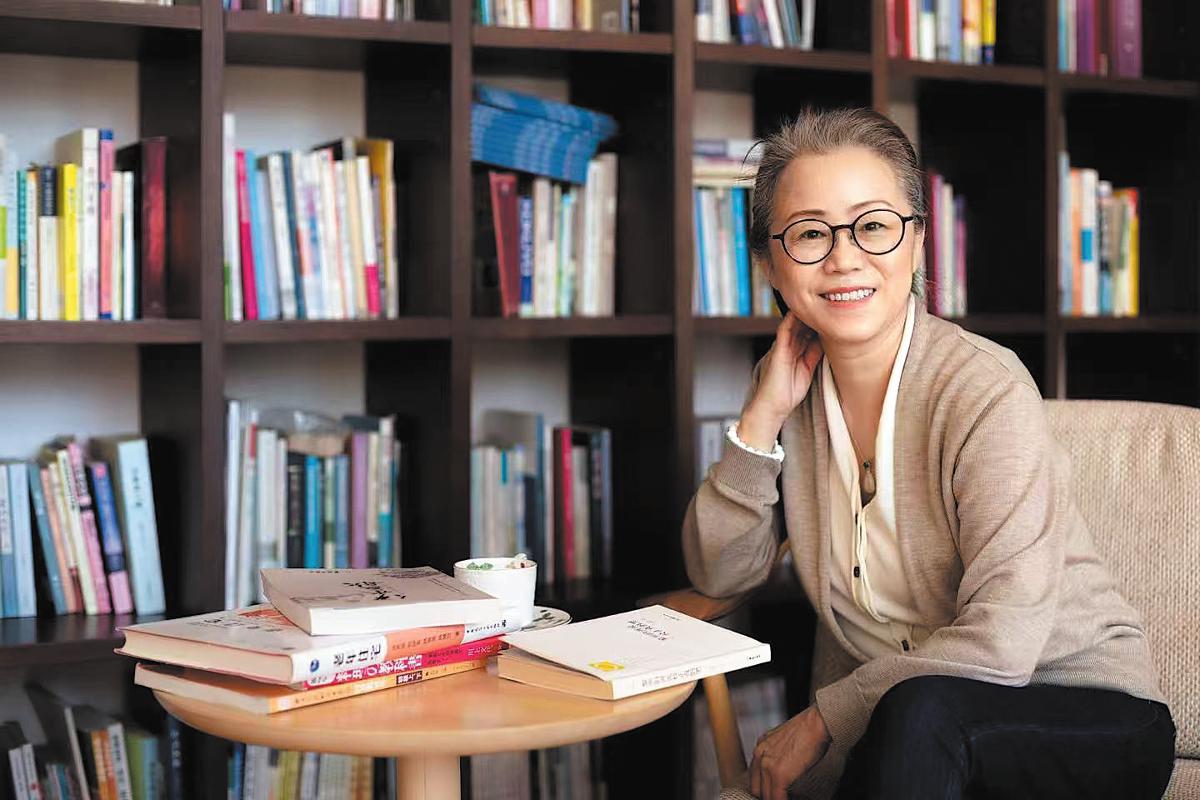
In a sunlit activity room at Beijing's Kang Yuxuan Care Center, an 85-year-old woman named Guan, who was once confined to a hospital bed, now sits upright in a wheelchair, her hands rhythmically tapping a musical instrument.
Multiple intensive care unit admissions had left Guan's family desperate to avoid further medical interventions.
Her transformation, caregivers said, began not with advanced technology but through something far simpler: folding origami, the warmth of hand massages, and the freedom to eat from ceramic plates.
Guan's daughter recently asked about getting her mother dentures — a request that would have been unthinkable two years ago.
The change in Guan and many other seniors is the work of Jin Enjing, a geriatrician whose long career has involved dementia care research in Japan, Sweden, and Harvard University in the United States.
Her approach, shaped by her own mother's harrowing experience with Alzheimer's in the mid-2000s, challenges China's traditional elder care model, where safety protocols often override personal dignity. "Institutionalized care shouldn't feel like a prison sentence," she said. "Even the frailest deserve to live, not just exist."
The seeds of Jin's philosophy took root during a 2008 research project in Japan, where she studied that country's transition from hospital-dominated dementia care to community-based group homes. Later, in Sweden, she observed small-scale facilities designed as functioning households: residents cooked with real utensils, tended gardens, and gathered around pianos for impromptu sing-alongs.
These spaces prioritized sensory familiarity, such as soft lighting and wood walls, with no "clinical" odors. The settings were in stark contrast to the sterile, overmanaged environments she encountered back home.
"When you strip away everything that makes life feel like life," she said, "you accelerate decline."
At Kang Yuxuan, she has implemented a "four-leaf clover" framework. Rooms feature floor-to-ceiling windows to aid spatial orientation, while acoustic panels dampen echoes that might confuse disoriented residents.
Patients participate in cooking classes using adaptive utensils, a calculated risk Jin defends fiercely. "A home isn't a home without the clatter of dishes," she said. "Our job isn't to eliminate hazards but to create safe autonomy."
Music and touch form the program's emotional core.
Weekly group sessions employ resonant instruments, which require minimal motor skills to play. Staff describe how one nonverbal patient began humming along to a 1950s folk song, triggering muscle memory that improved her swallowing. Another breakthrough came through Swedish-inspired tactile therapy: 20-minute hand-and-foot massages that eased joint contractures in bedridden patients by stimulating the production of oxytocin, a feel-good hormone.
"Pain isn't always physical," Jin said. "Sometimes, it's the ache of being treated as a problem to manage."
Such methods, however, often clash with families' expectations. When Guan's daughter first refused a feeding tube — a common but contentious decision in end-of-life care — Jin's team proposed incremental steps: propping the elderly woman upright, offering honey-dipped spoons to stimulate salivation, and eventually reintroducing soft foods during music sessions. The process took six months.
"Families equate medical aggression with devotion," Jin said. "We teach them that not doing certain things can be an act of love."
China's elder-care workforce remains understaffed and undertrained, while cultural stigma still paints nursing homes as dumping grounds for "unfilial" families. Jin envisions a national network linking hospitals, community centers, and private facilities through shared training protocols.
Yet for all her large ambitions, Jin's greatest advocacy is for improving a patient's quality of life. "This isn't about adding years to life. It's about adding life to years," she said.






- 10 dead and 84 injured in explosion at steel plant
- China unveils flexible urban planning rules to improve lives, foster new industries
- Ex–China Construction Bank executive gets 18 years for bribery, loan violations
- First batch of eco-friendly pioneer zones for construction of beautiful countryside unveiled
- Woodpeckers, finches captured in Jilin winter scenes
- Mainland reiterates 1992 Consensus as foundation for resuming cross-Strait dialogue