Polar regions' key role in UN development goals highlighted in study









A systematic assessment in a recent study has shed light on the crucial role that polar regions play in achieving the United Nations Sustainable Development Goals (SDGs).
The study, published in the journal Nature Communications, identifies polar regions as a critical constraint — or the "shortest stave" in the metaphorical Liebig's barrel — within the global sustainability framework.
It introduces a dedicated set of SDG targets and indicators that explicitly integrate cryospheric feedbacks and polar-specific vulnerabilities. The researchers argue that, with strengthened global cooperation and decisive action, polar regions can shift from being bottlenecks to becoming transformative engines for sustainable development worldwide.
Polar regions are disproportionately affected by climate change, and the cascading consequences of their environmental transformation carry far-reaching implications—not only for local adaptation but for planetary-scale sustainability. Despite this, polar regions remain insufficiently represented in the current SDG framework, said Li Xin, a researcher from the Institute of Tibetan Plateau Research under the Chinese Academy of Sciences and lead author of the study.
Li attributed the neglect to persistent misconceptions that these sparsely populated and remote regions have marginal relevance to global development. As a result, the distinctive challenges and contributions of polar systems are often overlooked in international policy dialogues.
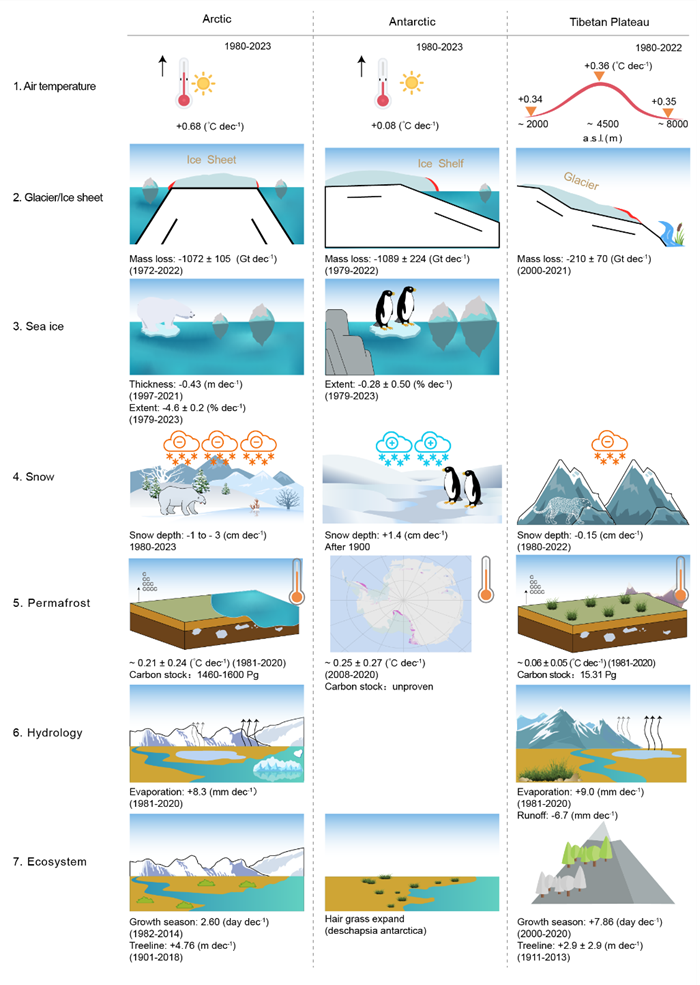
By synthesizing multi-source observations and climate model projections, the study reveals accelerated warming trends across the Arctic, Antarctic, and the Tibetan Plateau. The Arctic, for instance, is warming at an average rate of 0.68 C per decade — nearly four times the global average.
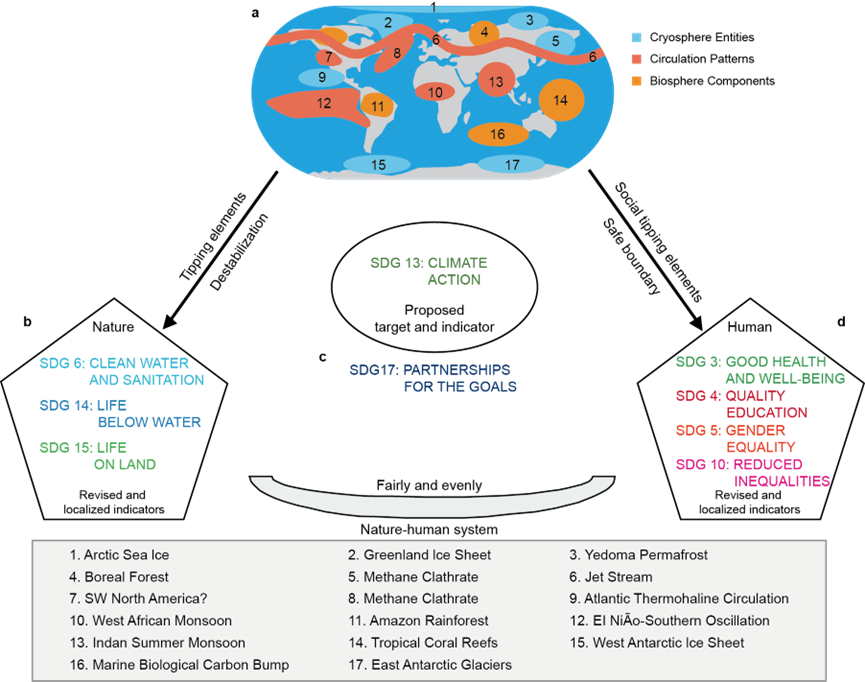
These temperature shifts are driving complex, interconnected changes in cryospheric and ecohydrological systems, with direct implications for Climate Action (SDG 13). Moreover, the teleconnection effects of climate tipping elements in polar regions — including glacier retreat, sea ice loss, and permafrost thaw — extend their influence across multiple SDGs.
The study cites that cryospheric melting contributes to sea-level rise and freshwater redistribution (SDG 6), threatens biodiversity and ecosystem stability (SDG 15), and exacerbates the frequency of extreme weather events, indirectly affecting global ecosystem services (SDG 14).
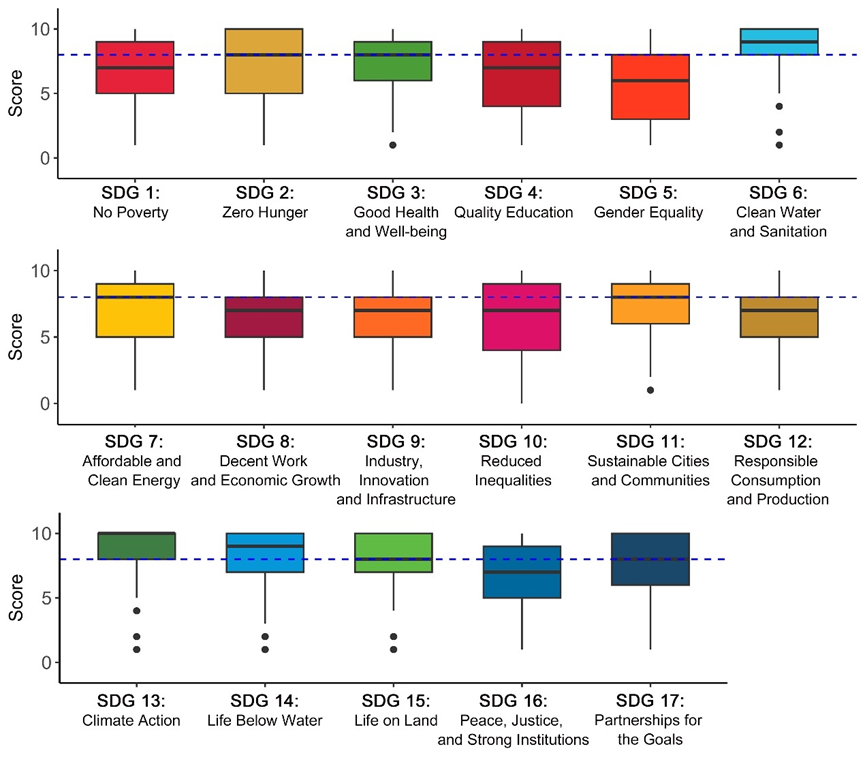
To quantify the broader relevance of polar regions to global SDG attainment, the team conducted an expert survey among polar and mountain researchers worldwide.
The findings reveal that all 17 SDGs are potentially impacted by polar processes, with teleconnection effect scores (TES) ranging from 5.9 to 8.8. SDG 13 (Climate Action) received the highest TES, highlighting the pivotal role of polar regions in regulating the global climate system. High scores were also reported for SDG 6 (Clean Water and Sanitation), SDG 15 (Life on Land), and SDG 14 (Life Below Water), underscoring the importance of polar regions in securing freshwater resources, maintaining biodiversity, and supporting ecosystem functions.
Notably, the strong linkage to SDG 17 (Partnerships for the Goals) emphasizes the need for international governance and cooperation in addressing sustainability challenges in these vulnerable systems.
The study further highlights that the existing SDG framework and its 248 global indicators inadequately capture the specific conditions and global implications of polar regions. To address this gap, the authors propose a set of revisions and additions, including a new target under SDG 13 (Climate Action) — designated as SDG 13.4 — focused on the cryosphere. A corresponding indicator is suggested to track changes in key cryospheric elements, including ice sheets, glaciers, snow cover, permafrost, and sea ice.
In response to the health vulnerabilities faced by communities in polar regions, the study recommends a dedicated indicator under SDG 3.4 to assess human well-being in extreme environments. To safeguard Indigenous cultures threatened by climate change and globalization, an additional indicator under SDG 4.7 is proposed to support the transmission of traditional knowledge and practices within polar communities.
Moreover, given the urgent need for biodiversity protection, the study suggests the inclusion of SDG 15.a.2, aimed at measuring financial support specifically allocated for biodiversity conservation in polar ecosystems. Recognizing the critical role of data in supporting informed policy and action, a new indicator under SDG 17.6.2 is proposed to track the level of data sharing and access to emerging technologies across polar regions, thus promoting innovation and cross-border collaboration.
To facilitate the effective implementation of these proposed targets and indicators, the researchers identify two urgent priorities.
First, strengthening cyberinfrastructure and Earth observation capabilities is critical. The development of an integrated, interoperable polar data platform would support comprehensive SDG assessments, enable advanced system modeling, and promote cross-border, cross-sector collaboration.
Second, the study calls for expanded investment in foundational scientific research, particularly on polar–global teleconnections and cryosphere tipping elements. Coupled modeling of natural and social systems is essential to improve risk detection and early warning capacities.
The authors conclude that polar regions represent one of the most fragile and decisive frontiers in the global sustainability landscape. Their exclusion from SDG implementation would risk undermining planetary resilience.
To "leave no one behind," the international community must elevate polar issues within global agendas and scale up investments in monitoring infrastructure, research, technological innovation, and institutional capacity. Initiatives such as the UN Decade of Action for Cryospheric Sciences exemplify the potential of global partnerships to integrate polar sustainability into broader development pathways.