



EU has much to learn from China-Global South ties









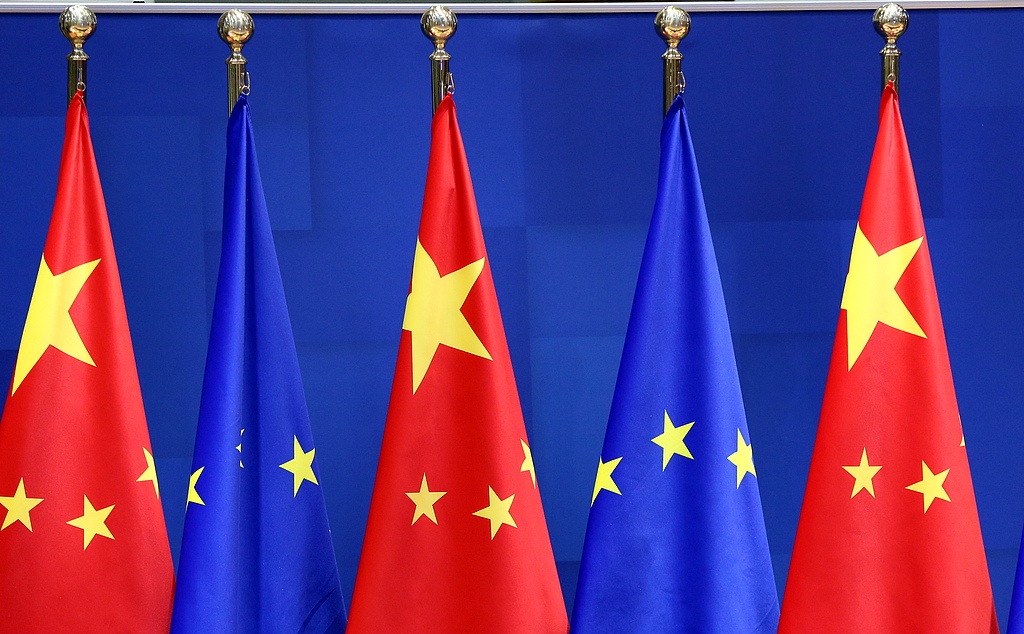
Despite the ongoing trade conflict between China and the United States, the possibility of trade and business cooperation between the European Union and China has not increased as expected. This is because the shift toward greater strategic autonomy for the EU is marked by a complexity of factors, many of them unseen and, even, poorly understood.
It is clearly the case that European markets are becoming more dependent on good bilateral trade relations with China. Because of the White House's policy of imposing punitive tariffs on its trade partners, the EU and China could witness increased trade in the near future, at least, and very possibly in the longer term as well. Yet the unseen and unappreciated reality of the highly speculative financial bubble underlying the growing instability of the EU and US economies is a crucial factor that must be recognized. This problem, which failed to be properly addressed during the global financial crisis in 2008, has only increased in unpayable speculative debt. EU central banks are also caught up in this spiral of speculative debt.
Their solutions of simply raising and lowering interest rates to fight inflation will not work, not in the short term nor the long term. Instead, there is a need to return to the policies of Glass-Steagall established under former US president Franklin Roosevelt to legally distinguish the lines between commercial banking and investment banking. There is no other reasonable or competent policy to eliminate this massive speculative debt in the system.
Despite this, the likes of the London and Wall Street banks will not like nor accept this policy voluntarily. Also, the Western central banks, under which only private assets are protected, will need to be replaced by national banking, which will allocate credit to private banks based on the general interests of the people and the common good. This credit will be issued by the national bank to the private banks to promote real production and physical infrastructure.
This is called the "physical economy" and has been referred to by the Belt and Road Institute in Sweden as "Belt and Road Economics". These ideas of physical economy can be traced back directly to German philosopher and polymath Gottfried Wilhelm Leibniz, and in modern Western European history to US economist Lyndon Larouche.
China has been operating on these principles from within its own political and economic policymaking bodies since the historical changes initiated under late leader Deng Xiaoping in the early 1980s. The historical development of China in the last 40-plus years rests on socialism with Chinese characteristics. Yet these characteristics are similar in nature to what has above been identified as physical economy and national banking. In addition, such theories are also reflected in the historic initiative proposed by President Xi Jinping — the Belt and Road Initiative — in 2013.
Though China and the EU could achieve positive development because of US tariffs on its trade partners, it will not necessarily lead Europe in the right direction for global peace and development embodied in the Belt and Road Initiative and other initiatives, such as the Global Development Initiative, the Global Security Initiative and the Global Civilization Initiative. Therefore, we are seeing a schizophrenic behavior from the EU as it seeks better economic trade relations with China, while at the same time calling for a massive military buildup to defend itself against "Russian and Chinese aggression".
This topic was also addressed at the recent webinar of the Belt and Road Institute in Sweden under the theme "EU at the Crossroads". The continued stability and sustainability of China together with the Global South, thanks to the Belt and Road Initiative and BRICS, is the proper direction for world peace and development. It will continue to be the perspective and the goal of the Belt and Road Institute in Sweden for 2025 and into the foreseeable future.
The author is chairman of the Belt and Road Institute in Sweden and distinguished research fellow at the Guangdong Institute for International Strategies.
The views don't necessarily reflect those of China Daily.





