



Glaciers in Asia at risk, action urged









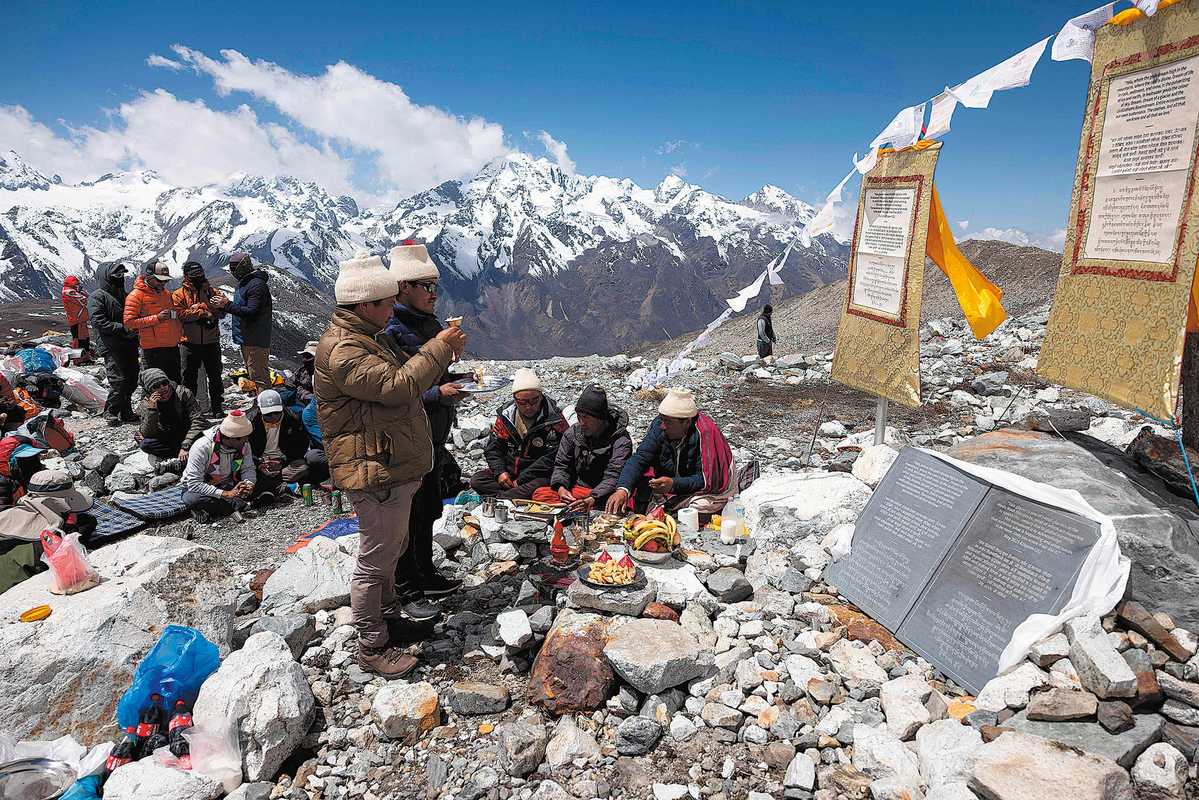
The rapid melting of glaciers in the Asia-Pacific has not only put pressure on governments to take urgent and collective action but also turned the spotlight on developed countries to mitigate the devastating effects of climate change, experts said.
According to the latest report from the World Meteorological Organization, global climate predictions indicate that temperatures are expected to remain at or near record levels over the next five years.
"We have just experienced the 10 warmest years on record. Unfortunately, this WMO report provides no sign of respite over the coming years, and this means that there will be a growing negative impact on our economies, our daily lives, our ecosystems, and our planet," said WMO Deputy Secretary-General Ko Barrett.
A WMO statement on May 28 said the current level of warming is already driving more heatwaves, extreme rainfall events, intense droughts, the melting of ice sheets, sea ice and glaciers, ocean heating, and rising sea levels.
Earlier, UN Secretary-General Antonio Guterres sounded the international alarm over the rapid melting of Himalayan glaciers in Nepal and called for urgent action to tackle climate change, particularly in ecosystems that are most vulnerable in the world.
"Record temperatures have meant record glacier melt," Guterres said in a video message at an international conference last month. "Nepal today is on thin ice — losing close to one-third of its ice in just over 30 years. And your glaciers have melted 65 percent faster in the last decade than in the one before."
In Nepal, the high glaciers in the Himalayas are melting rapidly due to global warming, which is happening nearly twice as fast as the global average, according to Christine Loh, chief development strategist at the Hong Kong University of Science and Technology Institute for the Environment. She added that the Maldives, at the other end of South Asia, faces rising seas caused by global glacier melt, which threatens its survival.
"Both Nepal and Maldives are among the least responsible for climate change but are suffering the most," she said. "This sad situation calls upon the G7 countries that developed early and hence are the most responsible for climate change to help the least responsible in adaptation and resilience through active assistance and cooperation while they and everyone else work harder to decarbonize."
Water security
Anjal Prakash, an associate professor and research director at the Bharti Institute of Public Policy at the Indian School of Business in Hyderabad, said: "The melting ice jeopardizes water security for some of the world's most densely populated nations that rely heavily on glacier-fed rivers for agriculture, drinking water, and hydropower."
As glaciers diminish, the risk of glacial lake outburst floods increases, endangering communities and infrastructure, he said.
According to Prakash, governments must prioritize climate mitigation strategies, including reducing greenhouse gas emissions through the adoption of renewable energy, reforestation, and sustainable development.
Promoting regional cooperation for climate resilience, disaster preparedness and data sharing can enhance the region's adaptive capacity, noted the expert, who is a lead author with the Intergovernmental Panel on Climate Change.
"By committing to swift climate action and sustainable policies, South Asian countries can protect their glaciers, preserve vital water resources, and ensure a stable future for their populations. The time to act is now. Glaciers are not just ice — they are the lifelines of our nations."
Levan Tielidze, a research fellow at the School of Earth Atmosphere and Environment at Monash University in Melbourne, noted that the retreat of glaciers is a significant indicator of climate change.
As glaciers melt at heights above Nepal and in other similar places in the world, the storage function of the glaciers will have been lost, said Michael Edesess, an adjunct associate professor in the Division of Environment and Sustainability at Hong Kong University of Science and Technology.
"These are the tasks facing watershed management planners, who must plan decades in the future, taking into account the changes in glacier sizes and flows," he said.
Being home to more than 7,000 known glaciers, Pakistan has the highest number of glaciers outside the Earth's poles. Their melting makes the country highly prone to the risk of floods, said Shahid Khaqan Abbasi, former prime minister of Pakistan. Some Asian countries have the largest populations, yet they are hit hardest by the devastating impact of climate change, such as glacial melt, he added.
However, the response of the governments in developing countries is limited to managing the fallout. Thus, it is important for developed countries, particularly the United States, to help address the issue of funding or climate financing, as trillions of dollars will be required in the green energy sector, he noted.
"The US is a major consumer of power or energy, so if the country is not on board, it will be impossible to have a sustainable solution."
Karl Wilson in Sydney contributed to this story.
vivienxu@chinadailyapac.com










