



Tariffs no panacea for trade imbalance









The world heaved a collective sigh of relief as the leaders of the world's two largest economies engaged in a phone call on Thursday.
President Xi Jinping emphasized the need to recalibrate the direction of the China-US relationship, stressing that both sides must take the helm and chart the correct course, and highlighted the crucial importance of avoiding disruptions and disturbances.
Nevertheless, trade negotiations may still prove challenging, and Chinese enterprises cannot afford to be complacent. Particularly for export-oriented businesses, continued self-reform is essential during turbulent times to survive.
The trade war that the US administration re-ignited with most of its trading partners in April, despite the China-US trade talks in Geneva on May 12 and the phone call between the two leaders on Thursday, has not ended. Instead, the interim deal only shifts the tone, and in the brittle geopolitics of today, tone matters.
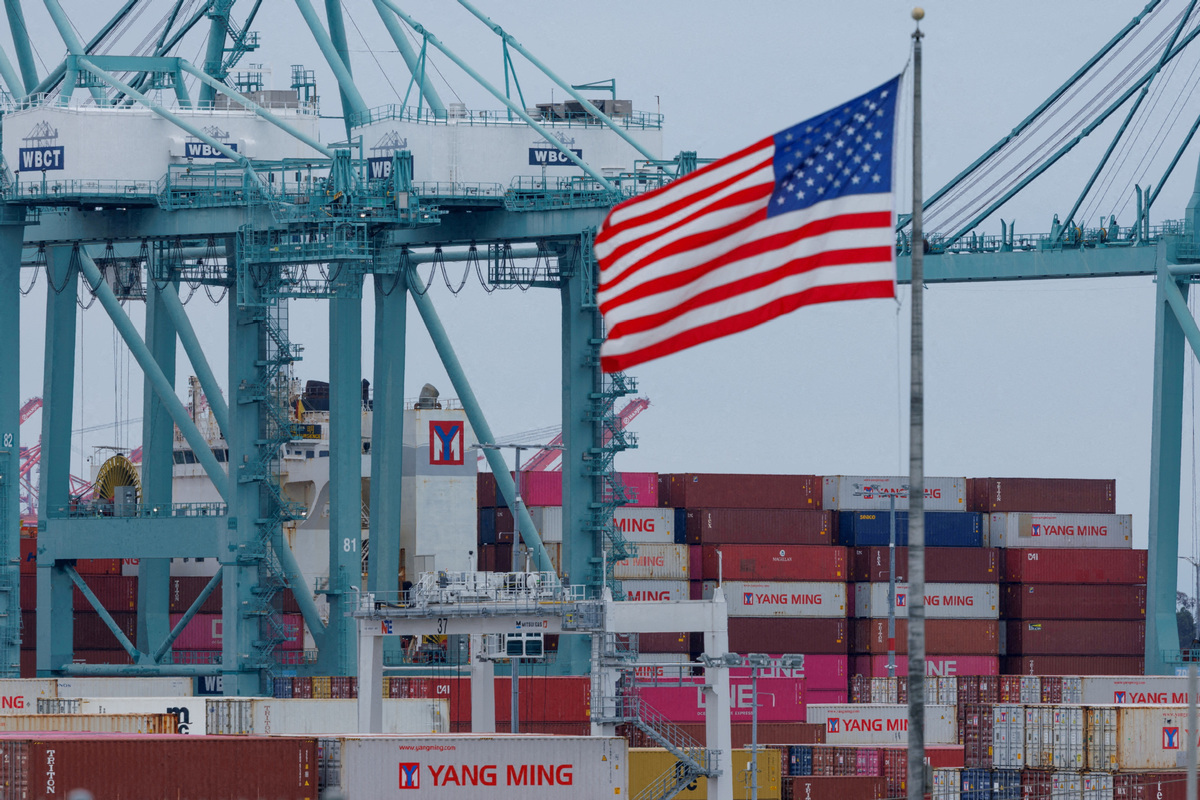
The markets didn't wait. Chinese exporters, from Guangdong province to the Yangtze River Delta region, reported a surge in US orders almost overnight after the Geneva talks. Companies such as Shenzhen-based Shengtianlong, once facing grave uncertainty, began receiving frantic e-mails from American clients, requesting immediate dispatch of shipments. Accordingly, container bookings on China-US routes jumped nearly 300 percent, with Shenzhen's Yantian Port flagging off six vessels a day to the US.
Even the airlines that had shut down trans-Pacific cargo services reversed course. For businesses, the signal was clear: The gates are opening again.
But while the tariff war has subsided, for now, tensions in the technology sector are rising, and rising fast. More than 50 Chinese tech firms remain on the US' Entity List. Soon after the Geneva deal, the US Commerce Department tightened export controls on AI chips, restricting global use of Huawei's Ascend processors. The US' message: Trade will continue, so will tech rivalry.
The US strategy is rooted in the US administration's orthodoxy that deindustrialization is a national security threat, and controlling high-tech chokepoints is essential to preserving the US' global dominance in the sector. China's response has been strategic patience — bolstering innovation at home and building resilience through a "dual circulation" model.
At a recent meeting of the State Council, China's Cabinet, Chinese leaders emphasized the importance of boosting domestic demand as well as deepening supply-side reform, in order to transform the industrial sector. That transformation is well underway, as China reduced tariffs on key raw materials, from ethylene-vinyl alcohol copolymers to cyclic olefin polymers, in January to support high-tech manufacturing and low-carbon innovation.
Besides, Chinese enterprises have been making breakthroughs in quantum computing, artificial intelligence and new energy storage. And the export of electric vehicles and green technologies is fast increasing. This means China is no longer playing defensive; it's trying to reshape the board.
The fragile deal reached between China and the US in Geneva reveals a deeper contradiction in US trade policy. Tariffs intended to shield American industries have ended up increasing inflation in the US, forcing a reluctant recalibration. The Geneva joint statement, in this sense, is less a breakthrough than a nod to economic reality. The statement exposes the limits of unilateralism, too.
Moreover, global supply chains and financial markets are no longer bystanders; they've become powerful forces nudging the US and China back to the negotiating table.
Still, the détente remains fragile. While American officials insist the US has no intention of decoupling from China, the US' continued reliance on tariffs to "correct trade imbalances" and revive domestic manufacturing tells a different story. Disputes over technology, standard-setting and market access remain unresolved. Yet no single agreement, however symbolic, can address these systemic frictions.
China, on its part, is doubling down on openness and innovation. By anchoring its growth on the "dual circulation" model, China hopes to build economic resilience at home while remaining engaged with the world, with the aim of developing a trade architecture that is open and secure, dynamic and inclusive.
The author is a professor at the School of Public Administration, Guangdong University of Foreign Studies.
The views don't necessarily reflect those of China Daily.
If you have a specific expertise, or would like to share your thought about our stories, then send us your writings at opinion@chinadaily.com.cn, and comment@chinadaily.com.cn.





