World Bank: Trade issues affect global growth









Global growth could rebound faster if major economies ease trade tensions and policy uncertainty, the key factors driving growth this year to its slowest pace, excluding full recessions, since 2008, the World Bank said in a report on Tuesday.
Global GDP is expected to grow just 2.3 percent in 2025, nearly half a percentage point lower than forecast in January, according to the World Bank's latest Global Economic Prospects report.
The report was released at a time when trade representatives of China and the United States, the world's two largest economies, were working to defuse a bitter trade war in high-level talks in London, which started on Monday and stretched into the evening Tuesday.
The World Bank's projection is grimmer than the forecast made by the International Monetary Fund, which estimated in April that global growth would drop to 2.8 percent in 2025, also citing a rapid rise in trade tensions and policy uncertainty.
Both agencies projected a global slowdown rather than a global recession.
Nevertheless, if forecasts for the next two years materialize, average global growth in the first seven years of the 2020s will be the slowest of any decade since the 1960s, the World Bank said in a press release.
The World Bank has revised down growth forecasts in nearly 70 percent of all countries, across every region and income group.
"This moment has passed," Indermit Gill, senior vice-president and chief economist of the World Bank Group, said of earlier optimism for a soft landing only half a year ago.
"The world economy today is once more running into turbulence. Without a swift course correction, the harm to living standards could be deep," Gill wrote at the launch of the report.
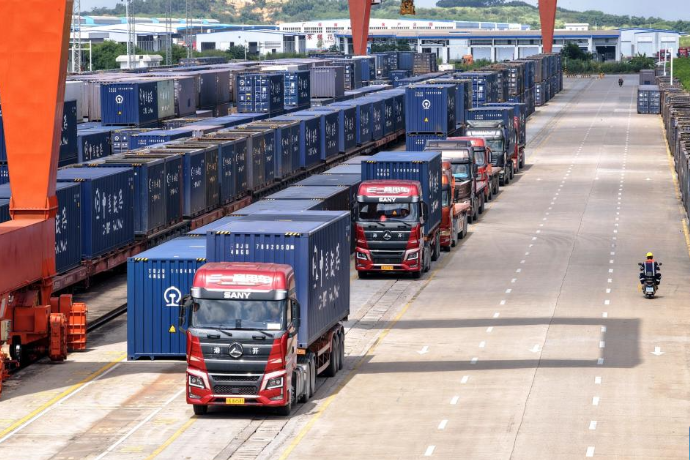
The report noted that the sharp rise in tariffs and policy unpredictability has stalled global trade, which is expected to expand by only 1.8 percent this year — down from 3.4 percent in 2024.
Tariff increases and tight labor markets are also exerting upward pressure on global inflation, which at a projected average of 2.9 percent in 2025 remains above pre-pandemic levels, according to the World Bank.
The outlook for US growth and inflation in 2025 has deteriorated relative to January forecasts, as the rise in trade barriers, heightened uncertainty, and the spike in financial market volatility are set to weigh on private consumption, international trade, and investment.
As a result, the US is forecast to grow just 1.4 percent in 2025, nearly a full percentage point lower than projections from six months ago, according to the World Bank.
China's growth forecast has been stabilized at 4.5 percent for this year, in line with previous projections, as "the impact of higher trade barriers and weaker external demand is assumed to be offset by the boost from additional fiscal policy support", according to the report.
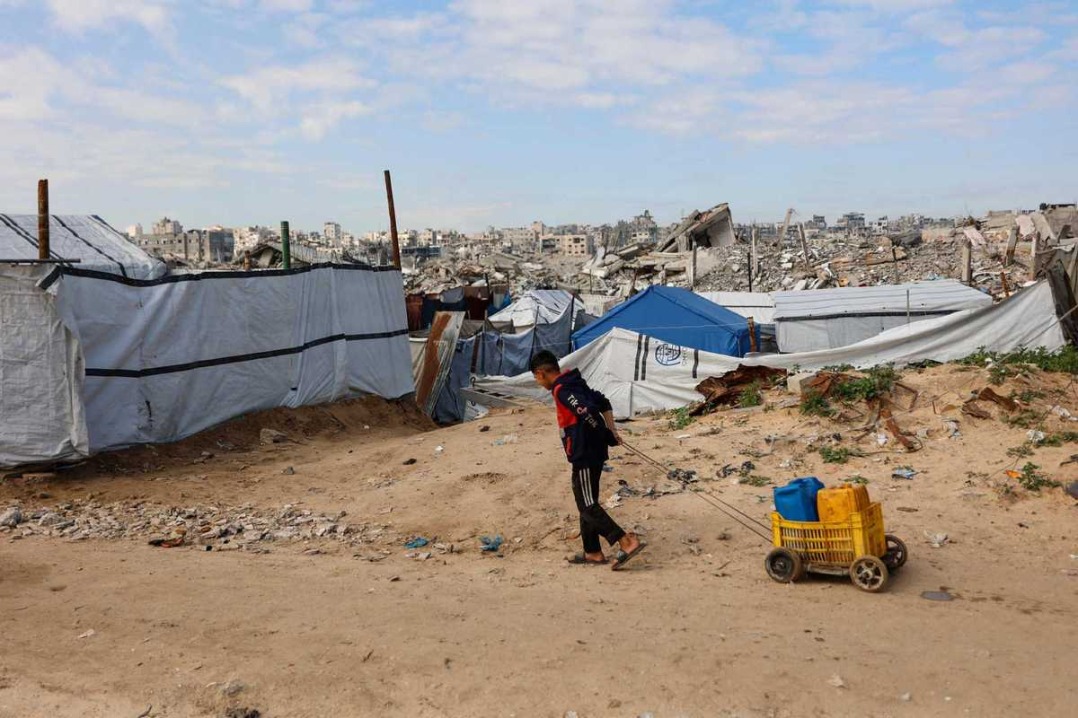
Outside of Asia, growth in many developing countries has stagnated. The report warns of a "development-free zone" emerging across much of the Global South, where economic momentum has steadily declined. Growth in developing economies has fallen from 6 percent in the 2000s to less than 4 percent in the 2020s.
Per capita income growth in those economies is forecast at just 2.9 percent in 2025, well below the pre-pandemic average. At this pace, many countries — excluding China — will take nearly two decades to return to their previous growth trajectory.
The World Bank estimates that resolving trade disputes through tariff-cutting agreements could boost global growth, as "the evidence is clear: economic cooperation is better than any of the alternatives — for all parties", according to Gill.
"Our analysis suggests that if today's trade disputes were resolved with agreements that halve tariffs relative to their levels in late May 2025, global growth could be stronger by about 0.2 percentage point on average over the course of 2025 and 2026," he wrote.
M. Ayhan Kose, the World Bank's deputy chief economist and director of the Prospects Group, also noted that with trade barriers rising and uncertainty mounting, renewed global dialogue and cooperation can chart a more stable and prosperous path forward.
Earlier in April, IMF Managing Director Kristalina Georgieva also said that the heightened uncertainty stemming from escalating trade tensions is costly, and the more it is removed, the better.
To reverse the slowdown, the bank urges countries to act decisively on reducing tariffs and expanding "deep" trade agreements — those that go beyond tariffs to address regulatory issues, which would increase growth and lower trade costs.
This echoes earlier IMF calls for countries to restore trade-policy stability and forge mutually beneficial arrangements.
In addition to strengthening public finance and creating jobs for a growing workforce, the report also calls for renewed support for rules-based institutions such as the World Trade Organization.
Despite widespread risks, including geopolitical tensions and climate shocks, the bank emphasizes that a coordinated global response could still unlock stronger growth. Trade liberalization, responsible fiscal management, and labor reforms offer the clearest paths to economic resilience, it said.
"With decisive action, governments across the world can still regain the momentum of poverty reduction — and deliver rising living standards for the next generation," the report concludes.
huanxinzhao@chinadailyusa.com