When Andrea Baldini presented a video featuring a closeup of a verdant, breathing wall of moss, a green installation interacting with real-time data from air quality, a visible ripple of intrigue passed through the audience.
Created by his Italian artist friend, the sculpture uses data from the Air Quality Index, which it translates into dynamic movements and sound.
"The installation includes a speaker and a responsive screen that moves in real time with the AQI data. As pollution levels rise, the sculpture seems to 'breathe' with increasing difficulty, creating both a sonic and visual metaphor for what air pollution does to our bodies," explained Baldini to a roomful of scholars and experts at the Peking University.
By turning abstract data into a sensory narrative, the artwork in a rural area fosters environmental awareness and encourages civic dialogue, which Baldini believes can reframe the countryside not as a place left behind, but as a site for ecological imagination and interdependence.
His goal is to explore how digital technologies — mediated through art — can help rural communities face some of the pressing challenges related to sustainable development.
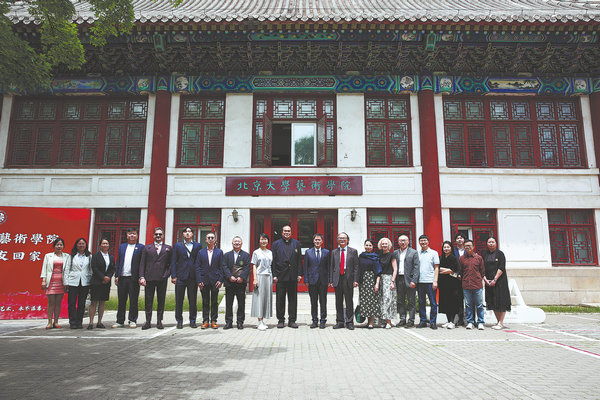
Baldini was among more than 50 scholars from China, Thailand, France and South Korea who gathered to explore cutting-edge approaches to technology-enabled rural vitalization at the academic workshop Rural Asia: Digital Creativity and Local Sustainable Development that was hosted by the UNESCO Chair on Rural Creativity and Sustainable Development, and Peking University's School of Arts and Institute for Cultural Industries in mid-May.
Zuo Jing, associate professor from Anhui University, proposed the use of art exhibitions to deliver sustainable development in rural areas.
He has focused on an ancient mining area in Fanshan town that was running for more than 600 years since the Ming Dynasty (1368-1644) and has been working with his team on a rural biennale in the town in Cangnan county of Zhejiang province.
The long mining history has shaped the terrain and left behind a complex legacy of industrial infrastructure.
"What sets this region apart from typical rural villages or urban centers is how deeply industrial life is interwoven with local culture. Over the centuries, a distinct way of life, complete with unique dialects, culinary traditions, and social practices, has developed around mining," Zuo said.
Yet, the end of mining has posed the challenge of how to sustainably transition this historically industrial area into a new phase of development.
He found one of the main issues is the disconnection between cultural preservation and the community's lived experience.
Many initiatives, including cultural tourism and museum development, have not yet engaged meaningfully with local residents. The sense of community ownership and participation is largely absent, he observes.
"That is why our project emphasizes community building. We aim to work with local residents, neighborhood committees, and county authorities to transform residents from passive heritage witnesses into active co-creators of their shared narrative," he explained.
To build a shared vision, he introduced the Cangnan International Rural Biennale — an event that would bring global attention and participation to the area.
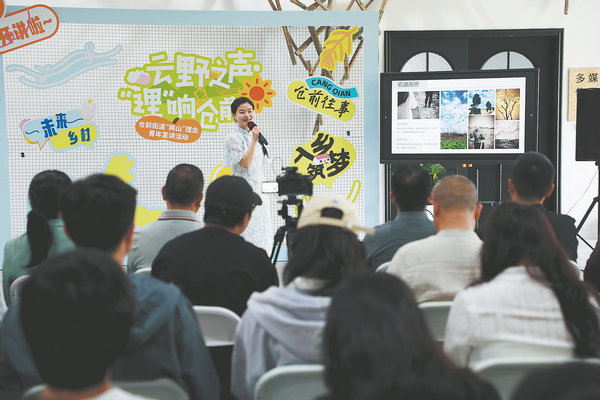
Rather than housing artifacts removed from their context, the biennale aims to preserve and interpret the cultural and natural environment in situ, involving the people who live there. Key elements include a cultural heritage data center, a comprehensive community development plan, and mechanisms for interaction between locals and visitors, Zuo shared.
He said his team is also adopting an event-driven approach, using the proposed international biennale as a platform to activate broader cultural engagement.
By grounding efforts in local life, environment, and heritage, Zuo says he intends for the project to create a sustainable, participatory model for rural transformation in the post-industrial era.
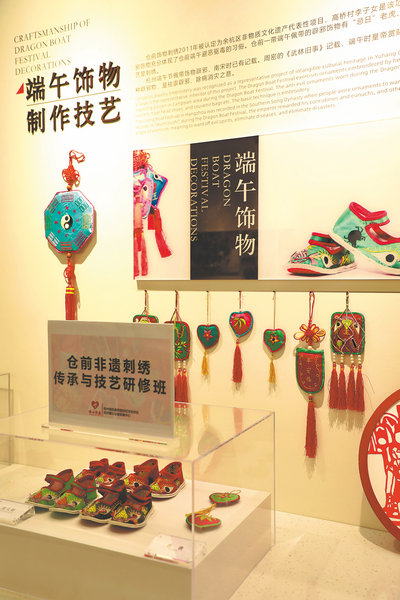
Professor Chen Ping, president of Jinan University's Academy of Cultural Heritage and Creativity, stressed that handicrafts are central to rural vitalization, serving as "both cultural anchors and economic drivers".
The university was awarded a UNESCO Chair on World Traditional Handicrafts: Inheritance and Innovation in 2022.
"These artifacts are not mere objects but living connections between past and future — examples of ancestral wisdom and daily life," Chen said.
However, modernization threatens their survival, as mass production displaces artisanal traditions and younger generations lose touch with their heritage, she noted.
Chen drew on Pierre Bourdieu's theory of cultural capital that highlights how culture functions as a form of invisible wealth that can be leveraged for social advantage and argued that rural crafts must be systematically integrated into contemporary economies.
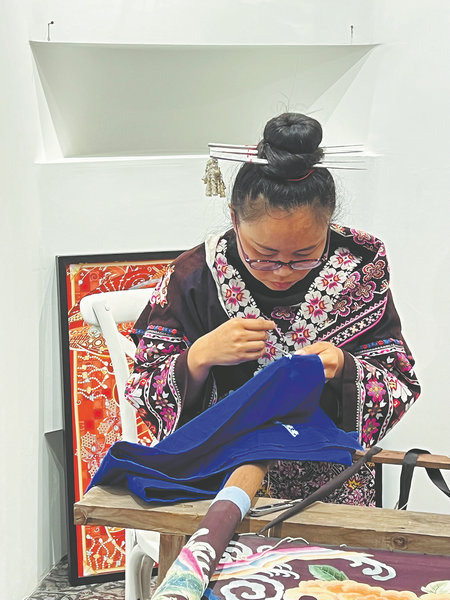
As traditional skills, often upheld by village women, remain undervalued due to limited education, market access, and innovation capacity, Chen advocated for institutional frameworks that elevate craftsmanship into viable livelihoods, combining policy support, design innovation, and cross-sector collaboration.
After studying a good number of cases and datasets to identify promising models, Chen offered consistent patterns: localized collaboration, youth engagement, and community participation.
"Without the involvement of younger generations, heritage will eventually vanish. Community awareness and government support are also essential, as is the public's understanding of how traditional craftsmanship relates to contemporary and future society," she explained.
"Nearly all effective initiatives involve support from multiple stakeholders: policymakers, designers, private enterprises, and scholars — all contributing wisdom and resources," she added.
From 2010 to 2016, she spearheaded an international folk art fair in Southwest China's Guizhou province, fostering dialogue among artisans, designers, and policymakers across 60 countries.
Since 2020, a youth designer program launched by her team in the Guangdong — Hong Kong — Macao Greater Bay Area has trained more than 100 emerging talents to reinterpret traditional motifs for contemporary products — from fashion to architecture.
She believes such initiatives demonstrate how traditional crafts can adapt to modern markets while preserving cultural identity.
Currently, Chen is compiling a digital pattern library of minority ethnic motifs from western China.
"We hope to work with AI and data science to explore how such designs might support cognitive therapy — for children with ADHD, elders with Alzheimer's, and youth struggling with depression," she said.
Professor Si-bum Kim from Gyeongkuk National University shared insights on how local heritage can drive economic, social, and spiritual sustainability through strategic storytelling and community engagement.
He cited how Verona, Italy, has transformed a fictional tale (Romeo and Juliet) into a thriving tourism brand by creating tangible symbols, such as love-letter traditions.
Kim stressed the need to protect indigenous heritage from exploitation, advocating for legal frameworks. He praised China's efforts to elevate local arts, noting how outsiders often recognize hidden cultural value before locals do.
Sirichai Fonseka, president of Assumption University, said Asian universities must cultivate tech talent with cultural sensitivity, building knowledge systems that honor tradition while driving innovation.
The university was officially designated as a UNESCO chair international hub, marking substantial development of the chair's global network.
At the launch of the academic workshop, Xiang Yong, UNESCO chairperson and dean of the Peking University's Institute for Cultural Industries, revealed two milestones in the past year's work.
An oral history project has documented over 800,000 words of rural narratives across China, while the global creative villages atlas database launched with 50 benchmark cases of rural innovation.
A global alliance for culture-tech innovation was launched at the convention, where a Beijing Declaration was unveiled, calling for ethical tech development and cultural preservation.