



China's position in the emerging humanoid robotics market









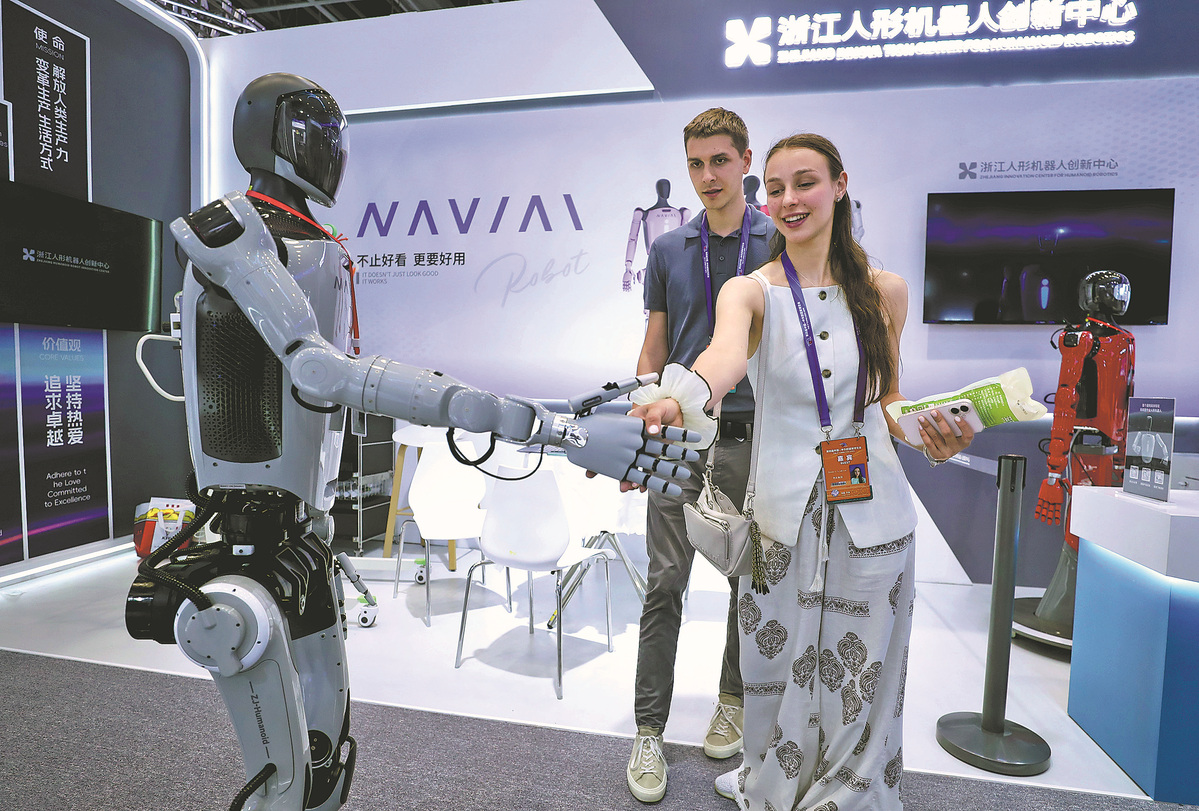
According to recent projections by Morgan Stanley, China is positioned to emerge as a global leader in the rapidly expanding humanoid robotics sector, which is estimated to be worth up to $5 trillion in the coming decades. While such a figure might initially appear speculative, it aligns with observable trends in China's technological trajectory and industrial planning. Far from being a speculative vision of the future, this projection reflects a growing consensus among analysts that the next great technological inflection point will center not on software or data alone, but on the synthesis of artificial intelligence, embodied machines and autonomous labor.
China's ambitions in the field of humanoid robotics are deeply embedded within its broader national strategy for technological self-reliance and industrial modernization. The country's current development framework, outlined in the 14th Five-Year Plan, prioritizes innovation in high-end manufacturing, intelligent systems, and robotics as foundational to its long-term economic resilience and global competitiveness. Within this context, humanoid robotics is seen not merely as a commercial opportunity but as a strategic domain through which China can overcome external technological constraints and establish a leading position in what many view as a transformative industry.
Morgan Stanley's framing of humanoid robotics as a "platform shift" - analogous to the rise of the personal computer or the mobile internet emphasizes the anticipated breadth of application for such technologies. Humanoids are expected to impact diverse sectors, from healthcare and logistics to consumer services and manufacturing. As demographic challenges intensify, particularly in rapidly aging societies such as China's, humanoid systems may offer partial solutions to labor shortages, care provision, and productivity stagnation. For China, whose labor-intensive growth model is undergoing a necessary recalibration, the timing is opportune.
What distinguishes China's approach from that of many Western nations is the alignment between policy, capital and industrial coordination. China has mobilized significant resources toward research in sensor technologies, power systems, advanced materials and generative artificial intelligence—all critical components of the humanoid ecosystem. In contrast to more decentralized innovation models, China's state-guided system allows for the integration of research and development, regulatory frameworks, and supply chain scaling in ways that can accelerate commercialization. As Morgan Stanley notes, this systemic cohesion may enable China to move from laboratory prototypes to mass-market deployment at an unparalleled pace.
Nevertheless, the rapid deployment of humanoid systems also brings with it considerable ethical, political, and social considerations. Beyond their utilitarian roles, humanoids are inherently data-intensive entities. Designed to interact with humans in dynamic environments, they are likely to collect, process, and respond to vast amounts of personal and behavioral data. In a context where surveillance technologies are already deeply embedded in public life, the proliferation of mobile, interactive, and potentially autonomous robotic agents could deepen societal concerns around privacy and civil liberties.
This raises important questions regarding the governance of such technologies. In China, where state control over digital infrastructure is extensive, the use of humanoid robotics could potentially augment mechanisms of social oversight. If humanoids are equipped with capabilities to monitor behavior or enforce normative expectations, they could blur the boundary between assistance and surveillance. Such scenarios, while speculative, must be taken seriously.
The rise of humanoids—whether in China or elsewhere—heralds a structural transformation in global labor and industrial relations. As populations age and workforce participation rates decline across much of the world, the integration of robotic labor may become not only advantageous but necessary. In this regard, humanoid robots could play a vital role in sustaining economic growth, enhancing healthcare provision, and improving supply chain efficiency. Their utility is not inherently ideological, but shaped by the institutional and normative frameworks in which they are developed.
China's growing influence in this sector thus has global implications. Firms such as Fourier Intelligence, UBTECH, and Xiaomi Robotics are not only advancing technical performance but may soon define the human-machine interface for billions. As American companies once set standards for internet design and governance, Chinese firms may now have the opportunity to shape the protocols, ethics, and user expectations of the humanoid age. The extent to which these firms embed principles such as user consent, transparency and cultural sensitivity into their products will have a significant impact on the global acceptability of Chinese-made humanoids.
This leads to a broader challenge for the international community: how to engage with the development of humanoid robotics in a manner that promotes shared norms and mitigates emergent risks. Questions of autonomy, safety, ethical alignment and cross-cultural interoperability will become increasingly urgent as humanoid technologies mature. Multilateral dialogue, cross-border research initiatives, and the creation of international standards may be necessary to ensure that the deployment of humanoid systems reflects diverse human values and respects fundamental rights.
In conclusion, the projected emergence of a $5 trillion global humanoid market is not a distant or speculative prospect, but a near-term industrial shift with far-reaching implications. China's potential leadership in this domain reflects both its strategic intent and its institutional capacity to coordinate large-scale technological development. Whether this future will foster empowerment or engender new forms of control depends not only on China's domestic choices but also on the capacity of the international system to shape inclusive, transparent, and accountable frameworks for the humanoid era. The technologies themselves may be mechanical, but the stakes are profoundly human.
The author is a Beijing-based commentator. The views don't necessarily reflect those of China Daily.
If you have a specific expertise, or would like to share your thought about our stories, then send us your writings at opinion@chinadaily.com.cn, and comment@chinadaily.com.cn.





