Active architect of its own future










At 25, FOCAC sends the message that the Global South is a model of cooperation rooted in shared growth, mutual respect and modernization
As the Forum on China-Africa Cooperation marks its 25th anniversary this year, it is not merely a milestone, but a testament to what principled, development-led South-South cooperation can achieve. At a time when the global development landscape is fragmented and dominated by political conditionalities, the FOCAC stands out as a long-term, reliable and evolving partnership between China and 53 African nations.
Unlike the Western development frameworks built on asymmetrical terms, the FOCAC is grounded on the principles of mutual benefit, non-interference and common prosperity. Its endurance and expansion over two and a half decades are evidence of the growing consensus among Global South partners. Development is not a gift handed down, but a process jointly created by equals.
In its early phase, the FOCAC prioritized connectivity and infrastructure, tackling bottlenecks long ignored by global financial institutions. Projects such as the Mombasa-Nairobi Standard Gauge Railway, the Addis-Djibouti corridor and the Karuma Hydropower Station brought not just bridges and power, but jobs, skill transfer and confidence in self-determined growth.
Today, China remains Africa's largest trading partner for the 15th consecutive year, with trade reaching $282.1 billion in 2023.But the FOCAC is not content with raw material exchange. Increasingly, China supports industrial parks, agri-processing and joint ventures that move African economies up the value chain. This structural shift is not imposed — it reflects Africa's own developmental priorities and Agenda 2063.
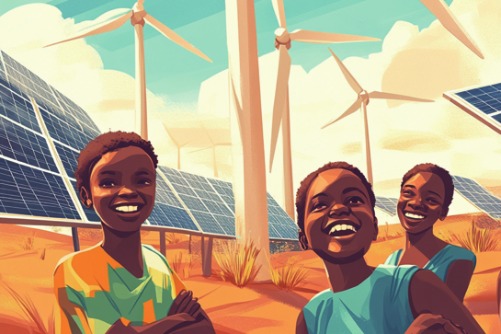
The FOCAC's 2024 Beijing Summit in September introduced 10 partnership actions for modernization, a forward-looking plan emphasizing green growth, youth entrepreneurship, digital development and industrial upgrading. Unlike the one-size-fits-all models pushed by Western donors, this framework is flexible, responsive and designed for African realities.
China's engagement in digital infrastructure — from telecom networks to cross-border e-commerce — is empowering Africa's technological sovereignty. New projects under the FOCAC will expand digital access while strengthening cybersecurity through joint protocols. China is also deepening cooperation in public health and education, evident in the construction of the Africa Centers for Disease Control and Prevention headquarters, the deployment of over 21,000 Chinese medical personnel, and the growing number of African students in Chinese universities.
No serious development partnership is free from challenges. Concerns over debt sustainability, environmental standards and labor localization deserve attention. But these concerns must be based on facts, not distortions.
The so-called debt trap diplomacy is a Western narrative lacking empirical support. African governments choose Chinese financing to fill critical gaps left by the Bretton Woods Institutions, which often impose austerity and political strings. China's financing is demand-driven, transparent and increasingly renminbi-denominated — a move that enhances Africa's financial autonomy while contributing to building a more just, diversified and multipolar international monetary system.
More importantly, China does not dictate political conditions or interfere in domestic affairs. This respect for sovereignty is a cornerstone of the FOCAC, and one reason why so many African leaders continue to choose partnership with China.
The FOCAC is evolving from a China-initiated platform to a more co-owned architecture. China welcomes greater institutional involvement from the African Union, the African Continental Free Trade Area Secretariat and other regional blocs. This is not a retreat from leadership but an affirmation of partnership. Co-ownership ensures deeper alignment with African integration goals and strengthens the legitimacy and resilience of cooperation.
The Fourth China-Africa Economic and Trade Expo, held in Changsha, capital of Hunan province, in June, exemplified this maturing partnership. Under the theme "China and Africa: Together Toward Modernization", the expo attracted over 4,700 enterprises from 53 African countries, resulting in $11.4 billion in signed deals. Green minerals, digital trade and youth innovation — sectors that speak to the future, not the past — featured prominently.
The FOCAC is not just about Africa. It is a strategic response to the failings of Western-led globalization. For decades, development was monopolized by a handful of powers who sought control, not cooperation. China offers a different path rooted in long-term planning, infrastructure-led growth and innovation-driven development.
This is the power of statecraft over state coercion. Instead of exporting ideology or demanding allegiance, China empowers its partners to pursue their own development paths. In doing so, it advances a new global consensus — one that rejects zero-sum thinking and embraces mutual uplifting.
As the FOCAC enters its 25th year, its message is clear: the Global South is no longer a passive recipient of development, but an active architect of its own future. Together, China and Africa have laid the groundwork for shared modernization. The next 25 years will be defined not by dependency, but by dignity, cooperation and co-creation.
The author is a senior lecturer of Kent Business School at the University of Kent and a fellow of Taihe Institute. The author contributed this article to China Watch, a think tank powered by China Daily.
Contact the editor at editor@chinawatch.cn.