



Changing consumer habits mark end of an era for e-shopping









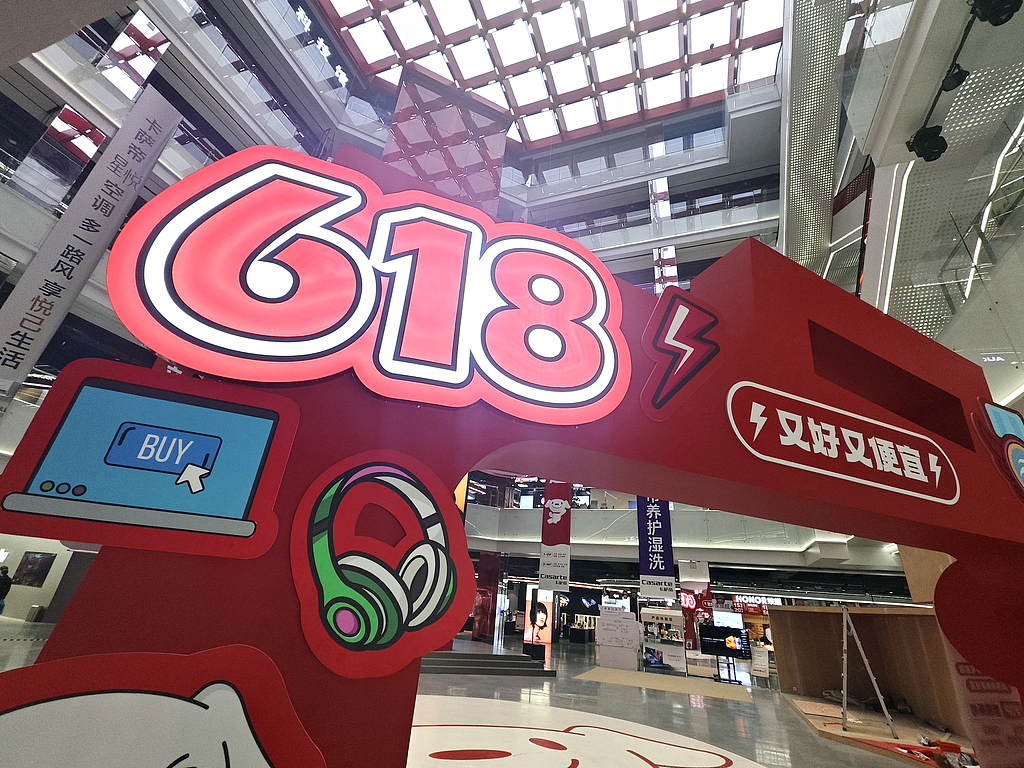
Once a nationwide carnival, the biannual e-commerce festivals have now become almost silent. The scenes of families gathered before their "shopping carts", creating astronomical sales figures the moment the clock struck midnight, have faded. But this is actually a positive sign, not something to lament.
This year's 618 e-commerce festival, the longest ever, spanning 39 days, concluded last Friday. After experiencing its first decline in 16 years last year, the total online retail sales this time reached nearly 2 trillion yuan ($278.66 billion), a year-on-year increase of 9.8 percent, according to Fudan University's Consumer Big Data Laboratory. The growth can be partly attributed to the extended duration, more participating merchants and platforms, and State subsidy policies.
Nevertheless, a hint of nostalgia lingers. "Nothing exciting anymore", sighed one netizen, while others claimed they were completely unaware of 618's arrival or departure. Without the buzz of concerts or the spectacle of livestreaming halls, the record-breaking yet quiet festival may signal the end of an era.
On June 18, 2008, JD.com launched a major promotion for its 10th anniversary. In 2009, Taobao Mall (later Tmall) aimed to create China's Black Friday. To make it memorable, especially for young people, it chose Nov 11 — the so-called Singles' Day — to kick off promotions, ushering in a new era of consumption.
Other e-commerce platforms followed suit. The mid-year and year-end sales events evolved into industry-wide promotional nodes, becoming China's two major annual e-commerce spectacles. And consumers from more than 200 countries and regions flocked to Chinese platforms, turning the festivals into global shopping phenomena.
The past 17 years were an era of blazing passion and dazzling achievements. Take the Double 11 (Nov 11) Shopping festival for example. In 2010, the combined sales on Tmall and Taobao reached 936 million yuan, 18 times the figure from its inception in 2009. By 2012, sales hit 19.1 billion yuan, making it the world's largest shopping day. And this year, the 618 overall data was more than 200 times bigger than that initial Double 11.
However, Baidu Index shows interest in the festivals began declining in 2019, with Double 11 search volumes falling back to 2013 levels in recent years. Having played a pivotal role in disrupting traditional retail, the question of whether e-commerce festivals are past their prime and what that means for the industry has become a crucial subject for discussions.
As a microcosm of industry evolution, the gradual quieting of e-commerce festivals reflects a journey of transformative development. For instance, 2016 is considered the first year of livestreaming e-commerce. In March that year, Mogujie, an e-commerce platform meant primarily for female consumers, pioneered integrating livestreaming into e-commerce sales. Taobao Live was launched a month later, sparking rapid growth in the sector, with platforms and users multiplying.
The pulse-like consumption frenzy of annual mega-sales began dissolving in the livestreaming era. Influencers could now trigger concentrated spending bursts — smaller, distributed pulses occurring daily — slowly reshaping consumption habits. Many consumers shifted to finding desired products in the livestream rooms of their favorite top influencers.
More importantly, consumer values shifted, from chasing rock-bottom prices toward prioritizing quality and individuality. For years, both 618 and Double 11 relied on hype to fuel impulse buying. The latest e-commerce festivals, however, show consumers have developed immunity to slogans such as "lowest price online". Instead, quality-to-price ratio has become the new trend. The unsustainable model of "slashing prices to chase volume", which exhausted consumers, merchants and platforms alike, faded as traffic wars for attention receded.
Under complex discount mechanisms centered on "spend X, save Y", past festivals felt like a headache-inducing math puzzle for consumers. Simplified rules, especially across-the-board "direct discount per item" offers from last Double 11 to this 618, mean shoppers no longer waste hours calculating deals, buying unnecessary items just to hit thresholds.
Beyond simplified rules lies a deeper shift in platform competition logic. Leveraging traffic and price to drive transactions is losing potency; shopping experience is now paramount. Xiaohongshu's (Red-Note) Friendly Market embodies a "browse-and-buy logic" blending community and e-commerce, allowing users to discover and purchase goods organically, much like browsing a physical market.
Furthermore, e-commerce is increasingly focusing on the new frontier: lower-tier markets. Data show rural consumers, especially the young, exhibit higher confidence than their urban counterparts. Among relatively affluent rural Gen Z, optimism about economic prospects is 88 percent. Last year, rural incomes grew 6.6 percent year-on-year, outpacing the urban income growth of 4.6 percent. This shift is reflected in the festival trends. Where major brands once targeted their promotions especially to tier-one/two cities, they are now rapidly expanding into counties and villages, new territories for growth.
Having fulfilled their mission of popularizing online shopping, e-commerce festivals seem to have lost their original raison d'être. This also signifies the end of the era of extensive growth. As the clamor fades, what remains is a more mature, rational consumption pattern. With long-term considerations surpassing gross merchandise volume as the core value of e-commerce, the festivals may no longer be noisy — much like how people complain that Chinese New Year lacks the festive spirit of the "old days" — but for consumers, every day is now a shopping festival.

The author is chief researcher at the China Watch Institute, China Daily.





