China confronts senior cancer surge with early detection, TCM









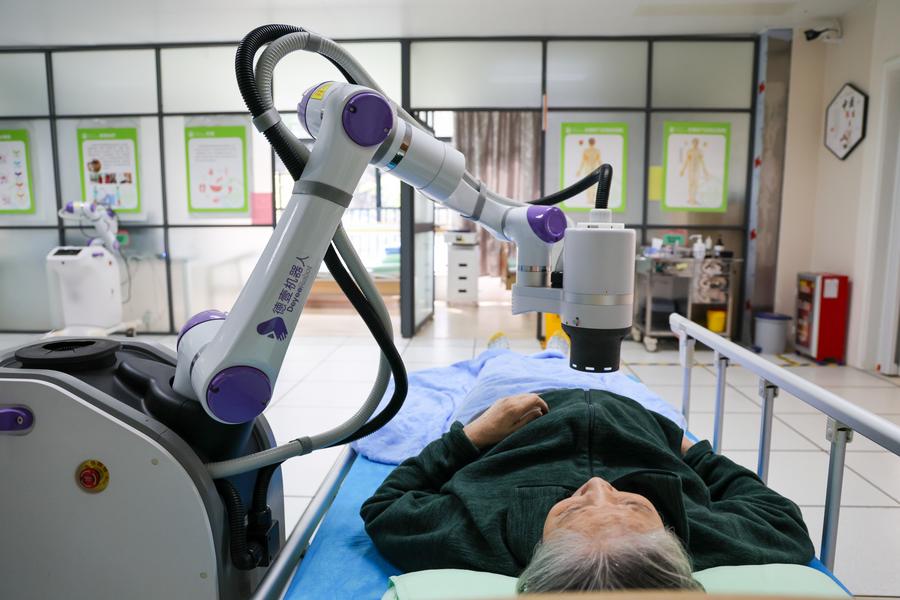
BEIJING -- With a rapidly aging population, China is facing a pressing new public health challenge: cancer among the elderly.
According to the latest data, people over the age of 60 now account for 60.7 percent of all new cancer diagnoses in the country, making senior cancer care one of the most urgent priorities in China's efforts to deliver health for all.
To promote cancer awareness among the elderly, China has launched a week-long national campaign. Medical experts are urging earlier detection, evidence-based treatment, and greater public education to counter myths that often cause seniors to delay or avoid care.
China's demographic shift is accelerating: those aged 60 and above now make up more than 20 percent of the population. By 2035, that figure is expected to reach 30 percent, with the elderly population surpassing 400 million.
A report by the Chinese Anti-Cancer Association shows that lung and gastrointestinal cancers are the most prevalent among older adults, accounting for roughly 65 percent of malignant tumors in this age group. Other commonly diagnosed cancers include liver, lymphoma, prostate, and various blood cancers.
"Cancer among seniors is not uncommon, and it's closely tied to the accumulation of genetic mutations over time," said Xue Dong, a specialist in senior oncology at Peking University Cancer Hospital. Xue explained that aging cells, a declining immune system, and long-term exposure to carcinogens significantly increase vulnerability.
Early detection remains the most powerful tool in fighting cancer, experts say.
In response, China's National Health Commission has called for enhanced public health services, including nationwide health checkups for adults aged 65 and older, with more frequent screenings for high-risk groups.
Local initiatives are also underway. In Yancheng, East China's Jiangsu province, residents aged 60 to 69 now receive free testing for 12 common tumor markers. In Daqing, the northeastern province of Heilongjiang, authorities offer free screening for five major cancers -- lung, breast, liver, upper gastrointestinal, and colorectal -- to citizens aged between 45 and 74.
Beyond cancer screenings, physicians also promote healthier daily routines. Zhang Tong, a cancer specialist at Xiyuan Hospital of the China Academy of Chinese Medical Sciences, encourages seniors to maintain a balanced diet and practice traditional Chinese fitness exercises, such as Tai Chi and Baduanjin, which are known to enhance energy and immune function.
Doctors also emphasize that traditional Chinese medicine can play a supportive role in conjunction with Western medical treatments.
During chemotherapy, therapies like acupuncture and acupoint patches help relieve side effects such as nausea, appetite loss, and constipation. For radiation-related symptoms like skin damage and mouth ulcers, herbal baths and steam therapy offer relief.
Li Yuanqing, a colleague of Xue at the same hospital, noted that clinical experience shows these approaches can ease patient discomfort during chemotherapy and radiotherapy.
Additionally, experts warn of deep-rooted misperceptions. Many older patients place faith in miracle cures or folk remedies, while others fear that conventional treatments like surgery or chemotherapy will only accelerate their decline.
"Treating elderly cancer patients requires balance," said Xue. "We can't simply apply treatments designed for younger people, nor should we dismiss care due to age. The key lies in personalized treatment, guided by both medical need and the patient's physical and emotional readiness."
"With science and compassion as our prescription, more elderly cancer patients can look forward to a dignified late life," Xue said.




- China, Malaysia to hold joint military drill
- Over 2.4b cross-regional trips expected during Golden Week
- China uses seawater for equipment cooling
- Xinjiang's foreign trade grows 40 percent annually since 2021
- Qinghai rescue operation saves 251 trapped hikers after one death
- Vibrant China during holiday: Strong consumption vitality