Flexible programs build diverse talent pool









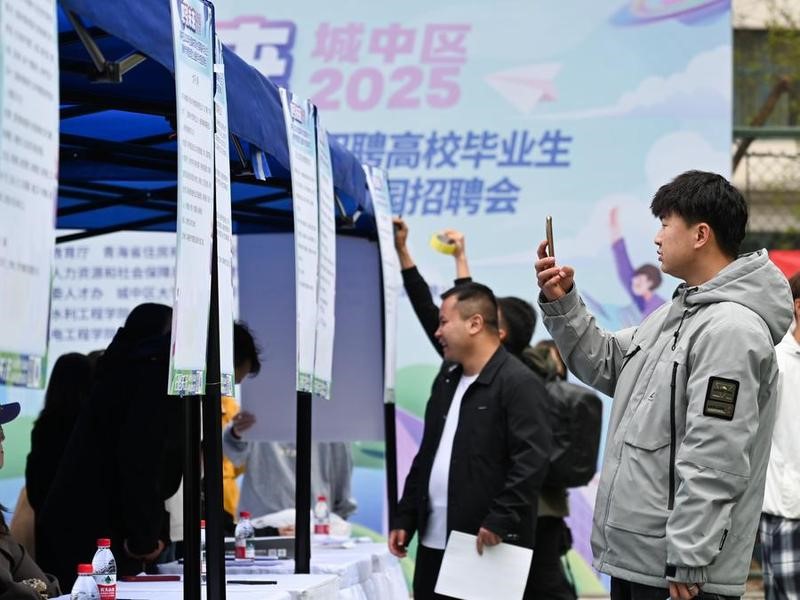
A new academic trend is gaining ground in universities across China. Students are increasingly spending their evenings and weekends pursuing micro-majors, which are short-duration educational programs designed to empower them with practical skills needed in the job market.
Such programs constitute a key step in enhancing graduate employability and align the higher education system with the country's economic needs, the Ministry of Education said.
In a recent guideline aimed at improving public welfare, the central government called on universities to deepen the integration of industry and education by developing micro-major programs that target skills in high demand.
Guo Peng, director of the ministry's Department of Development Planning, said in early June that the guideline supports universities in establishing micro-major programs to strengthen students' employment and entrepreneurial capabilities.
Unlike traditional academic programs, micro-majors are nondegree programs comprising three to 10 courses. They feature flexible schedules, shorter terms and curriculums centered around knowledge that is interdisciplinary, advanced and practical.
In March, the ministry launched a plan aimed at accelerating the trend and establishing 1,000 micro-major programs nationwide. The objective was to create an innovative talent pool that can quickly adapt to industrial shifts.
Universities across the country have responded to the new trend.
This month, Jiangnan University in Jiangsu province started enrollment for 19 new micro-majors for the 2025 academic year. These include eclectic programs such as embodied artificial intelligence and robotics, Chinese liquor, biopharmaceuticals and entrepreneurial design.
Classes are held in the evenings, over the weekends, or during condensed short terms to avoid conflict with primary studies. Upon finishing a micro-major program, students receive a certificate, but it has no bearing on their GPA, the university said.
In Shanghai, 33 institutes have established 298 micro-majors focused on emerging industries such as the digital, green and low-altitude economies, according to the municipal education bureau.
Wang Haoxu, a student majoring in international communication at Tsinghua University in Beijing, has registered for a micromajor in public health to build cross-disciplinary skills.
As a student of liberal arts, Wang said he wants to pursue fields that intersect with science and technology to enhance his scope of employment in the future. "Having a cross-disciplinary background may also lead to a higher salary," he added.
Most micro-major programs are practice-oriented, according to Wang. For example, a program on nutrition and health offers immediately applicable lessons on healthier eating, while another on global health and governance uses case studies to inculcate a problem-solving framework.
"Public health is a practice-oriented discipline. Much of the knowledge we acquire in theory can be applied in practice," he said, adding that the program is more about building a foundational literacy that is useful in the real world.
One of the most appealing features of such programs is that they give students a competitive edge, Wang said. "If I enter the media industry, the (additional) knowledge will give me an advantage over students from the same major and help me form my own unique strengths."
Beyond career prospects, Wang has discovered unexpected parallels between the two disciplines he has chosen. The public health program's strong emphasis on evaluation is similar to the focus on effectiveness in international communication, he said.
International communication students are sometimes required to provide policy advice to government departments on issues such as public opinion management.
"If you don't understand the entire process and the regulatory logic of the medical field, it's very difficult to give targeted recommendations," Wang said.
The new trend is also breaking down the wall between campus and society.
Since 2023, Soochow University in Suzhou, a city in Jiangsu, has opened some of its micro-majors to the public. The educational leadership-plus program is offered for free to primary and secondary school teachers in western China to build up the regional teaching workforce. The university's precision radiology program is open to undergraduate students of nine other universities to foster collaboration.
Yan Changjie, director of the academic affairs office at Yangzhou University in Jiangsu, said the traditional process of establishing a new academic major may take years from application to the first graduating class, by which time the industry may have already changed.
"Micro-majors are nimble. Those with positive feedback are expected to supplement a traditional degree and could even be developed into a full-fledged major," Yan said.
Fan Xiudi, director of the Education Evaluation Research Center at Tongji University in Shanghai, said the programs are a necessary and practical way for universities and enterprises to provide more diverse options for college students and other members of the public.
Although micro-majors can't substitute for traditional degree programs, they represent a way for higher education to serve national needs and are bound for greater development in the future, she added.
However, Fan warned that institutions must focus on quality, rather than simply follow a trend.
"These programs should be diverse and constantly adjusted to meet the real needs of students and professionals," she said. "If micromajors focus more on quality and flexibility, they will gain broader recognition and have a positive impact."
Xi Zhimiao contributed to this story.




- 10 dead and 84 injured in explosion at steel plant
- China unveils flexible urban planning rules to improve lives, foster new industries
- Ex–China Construction Bank executive gets 18 years for bribery, loan violations
- First batch of eco-friendly pioneer zones for construction of beautiful countryside unveiled
- Woodpeckers, finches captured in Jilin winter scenes
- Mainland reiterates 1992 Consensus as foundation for resuming cross-Strait dialogue