Digital diary of unsung courage
Trio livestreams updates of war of resistance to remind today's generation of the soldiers' supreme sacrifices, Wang Xin reports in Shanghai.









"Today is July 7, 1937," read a Weibo post published on the same day in 2012, marking the launch of an extraordinary eight-year-long daily update project that followed the timeline of the Chinese People's War of Resistance Against Japanese Aggression (1931-45).
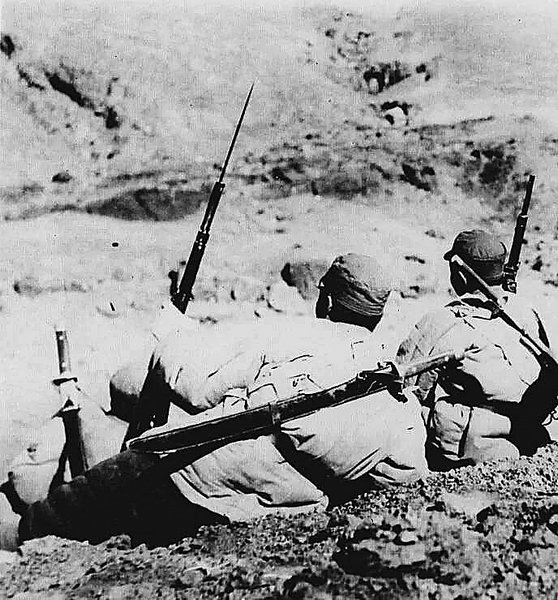
The date is etched in history with the Lugou Bridge Incident in Beijing, when Japanese troops attacked Lugou Bridge (Marco Polo Bridge) and the defending Chinese troops rose to fight the enemy. The event triggered China's full-scale war of resistance against Japanese aggression, also a main Eastern theater of the World Anti-Fascist War.
The Weibo account named "Kang Zhan Zhi Bo", which means "the livestream of war of resistance against Japanese aggression", has posted an average of 10 posts every day, re-creating daily life during the grueling eight-year conflict till Sept 2, 2020. On Sept 2, 1945, Japan formally surrendered, officially ending the war and World War II.
However, that was not the end of the account. Half a month later, it made a comeback and started a new round of livestreams on the war from Sept 18, 2020. That date corresponds with an incident on Sept 18,1931, when Japanese imperialists made an attempt to turn China into its colony, marking the beginning of the war. At the time of writing, the account has published over 55,700 posts on the war and garnered nearly 2.2 million followers on Weibo.
"We do the livestream of the war not to drum up hatred, but to moderately evoke the forgotten. We believe that we will have a more mature and rational thinking about reality if we always keep in mind the fear and humiliation suffered by our ancestors, the national reconciliation they realized regardless of divergence when facing a national crisis, and how they sacrificed their lives fearlessly for the country," says a pinned post on the account.
Jiang Tao from Shanghai, 49, is one of the three members voluntarily running the account out of interest and deep respect for the martyrs. It took them over half a year to prepare for their first post, including collecting diverse information from media outlets and historical records, complementing and verifying the sources, and eventually creating a material database covering battles, social news, military equipment and more. Normally, the trio spends hours on weekends getting the posts ready and scheduling them for the next week.
"We cannot even begin to feel the actual 'length' and 'weight' of the war as we are not living at that time. It is an extremely long period amid the crucial war. Although we may never share the same feeling of a boom going off right above our heads, we hope to experience a bit more and up close through the lengthy daily livestream," says Jiang.
Identifying roots
Asked about his original motivation, Jiang mentioned the touching story of an unknown officer surnamed Liu, which was included in the book Red Star Over China, written by Edgar Snow (1905-1972) and published in 1937. Snow was the first Western journalist to report from China's revolutionary base areas.
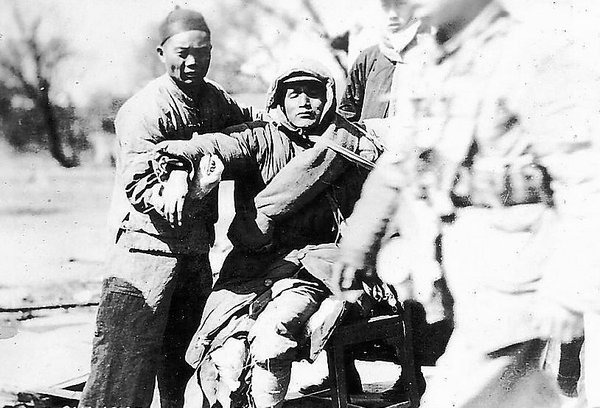
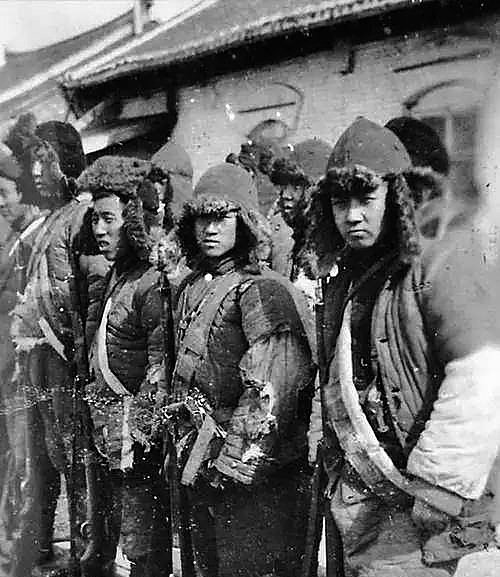
The officer met Snow on the way to his next battle. With a tattered outfit and headscarf as his only belongings, they talked a lot about love, life, warfare and the future along the way. And when asked about what he would do after the war, the officer answered clearly and firmly with perfect calmness: "I will be dead at that time. Most of us will not survive this war."
The answer shocked Snow then and struck Jiang several decades later. He was one of the countless unsung heroes and an epitome of the Chinese people during the war. Jiang's team hopes to uncover more such unknown stories.
Liu Changchun is widely known as the first athlete to represent China in the Summer Olympics in Los Angeles in 1932. But few know about the intricacy behind the story. Before the Games, Japan coerced and induced Liu to represent the illegitimate "Manchukuo" regime, but Liu flatly rejected the offer.
"I have the conscience of a Chinese and my blood flows for China. How could I betray my motherland and serve a puppet regime!" The brave sprinter's announcement came at the risk of losing his life, clearly marking China's position at the Games.
General Yang Jingyu is widely known as an anti-Japanese fighter who earned respect even from his foes. Jiang added details to the whole story. Just one day before his sacrifice in the frozen winter, he was overcome by exhaustion after many days of fighting the enemy when he met several villagers. Yang offered them money and requested they buy him some food and shoes, but the villagers advised him to surrender to the Japanese instead and said he would not be killed in that case. Yang rejected flatly, saying: "I am Chinese! I can never do that."
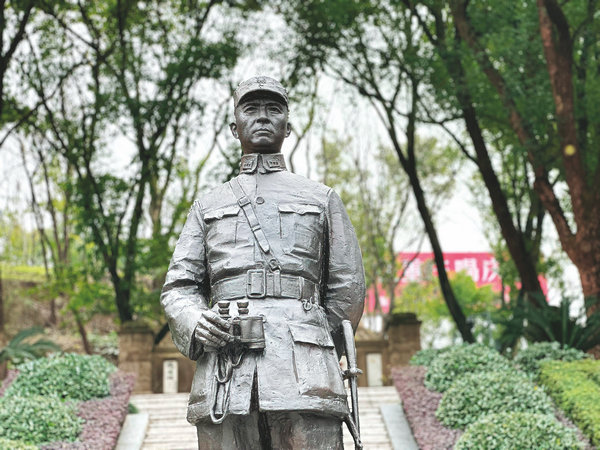
Jiang also shared with China Daily the story of General Zhang Zizhong, who was once misunderstood and wrongly labeled a "traitor". Despite never intending to betray his country or its people, the label weighed heavily on him. Determined to prove his loyalty and integrity, he took full responsibility and fought bravely till death against Japanese forces in 1940, ultimately reaffirming his dignity and patriotism through his sacrifice.
"It's always inspiring to see Chinese people feeling proud of their nationality, even when the nation is poor and weak. We gained a lot in posting their stories, feeling strongly supported and carried forward by their spirit. We often think about the meaning of life and may lose our direction sometimes. But look at them, they had a goal so clearly directing them. That is the identity of being a 'Chinese' and the shining goodness of humanity," says Jiang.
Humanity shines
The victory of the Chinese People's War of Resistance Against Japanese Aggression also owes a lot to people from outside China. In addition to the military heroes and warriors, Jiang particularly highlighted humanity during the war. International heroes such as Edgar Snow, Canadian doctor Henry Norman Bethune and British scholar Michael Lindsay are some of the names frequently posted on the account. The team also hopes to hail the heart-touching humanity among the broad mass of Chinese people in such hard times.
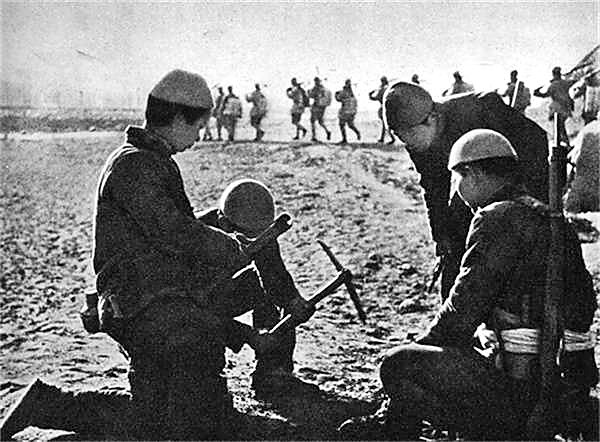
In modern Chinese history, there was no previous war that lasted longer than the war of resistance against Japanese aggression. Off the battlefield, people from all walks of life in the posts showcased their firm faith in the nation and spared no efforts during wartime to develop its education, industries and technology.
"Chinese people have the tradition of taking responsibility. They are not only fighting for themselves and the nation, but also for the whole world and mankind — even when no one is helping us," says Jiang.
With huge national sacrifice, the Chinese people held their ground in the main theater in the East of the World Anti-Fascist War, making major contributions to its victory. China suffered over 35 million casualties during WWII, yet its people stayed kind and tolerant toward other people regardless of national boundaries.
Jiang especially highlights on Chinese people's attitudes toward captives and foreign residents during the wartime. Though poor and weak, they still upheld the principle of "Do unto others as you would have them do unto you", with basic respect for each human — even for Japanese expatriates and civilians.
He adds that "the spirit of serving mankind" is naturally rooted in traditional Chinese culture, which consistently drives Chinese people to contribute to building a global community with a shared future, instead of pushing or bullying others with power.
Looking back at the victory 80 years ago, Jiang sees it as the "turning point" for the nation to gain faith, rebuild confidence, and find its presence back on the global stage while continuously striving for national rejuvenation. Although the war has ended, efforts in nation building and civilization development are far from over.
It has been 13 years since the account's first Weibo post. The long-lasting livestream is not only consistently motivating Jiang and his teammates, but also garnering massive number of followers and countless post views.
"Each post is like a telegram from the distant past. We see our land lost piece by piece, and then gained back one by one. An inch of land, a drop of blood. Pay tribute to the martyrs, and to this serious and magnificent internet art," reads a Weibo comment under the post.
"Eight years (1937-45) may have gone in the blink of an eye for me, but in actuality it's so long for our martyrs to persevere. … Our life today is really hard-won. The more we know about this history, the more we understand how hard it is for Chinese people to keep standing in the world," reads another one.
The livestream is still ongoing, and so is Chinese people's path to a better future.
Contact the writer at wangxin2@chinadaily.com.cn