Ignoring free trade benefits is absurd









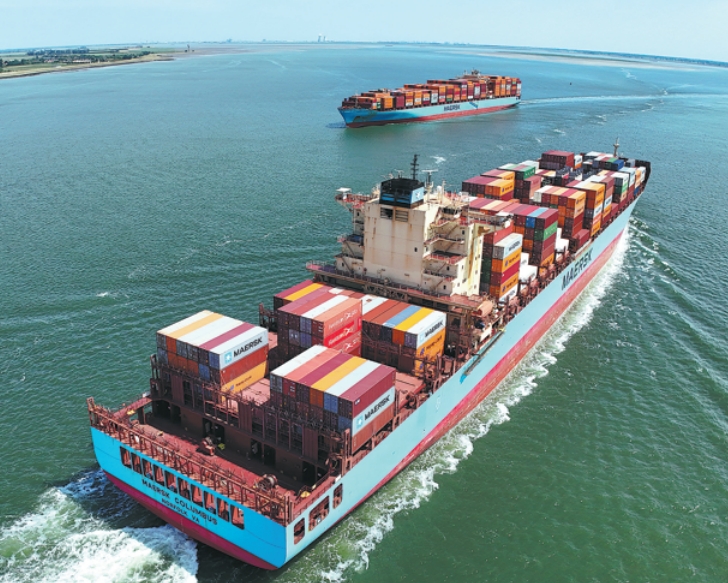
Around the world, people are waking up to the benefits of freer trade. After years of free trade fatigue and growing protectionism, a majority of Americans now say the United States should pursue global free trade, while the European Union is striking free trade deals as fast as it can, and even regional competitors China, Japan and the Republic of Korea have agreed to deepen greater cooperation in trade.
The threat of a global tariff war has driven many to the conclusion that everyone is better off when countries specialize in what they are best at. This rosy view is a stark contrast to the vision of trade as a zero-sum game that other countries have won. And yet, the downsides of free trade are real: Images of the "Rust Belt" of America have come to stand for the negative impacts of free trade not only with US voters but also globally. Miles of once-mighty factories were silenced and once-proud communities devastated when corporations shifted their manufacturing offshore.
Both things can be true. The benefits and costs of free trade policies do not fall equally. Wealthy countries benefit relatively less from freer trade, and parts of their workforce carry a disproportionate burden. But despite this, peer-reviewed research by Copenhagen Consensus economists shows that freer trade is still overwhelmingly good even for rich countries.
The researchers' economic model investigates what happens if we grow global trade by 5 percent. There are real and substantial costs. Across the entire world, for all workers and into the future, the present-day cost would be almost $1 trillion. That comes from adding up the impacts to the wage packets of affected workers who lose their jobs, or have to downsize to lower-paid roles, or end up abandoning the workforce altogether.
Some 92 percent of that cost occurs in developed countries. After all, this is where most of the import-exposed markets are. It is where wages are the highest and where workers are most at-risk from cheaper or better products from poor countries entering rich countries. These losses are real — $1 trillion is a vast sum to anyone.
But we also need to remember the substantial benefits of free trade. Indeed, the same shift that saw factories leave former industrial centers also drove incredible economies of scale and allowed consumers everywhere to buy cheap and often fairly well-made products from huge box-stores.
Middle-class Americans gain an estimated 29 percent of their purchasing power from foreign trade. In other words, the average middle-class American can buy nearly one-third more for each dollar than if there was no trade. The effect is even bigger — 62 percent — for the poorest tenth of American consumers.
When we count the benefits of free trade in the rich OECD countries, these are much higher than the costs: $6.7 trillion. In total, this means a $7 return for each dollar of cost. Yes, governments should work harder to help the workers who would be most hurt by freer trade, but even after addressing the nearly $1 trillion in costs, there are over $6 trillion in benefits to be enjoyed across the rich world. Any government would be foolish to ignore these much larger benefits, despite their substantial costs.
Perhaps even more importantly, the research shows that free trade is hugely beneficial for poorer countries. This is why it is a tragedy that some Western politicians have abandoned the multilateral free trade agenda altogether: freer trade can generate huge gains for the world's poorest countries. When the world's poorest countries are better-off, the whole world is a stronger, more stable place.
The world's low and lower-middle income countries that are home to 4 billion people will suffer some costs from freer trade, but these are relatively low at $15 billion. Yet their gains from freer trade would be a fantastic $1.4 trillion in benefits. Since the poorer world's economies are much smaller, this is a much bigger deal. And because their costs are much lower, each dollar in cost delivers $95 in benefits. That's an astonishing return on investment.
In a world grappling with inequality and economic uncertainty, freer trade remains one of the most powerful tools for shared global prosperity. While its costs — particularly in developed countries — are real and must be addressed with smarter, fairer policies, the benefits are too significant to ignore. With nearly $7 in returns for every $1 in cost for rich nations, and an extraordinary $95 return for poorer countries, freer trade is a win-win. The path forward is not protectionism, but reform to make sure the gains of trade are not only greater, but are also better shared.
The author is president of the Copenhagen Consensus. His book, Best Things First, was named by The Economist as one of the best books of 2023.
The views don't necessarily reflect those of China Daily.
The views don't necessarily reflect those of China Daily. If you have a specific expertise, or would like to share your thought about our stories, then send us your writings at opinion@chinadaily.com.cn, and comment@chinadaily.com.cn.