



Expanding media reach will make globalization more equitable









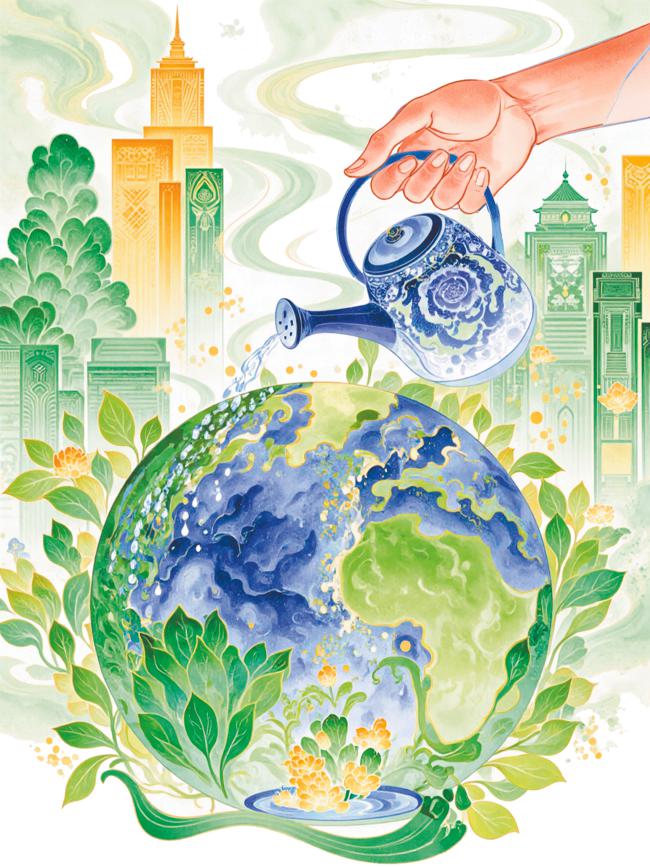
In many parts of the world today, it is no longer unusual to find news broadcasts, documentaries or talk shows produced by Chinese media organizations appearing on local screens in multiple languages. This growing presence reflects a desire of China to participate in shaping a more balanced global narrative, one rooted in mutual respect and cross-cultural understanding.
This shift has assumed added significance in 2025 as in March the US government ordered the dismantling of news outlets such as Voice of America and Radio Free Asia and Radio Free Europe. The decision followed years of mounting criticism, even within the United States, that such outlets had become expensive, outdated and ideologically driven.
For much of the postwar period, US-sponsored international media functioned as instruments of ideological competition, projecting Washington's narrative abroad. But today, audiences, especially in the Global South, no longer want to be passive recipients of such messaging. They are looking for more voices, not fewer; for authentic storytelling, not filtered ideology.
This is where the Chinese media is gaining ground. Instead of generating Cold War-style content, the Chinese media is focusing on mutual development, civilizational dialogue and inclusive global storytelling. Instead of exporting ideology, the Chinese media aims to present diverse perspectives, highlight common development and engage with the world respectfully and pragmatically.
It is not just official media that frames China's view of the world.
Millions of Chinese citizens now study, work or live abroad. These students, professionals and entrepreneurs are an increasingly important channel for cultural exchanges and international understanding. They experience foreign societies firsthand and share their observations directly through social networking sites, interpersonal networks and media collaborations. They can see, hear and think for themselves. This grassroots-level interaction adds authenticity and nuance to China's global understanding and complements the country's high-standard opening-up.
Indeed, China's opening-up is not only about trade or investment. It includes media cooperation, people-to-people exchanges and mutual learning. Expanding the international reach of Chinese media is part of a larger effort to make globalization more equitable and inclusive.
As the world becomes increasingly interconnected, the goal is not to gain narrative dominance, but to ensure fairness, diversity and understanding in how global events are discussed and interpreted.
In many developing countries, Chinese media fills an important void by offering a perspective on global issues that is grounded in development, not division. By partnering with local outlets, investing in multilingual content and supporting local journalism training, Chinese media shows a willingness to listen and collaborate.
Unlike some Western outlets that have cut back on international coverage, Chinese media organizations are expanding their presence and engaging more deeply with global audiences.
Of course, challenges remain. Chinese media should continue to adapt to local contexts and uphold the highest standards of credibility and professionalism. The growing influence of Chinese media reflects a changing global communication landscape, one that is moving beyond the binaries of the past toward a future where many voices shape the global conversation.
As some Cold War instruments fade into history, what emerges is not a vacuum, but a more pluralistic media world. One where bridges replace barriers and shared understanding takes precedence over ideological confrontation. In this evolving global media landscape, China's voice is not only being heard, it is helping others to speak and be heard too.





