New wave of tariffs: A risky gamble for US and the world









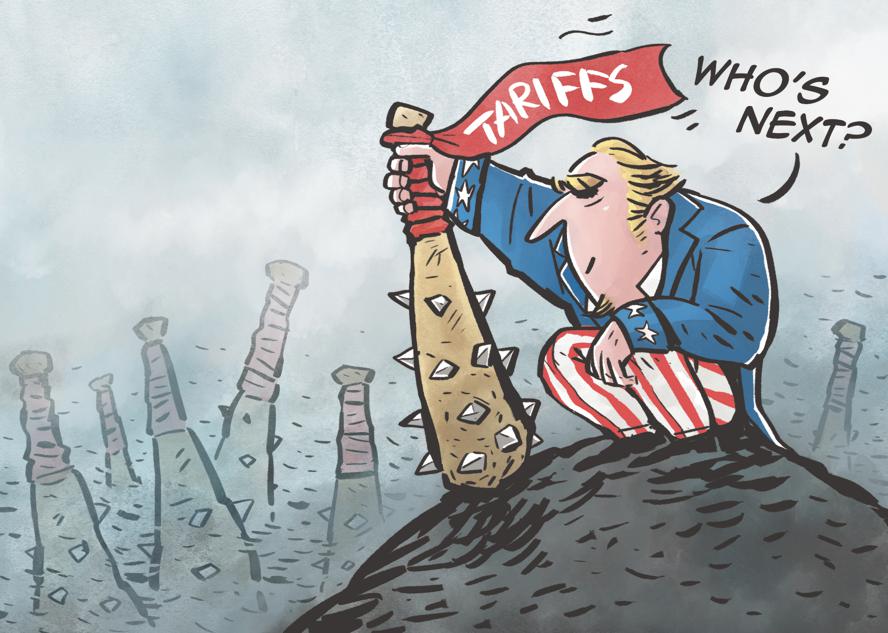
US President Donald Trump's recent announcement of a sweeping new wave of tariffs, set to take effect on August 1, 2025, marks a dramatic escalation in Washington's ongoing trade battles. With tariffs imposed on countries including major trading partners such as Japan, South Korea and Brazil, this move has reignited fierce debate about the effectiveness and consequences of protectionist economic policies in today's interconnected global economy.
Trump's tariffs are more than just a negotiating tactic; they represent a fundamental shift in America's approach to international commerce. The implications of this shift will be felt not only across the US economy but also among its allies and within the global trading system at large.
The US administration justifies these tariffs on two main grounds – the principle of reciprocity and national security concerns. While these arguments may resonate with some Americans, the broader economic and diplomatic consequences are far more complex and concerning.
The economic fallout from these tariffs is already visible. Copper prices have surged, with US consumers facing premiums of up to 50 percent more than global rates. Financial markets have reacted with volatility, and analysts warn of rising costs for manufacturers and consumers alike.
The Penn-Wharton Budget Model's April report predicted that these tariffs could reduce US GDP by about 6 percent in the long term, and lower average wages by 5 percent. For a typical middle-income household, this could translate into a lifetime loss of around $22,000, according to the report. Tariffs act as a tax on imports, raising the cost of a wide range of goods –from electronics to automobiles – ultimately hitting American families and businesses.
Moreover, trading partners have already announced or threatened retaliatory tariffs, targeting hundreds of billions of dollars in US exports. This retaliation threatens American farmers, manufacturers and workers whose livelihoods depend on access to foreign markets. Additionally, the tariffs risk fueling inflationary pressures as input costs rise, complicating the Federal Reserve's efforts to maintain economic stability.
Although the administration touts increased federal revenue from tariffs – estimated at $156 billion in 2025 alone – these gains pale in comparison to the broader economic losses. In effect, tariffs function as a regressive tax, disproportionately impacting lower- and middle-income Americans.
Beyond economics, Trump's tariff blitz risks alienating key allies and undermining the international rules-based trading system. Countries like Japan and South Korea – longstanding US partners in both trade and security – have been blindsided by these sudden, sweeping tariff hikes. The European Union, though spared in this round, is deeply concerned and scrambling to negotiate a reprieve before the August deadline.
The administration's approach – issuing tariff "ultimatums" through public letters rather than traditional diplomatic channels – has sown confusion abroad. Many nations view these tariffs as arbitrary and punitive, rather than legitimate attempts to address trade imbalances.
This risks eroding trust in the United States as a reliable trading partner. Allies may seek closer ties with other economic blocs, such as the European Union or China, to hedge against American unpredictability. The proliferation of tariffs and counter-tariffs threatens to fragment global supply chains, raising costs and reducing efficiency worldwide. It also weakens multilateral institutions like the World Trade Organization, which are designed to resolve trade disputes peacefully and predictably.
Trump's tariffs are as much about domestic politics as they are about economics. By positioning himself as a champion of American industry and a defender against foreign "cheating", he appeals to voters in key manufacturing states. Yet history shows that protectionism is a double-edged sword: while it may provide temporary relief to some sectors, it often inflicts broader harm on the economy and invites retaliation that can devastate other industries.
The timing of the tariffs – just months before the 2026 midterm elections – suggests a calculated effort to energize Trump's political base. But the risks of economic pain and diplomatic isolation are real and could ultimately backfire.
Trump's new wave of tariffs represents a bold, and deeply risky, gamble. While the rhetoric of reciprocity and national security may be politically potent, the economic and diplomatic costs are likely to be severe. American consumers, workers and businesses will bear the brunt of higher prices and lost export opportunities. Allies will question the reliability of the United States, and the global trading system will be further strained.
In an interconnected world, prosperity depends on cooperation, not confrontation. If the US continues down this path of escalating tariffs, it risks not only its own economic health but also its standing in the global community. The time has come for a more measured, collaborative approach, one that recognizes the due responsibilities of America as a major power in the world economy.
Liu Jianxi is a Beijing-based analyst of political and international relations and contributor to news organizations including Asia Times, CGTN, Global Times, and others. The views don't necessarily represent those of China Daily.
If you have a specific expertise, or would like to share your thought about our stories, then send us your writings at opinion@chinadaily.com.cn, and comment@chinadaily.com.cn.