China's experience key to fight against hunger in Africa









In the village of Bananko, Guinea, Lanciné Camara, president of the local agricultural group, remembers a time when every harvest felt like a race against loss.
Before support arrived, farmers stored their crops in straw-covered granaries or just sacks, leaving them vulnerable to pests and fire. Valuable seeds were often lost, and entire harvests spoiled. In Guinea, up to 30 percent of the harvested rice was lost before it reached the markets. "We often had no choice but to sell our crops quickly and cheaply," Camara said, "just to avoid losing everything."
Bananko is not an isolated case. Across West Africa, rice is both a staple and a struggle. Countries like Guinea consume far more than they produce, leading to costly imports and chronic food insecurity. Farmers used outdated tools and weak infrastructure even as they faced growing climate threats.
That wasn't the end of their travails. The poor storage infrastructure meant that much of the rice went waste—making hunger worse and food security harder to reach.
"In Guinea, hunger is an everyday reality," said Masae Shimomura, deputy country director of WFP Guinea, noting that 82 percent of the population survive on just one meal a day.
That changed with the arrival of the World Food Programme and the West Africa Rice Value Chain Project, which brought practical solutions inspired by China's agricultural experience.
The initiative provided small-scale farming tools to the farmers and, more critically, introduced mini silos that revolutionized crop storage conditions in the village.
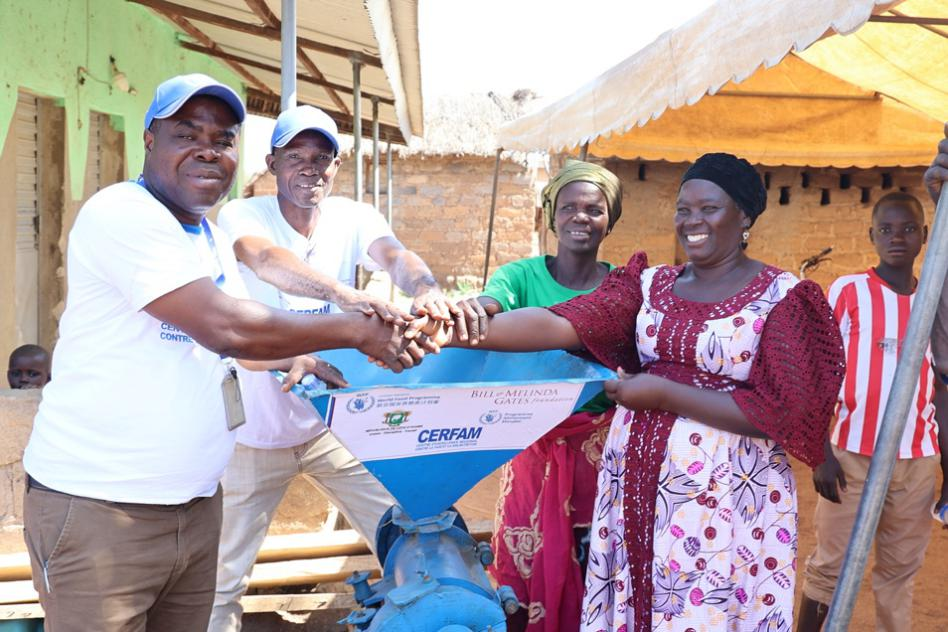
Launched in November 2022, the West Africa Rice Value Chain Project has transformed rice farming in project areas in C?te d'Ivoire and Guinea. By bringing in adaptable Chinese equipment and techniques, the project has directly improved the lives of over 3,000 smallholder farmers.
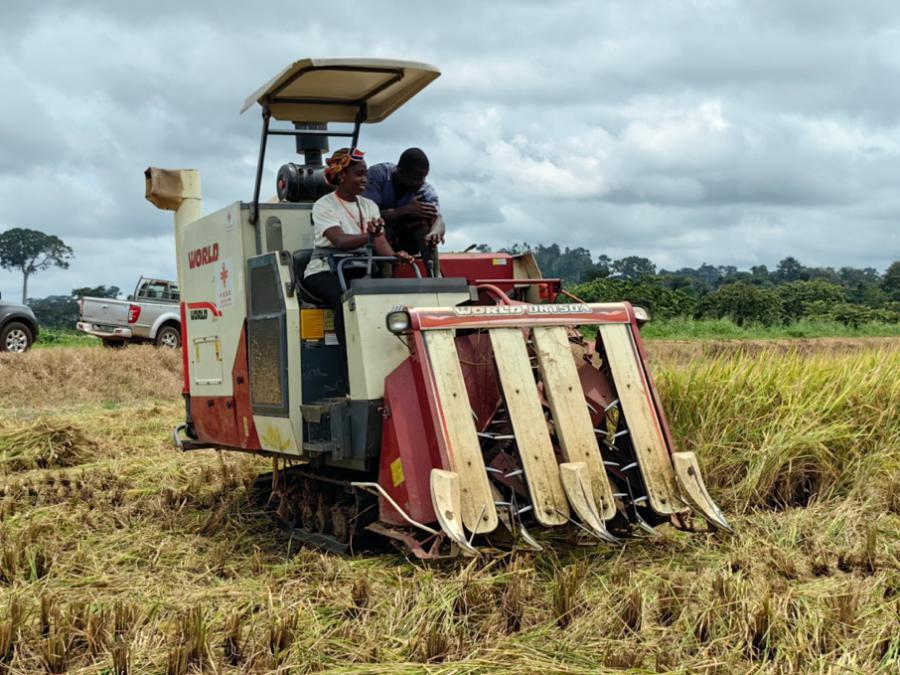
With improved seeds, fertilizers, and various types of small machinery — from tractors to threshers — farmers have succeeded in boosting rice yields by 20 to 40 percent. Post-harvest losses have also been cut by half, and incomes are up by around 30 percent, according to a WFP estimate.
One of the most transformative impact has been on female farmers. With access to better tools, training, and income-generating opportunities, women are taking on bigger roles in production and marketing — and gaining a stronger voice in their families and communities.
The project also connects local farmers with school meal programs, enabling them to supply safe, locally grown rice to nearby schools. This not only improves child nutrition and school attendance, but also creates a stable market for smallholders.
To enhance storage and processing facilities, the project delivered 600 China-made mini silos, built four community granaries, and installed two modern rice processing lines, helping farmers reduce broken grains and improve the value of their harvests.
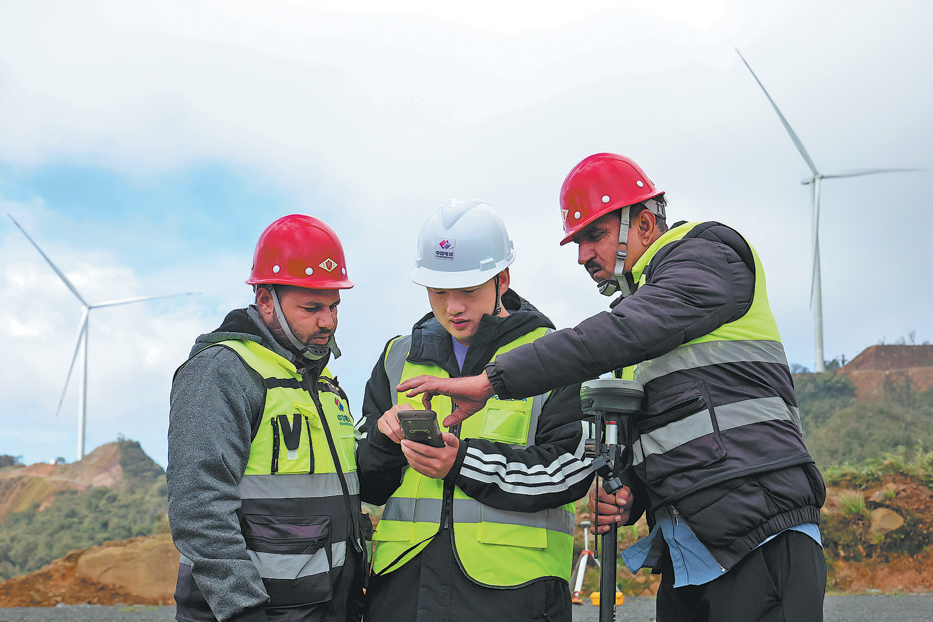
This transformation is part of a wider effort to adapt and share China's agricultural experience with Africa.
Li Ming, director-general of the Department of International Cooperation, China International Development Cooperation Agency, said China has made remarkable progress in agriculture and food security — feeding 20 percent of the world's population with just 9 percent of the world's arable land.
"At a time when China-Africa relations are at their best, we have launched a $4 billion Global Development and South-South Cooperation Fund," said Li. "With experience, capacity, and a strong commitment, the 'China solution' is well positioned to deliver real benefits to Africa."
However, despite these advances, challenges faced by farmers remain. "In many African countries, 80 percent of rice is rainfed, and the lack of irrigation, inputs, and machinery leads to structural shortages," said Qu Yunsheng, deputy general manager of Liaoning International Cooperation Company operating in Africa.
Even when machines are available, the costs of maintenance and spare parts, lack of after-sales service and limited electricity access — especially in remote areas — can hinder their use. That's why many companies are investing in solar-powered solutions and hybrid models, while also exploring equipment leasing schemes and credit options.
Amadou Touré, director of Processing and Marketing, Cote d'Ivoire's Ministry of Agriculture and Rural Development, pointed out that his country faces an annual rice demand of nearly 2.15 million tons, with a shortfall of around 0.6 million tons.
"We cannot talk about sovereignty without food security," he said. "We must increase production, reduce losses, and move toward rice processing industries."
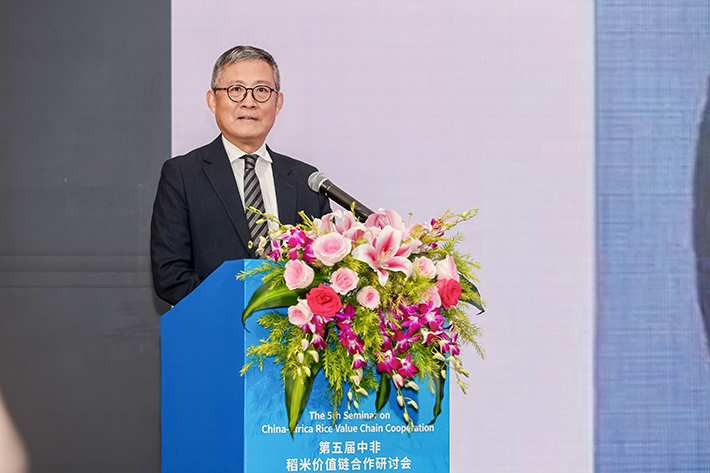
Zhao Bing, representative of the WFP China Office, said food security is fundamental to national governance, social stability, and economic prosperity.
"China has made a strong and meaningful contribution to advancing the Sustainable Development Goals, reducing global poverty, and improving food security," Zhao said. "Its knowledge, technology, and experience hold great potential for replication and scaling up."
He recalled a farmer in C?te d'Ivoire who once told him, "With better rice, my children can go to school—and my community thrives."
Today, Bananko is a local model of agricultural resilience. Under Camara's leadership, the village has not only strengthened its food security but also inspired neighboring communities.
"People from other villages now come to learn from our experience," Camara says with quiet pride.