Protecting elephants by turning poo into paper









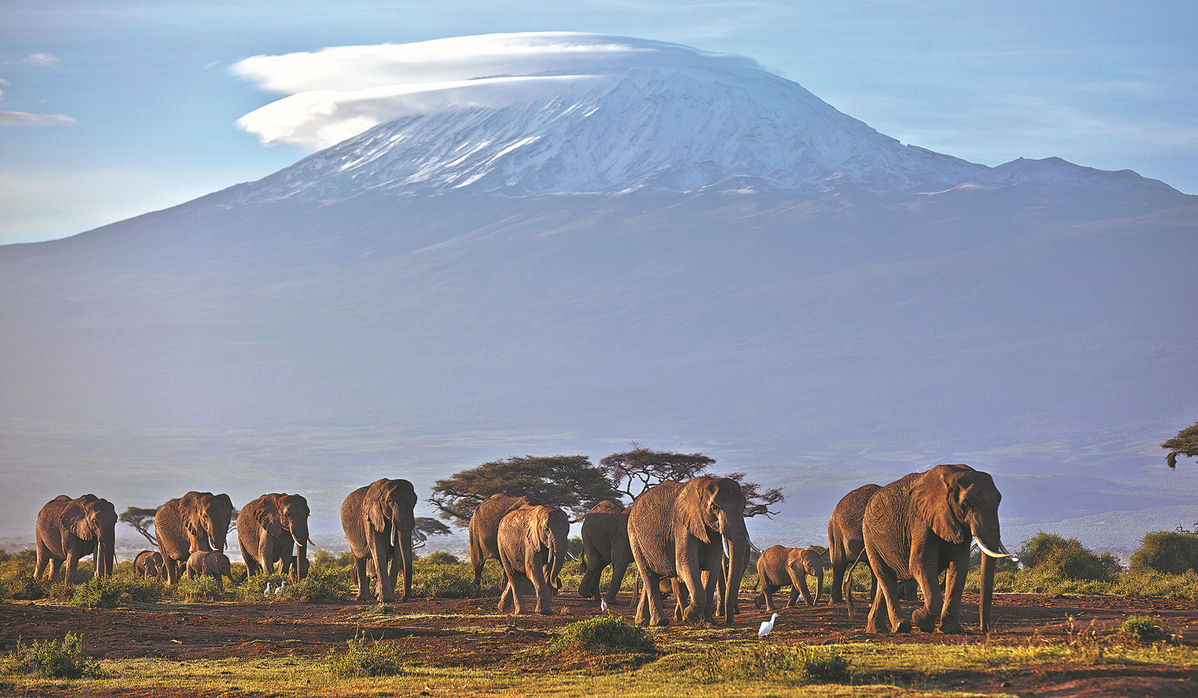
Before setting up the Nampath Paper company in Kenya's coastal region, John Matano had been a victim of human-elephant conflicts.
Having been a smallholder farmer mainly rearing maize, Matano, like other local farmers, always faced the risk of losing his crops to marauding elephants from the nearby Shimba Hills National Reserve.
"The elephants would move in large herds, sometimes numbering 100-150, and they would stay for several nights, causing widespread damage," Matano said. "After facing losses, many farmers had nowhere to turn other than to wait for government compensation which would sometimes get delayed. That is why we had to get alternative means of handling the problem."
Owing to increasing cases of poaching and human encroachment on what was formerly forest land, cases of human-wildlife conflict in Kenya have been on the rise.
In May, farmers in the country's Kilifi County reported significant losses after elephants from Tsavo East National Park destroyed their crops. The farmers complained the elephants consumed more than 40 hectares of maize, cowpeas, potatoes and other crops, leaving them with little to harvest and causing economic hardship.
Following these losses, Matano joined the Mwaluganje Elephant Sanctuary, which was set up back in the 1990s to help save elephants and to assist 200 or so local farmers facing direct conflict with the elephants.
Other than convincing farmers to donate part of their land to create a migration corridor for the elephants, the sanctuary also encouraged farmers to explore additional income sources such as selling elephant dung for turning into paper, or making the paper themselves.
"After being trained on how to make paper from elephant dung at the sanctuary, I set up my own company called Nampath Paper back in the early 2000s and today, I have employed 42 people, and we make an annual profit of up to $24,000," Matano said.
According to him, the process involves the collection of elephant dung, which is boiled and pounded to a pulp, after which wastepaper is added and pounded too. The paper and dung are mixed in different ratios depending on the color of the paper. More recycled paper is added to give it a lighter color.
"From 50 kilograms of dung, we can produce approximately 125 sheets of A4 paper of good market quality," Matano said.
Income source
Paul Gathitu, the spokesman of the Kenya Wildlife Service, said they support the use of elephant dung to make paper as a sustainable and eco-friendly alternative to traditional paper production. This is because the initiative helps reduce illegal logging and provides a valuable income source for the local communities.
"Elephant dung paper is a sustainable product as it utilizes a readily available resource and reduces reliance on traditional paper manufacturing practices like felling trees. In addition, when elephants are seen as a source of income through dung collection, it can reduce the incentive to poach them for ivory or other purposes," Gathitu said.
The Kenya Wildlife Service supports activities like the elephant dung project by providing forest rangers to sanctuaries like the Mwaluganje Elephant Sanctuary to reduce human-wildlife conflict. They have also supported the establishment of community-based organizations and companies like those run by Matano by ensuring they safely collect their raw material without coming into conflict with elephants.
Currently, there are more than 17 companies in Kenya producing paper from elephant dung with the list growing, including in other African countries like Uganda.
The writer is a freelance journalist for China Daily.